
If the West Falls, the Planet Will Follow: Cambridge and the Woke Agenda
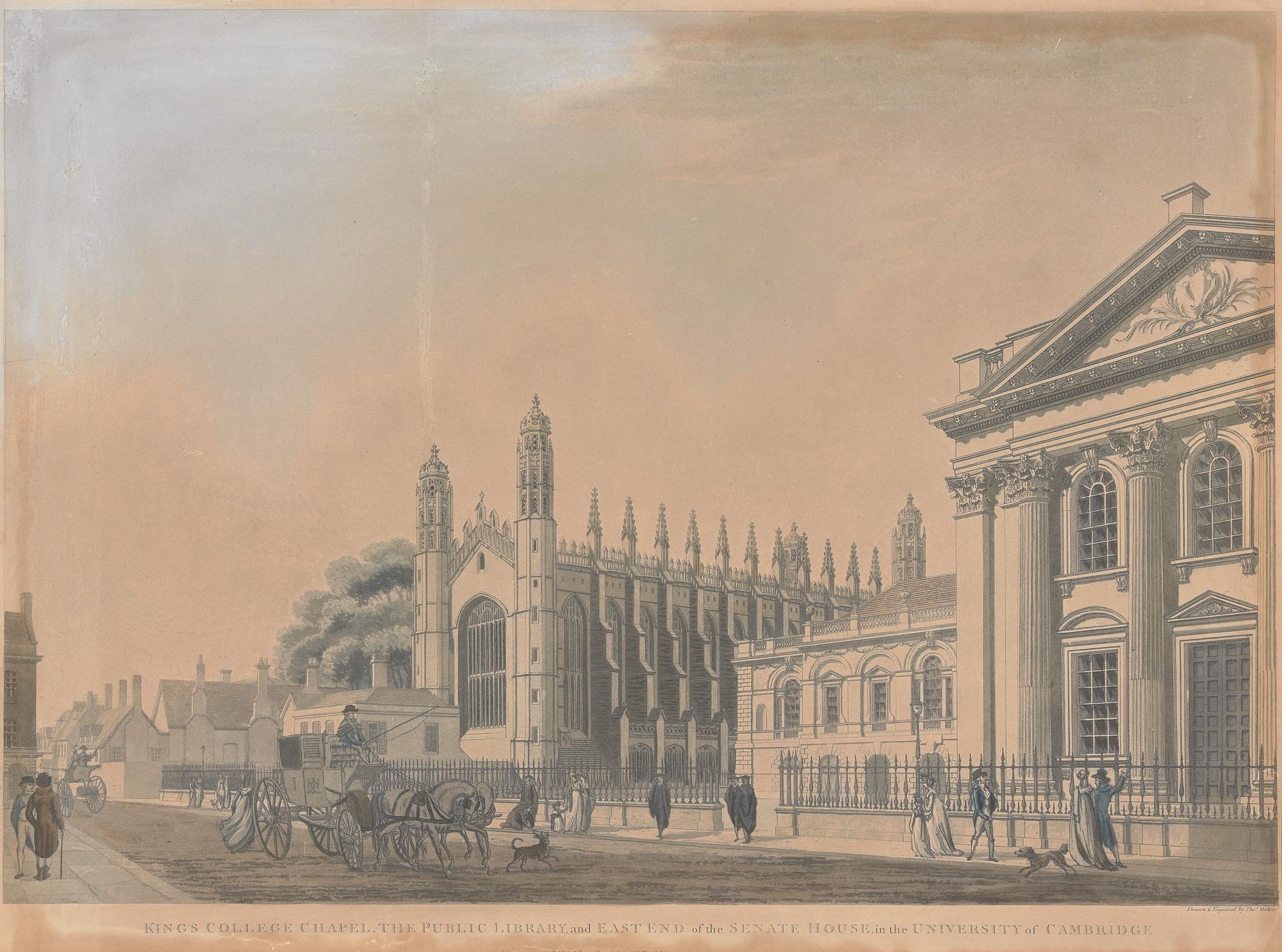
The death of Cambridge professor Jason Arday should indeed be a reason for reflection, as British Prime Minister Andy Burnham said. Reflection, however, should mean that we resist both the sanctification of Arday and his complete condemnation.
We do not yet know the whole truth behind all of the allegations, while the Arday case is already at the center of a broader discussion about academic ethics, the responsibility of universities, and Diversity, Equity, and Inclusion (DEI) policies.
If the serious questions regarding his qualifications and academic work are ultimately confirmed, there is, however, another crucial issue: Who appointed him, and how was his candidacy evaluated? Cambridge has now announced an independent investigation into the process of his appointment. A Western institution cannot benefit from an appointment of symbolic significance and, when that symbolism backfires, leave the entire burden on the individual himself to deal with the sad consequences.
Institutional responsibility, or even moral involvement, does not disappear simply because problems with this individual have been revealed. From the whole affair, it somehow seems to emerge that this professor, unfortunately, was also a fantasist. Or, to put it another way, there seems to have been quite a bit of stupidity in many of the things he said.
What I Believe About the Woke Agenda
In a recent post on the occasion of this case, psychologist Nancy Papathanasiou raised an important issue: What happens when the representation of a minority in an institution is so limited that a particularly prominent person ends up symbolically carrying the weight of the entire minority? Professor John Ellis, of Gonville and Caius College at Cambridge, wrote in a letter to the Guardian: “Universities should address structural inequalities structurally, rather than place the burden of representing institutional progress upon individuals.”
Papathanasiou’s observation takes me one step further. The real problem is not only what an appointment symbolizes, but what happens when a university needs a symbolic figure to prove that it has, more or less, changed. Changed, in order to be in line with the spirit of the woke agenda or culture? Personally, I look at these views with a skeptical eye, I dislike the word woke, but at the same time I believe in the need for changes within society and, within an institution such as a university, under an Aristotelian spirit and with the voice of reason.
The talk about the woke agenda is shovelfuls of ash in the eyes of many, both those who defend it (pro-DEI) and those who fight against it (anti-DEI) with the same fanaticism, so that no one deals with capitalism, where all the money is being gathered into 5,000 hands –soon the billionaires, after holding the economic and technological reins, will also take political power– everyone is becoming poorer, immigrants are blamed, while the countries from which they flee have been destroyed (Muslims who arrive in the West, for the most part, face problems of integration), AI is advancing, along with the data centers it needs, and people are being “de-stupidified” with a cellphone in their hand, connected to “the underworld” of social media 24/7. Talk, gentlemen, nonstop about the woke agenda, while good-quality food on the shelves is unaffordable!
Have We Forgotten Spinoza and Kant?
At the same time, when the representation of many minorities remains limited, the mistakes of one person can very easily be weaponized against an entire group. A prominent appointment can be used as proof of progress, while the deeper causes remain as they are.
I mean, close to the spirit of the statement made by Nathan Cofnas –incidentally, he is the one who also accused Arday of plagiarism– and it is a statement deeply offensive to humanity: “In a true meritocracy, blacks would disappear from almost all high positions except in sports and entertainment.” And does such a statement not bring to mind the nonsense Hitler used to say about the “Aryan race”? (I am not equating the two; I invoke the comparison for historical perspective.)
And when the same person –Arday in this particular case– finds himself at the center of a crisis, his failure or mistakes can be presented as proof that the entire DEI policy was wrong from the outset. Has the West lately forgotten Aristotle, Spinoza, and Kant?
The Lesson from the Arday Case
This, however, does not mean that the solution is to close the doors again. It means that more doors must be opened. How? Well, genuine equality cannot be based on a handful of prominent appointments, but on an expansion of real opportunities for more people, with the simultaneous demand for the same high standards of qualifications, evaluation, and accountability for everyone.
I live permanently in New York, where the discussion about DEI and the woke agenda is already intense, and cases like Arday’s can easily be turned into ammunition. Perhaps this would have been a better legacy for Jason Arday, that is, less symbolism, but more opportunities and a more substantive structural change on both sides of the Atlantic. Because every person who dies young –fantasist or not– is a tragedy. And less talk about the woke agenda that distracts from the real problems that capitalism sows.
And the University of Cambridge should also come to terms with its history –which had thinkers such as Russell and Wittgenstein among its ranks, and also awarded a doctorate to Derrida– and remember again the Judeo-Christian tradition that is the nervous system and the cultural confidence of the West. Because if the West falls, the planet will be lost too. And the West will not fall if it is determined to look its problems in the face, and with reason, take care of its peoples.