99.6% Ashkenazi + .4% Viking = 100% Zionist
If This Shocks You, You Haven’t Been Paying Attention
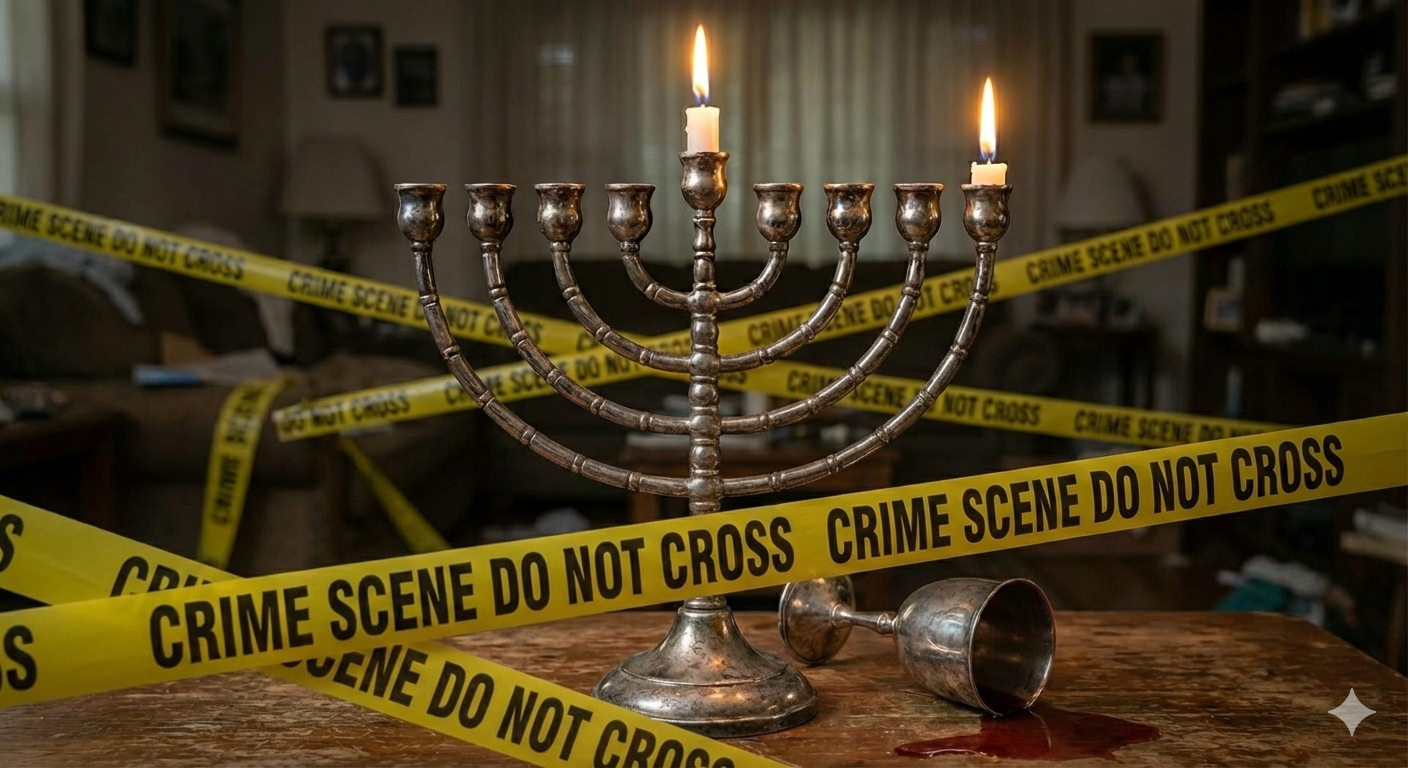
Hypocrisy amidst Terrorism (AI-generated image)
On December 14, 2025, a Hanukkah celebration at Bondi Beach—Chanukah by the Sea—became the site of a targeted attack against the Jewish community. People gathered to celebrate a holiday of light. Someone brought a gun.
As this is still breaking news as I write this, details will be debated. Numbers will be clarified. But the core fact is not in dispute: Jews were attacked for being Jews, at a Jewish holiday event, in a Western democracy.
And yet – if we’re being honest – this should not have come as a shock.
Not because violence is inevitable. Not because Australia is unsafe. But because the conditions that make such attacks conceivable have been forming in plain sight. We keep treating antisemitism as an occasional malfunction – an aberration to be condemned and forgotten.
It isn’t. It’s environmental.
Condemnation is easy. Responsibility is harder.
Within hours, leaders across the world have already issued statements: horrified, distressed, offering condolences, thoughts, and prayers. France’s president called it an antisemitic terrorist attack. Britain’s prime minister expressed sympathy. The UN Secretary-General said he was appalled. Australia’s own prime minister acknowledged the obvious – that this was a targeted attack on Jewish Australians during Hanukkah.
All of that is appropriate. None of it is sufficient.
Because many of the same governments now condemning the attack have spent the past year muddying moral lines – sometimes deliberately, sometimes carelessly – in ways that embolden exactly this kind of violence. They rush to denounce antisemitism after it explodes, while spending months normalizing the rhetoric that precedes it.
You cannot separate the outcome from the atmosphere that made it possible.
Words signal. Signals matter.
In August, Prime Minister Anthony Albanese spoke about recognizing a Palestinian state, describing “international momentum” and declaring that “enough is enough.” The framing was moral urgency – an attempt to end a cycle of violence.
No serious person claims a policy announcement causes a shooting.
But serious people understand something else: language from the top tells the public what is morally emphasized, what is deprioritized, and what will be politely overlooked. When leaders speak urgently about geopolitical symbolism while failing to speak with equal urgency about antisemitic blowback at home, extremists don’t need instructions. They read the room.
And increasingly, the room tells them that Jewish communities are fair proxies for grievances they did not create and cannot resolve.
Intentions do not cancel consequences
In September, Britain, Canada, Australia, and Portugal recognized a Palestinian state. Israel denounced the move as a reward for terrorism. Canada’s leadership insisted it was meant to empower peace and coexistence – not violence.
Perhaps that was the intention. Perhaps that is what Australia’s Jewish community can debate while digging the graves of their fellow countrymen.
But intention does not determine interpretation. Effect does.
There are people in the world – precisely the kind who would open fire on a Hanukkah celebration – who interpret these gestures as proof that violence works. That massacres can be contextualized. That pressure campaigns need not distinguish between civilians and combatants. That moral clarity is flexible when Jews are involved. Indeed, that is becoming the gold standard.
This isn’t theory. It’s pattern recognition.
Even some official condemnations reveal the problem. The Palestinian Authority issued a statement condemning the attack – but in its English version, it reportedly did not mention Jews or Hanukkah, while pivoting to criticism of Israel’s actions elsewhere.
That isn’t balance. It’s evasion.
And it mirrors a broader Western habit: condemning antisemitism in the abstract while resisting specificity when Jews are actually targeted. “We oppose hate,” followed by a careful refusal to say who was hated – or why.
If a crowd were attacked at Christmas mass, no one would struggle to say “Christians.” No one would rush to contextualize the victims. Hesitation appears only here.
That hesitation is noticed.
Not every country joined the recognition wave. New Zealand did not – its leadership explicitly noting that timing matters.
That restraint matters too. Because leadership is not only about what you believe, but about what your actions unleash in the real world. You do not introduce moral accelerants into an already volatile environment and then act surprised when something ignites.
What accountability would actually look like
If leaders want their condemnations to carry weight, they need to move beyond ritual language and toward responsibility:
- Name antisemitism clearly and specifically when it occurs.
- Stop laundering antisemitic hostility through the language of “passion” or “context.”
- Hold movements accountable for slogans that romanticize violence… (are you listening Mayor Mamdani)?
- Pair foreign-policy symbolism with aggressive domestic protection of Jewish communities.
Because statements issued after the fact do not prevent the next attack. Signals sent beforehand might.
In the days ahead, there will be more condemnations. More assurances that this was unthinkable – an aberration in a civilized society.
But climates don’t form overnight. They are built slowly, through signals sent, lines blurred, and consequences ignored.
And at this point, honesty requires saying the quiet part out loud:
If this shocks you, you haven’t been paying attention.
Related Topics