
Director of Diplomacy, Representative to UN Geneva & UNESCO, World Jewish Congress
IHRA Buenos Aires Plenary: Expanding the Frontiers of Remembrance
The Holocaust is widely regarded to be the most significant turning point in the history of humanity. The industrialized destruction of Europe’s Jewish communities reached levels of barbarism unseen previously. Written just three years after the end of the Shoah in 1948, the Preamble of the Universal Declaration of Human Rights states, “disregard and contempt for human rights have resulted in barbarous acts which have outraged the conscience of mankind,” a clear reference to the Holocaust and the other atrocities committed during the Second World War. So much so, that the existing multilateral system, including the modern international human rights instruments, have been constructed on the experience of the Holocaust, which “will forever be a warning to all people of the dangers of hatred, bigotry, racism and prejudice.”
To keep the memory of the Holocaust alive and promote its lessons, the International Holocaust Remembrance Alliance (IHRA) was founded in 1998 and comprises today of 35 member states and several observer ones. The organization fosters education, remembrance, and research about what happened in the past, to strengthen democratic values and build more inclusive and resilient communities.
The mandate of the IHRA could not be more urgent than it is today. With the passing of generations, the rise of antisemitism, the expansion and impact of AI, the development of new research methods, and the evolution of educational priorities, the way we approach historical memory needs to be reevaluated, refined, and recalibrated. By bridging the diplomatic and expert communities, IHRA allows for the sharing of ideas, good practice as well as development responses and tools for common challenges. It is a community of values that fosters democracy, coexistence and anti-discrimination.
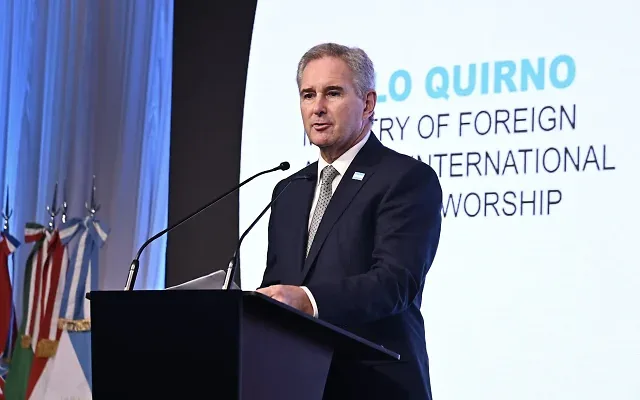
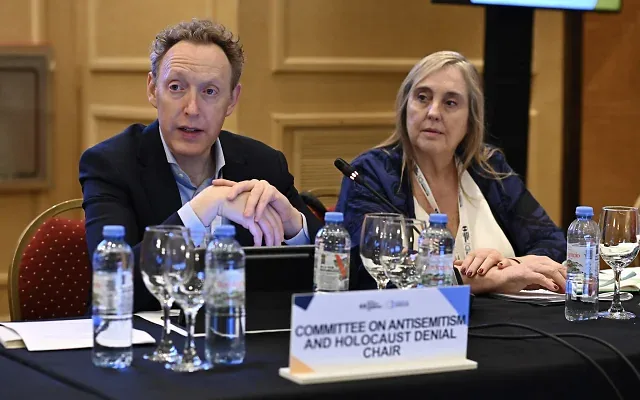
At the second Plenary under the Argentine Presidency which concluded last week, a conscious effort was made to deepen cooperation across Latin America by bringing more countries and institutions in the region into discussions about preserving historical memory and confronting antisemitism. As a member of the Greek delegation, I participated at the sessions of the Academic Working Group and the Committee on Antisemitism and Holocaust Denial, and discussed topics around the digitalization of Holocaust archives, expanding academic networks, cataloguing Holocaust diaries, countering Holocaust distortion often masked as political speech, and deepening cooperation with international partners.
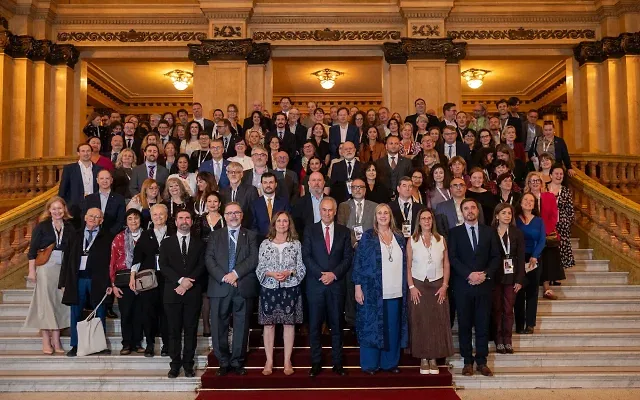
Delegates also had the opportunity to visit several sites in Buenos Aires and learn about the country’s rich, but also troubled, history. We visited the ESMA memory museum, a detention center were people were brought in for torture and questioning before they would “disappear”; the Anne Frank Museum, which includes a reconstructed segment of the original house in Amsterdam, and which is run, in large part, by young volunteers; the Libertad Temple adjacent to the Jewish Museum to learn about Argentina’s rich Jewish history; and finally the headquarters of AMIA, Argentina’s main Jewish community organization, site of the 1994 terror attack that cost the life of 85 people, where we honored the memory of the innocent victims, saw the impressive art monuments and watched a “Klezmer Tango” concert.
The Plenary was preceded by a conference and high-level dialogue, dubbed the Latin American Forum Against Antisemitism, involving senior representatives from 13 Latin American countries from beyond the IHRA membership. The event was organized by the Latin American Jewish Congress, World Jewish Congress’s regional affiliate, and Israel’s Foreign Ministry and aimed to analyze the growth of hatred against Jews and coordinate institutional responses.
All in all, it was a very successful meeting, which addressed many of the challenges we currently face, while setting the groundwork for further action in the near future. Argentina holds the IHRA Presidency until 1 March 2027, when France is due to assume the role, followed by Austria the year after.
Related Topics
Related Posts