
Global Regulatory Technology Specialist
IMF and World Bank Go Full AI
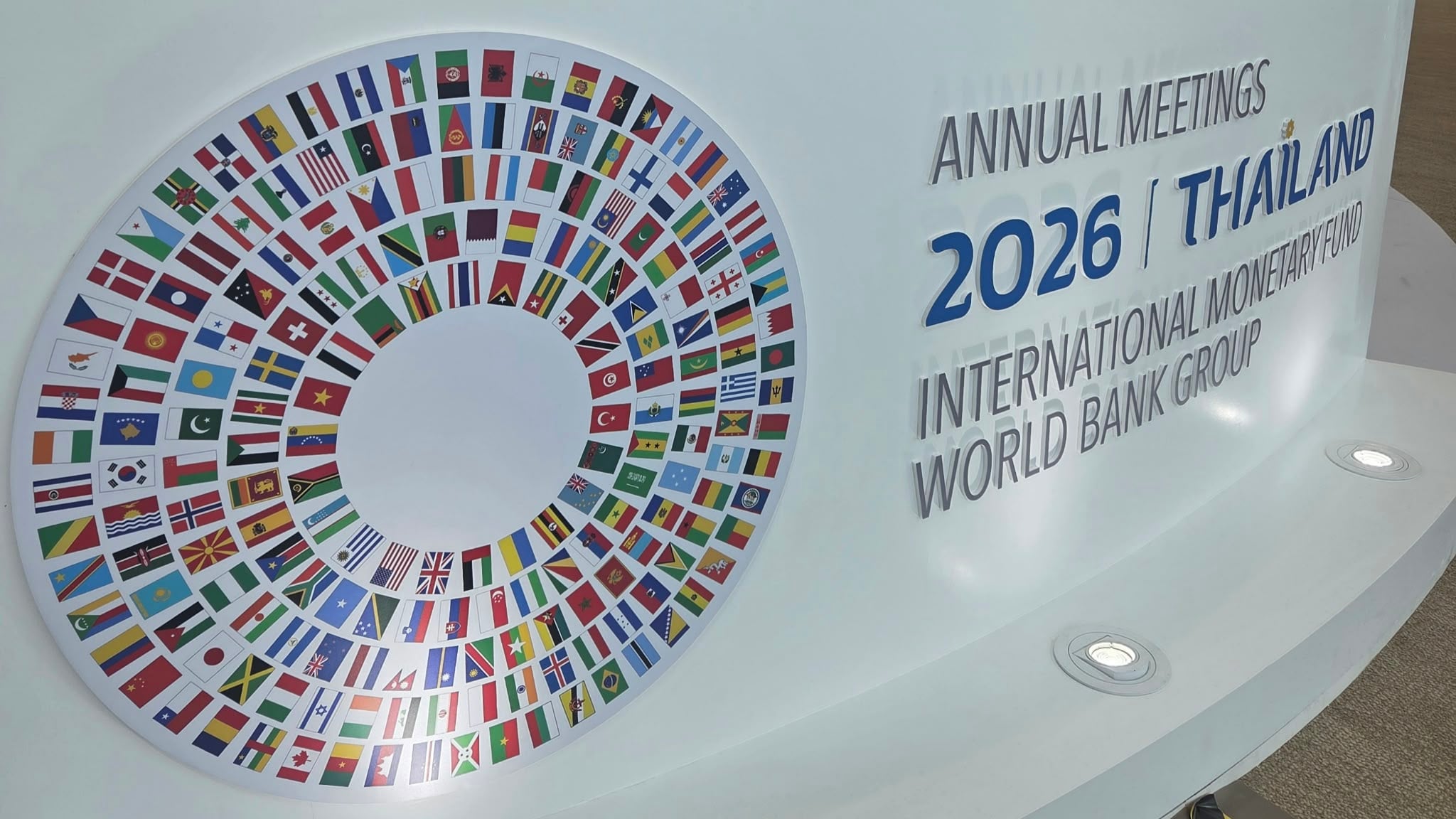
IMF/WB Annual Meetings 2026 - Bangkok, Thailand
BANGKOK, THAILAND — Last week in the corridors of the Queen Sirikit National Convention Center, artificial intelligence seemed to hover over every conversation. It surfaced in the growth numbers, the employment debates, the cautionary notes on financial stability. The technology had become an economic fact, nevertheless, the arrangements meant to manage its effects still looked provisional.
I attended the IMF and World Bank Annual Meetings as the head of a firm that works where public digital systems, regulation, and market access meet. What I observed confirmed a worry I have voiced for some time. Our collective enchantment with the speed of these tools has advanced far ahead of the legal and administrative foundations required to guide them. That imbalance is no longer conceptual. It now shapes the choices of finance ministers, central bankers, and the officials who must translate ambition into daily administration.

The figures presented in Bangkok carried their own weight. Global expansion is forecast at a restrained 3.1 percent for 2026, with a modest rise expected the following year. Price pressures remain stubborn, projected to ease only gradually. In lower-income countries, debt-service costs now claim roughly 14 percent of government revenue. Each further claim on the budget leaves less for classrooms, clinics, or preparation against future shocks. At the same moment, large volumes of capital are racing into computing hardware, data centers, and electricity generation, long before the expected gains in productivity can be measured with any confidence. The benefits concentrate among those who supply the technology. The risks spread more widely, falling heavily on energy importers already strained by higher costs and disrupted supply routes.
The Fund’s own report on financial stability noted that sanguine assumptions about returns could invite abrupt market corrections. Heavy concentrations of exposure, borrowed money, and deepening ties between technology companies and the financial system mean any correction would travel far beyond its origin. Governments that place little of their own money into these systems still inherit the consequences through tax receipts, pension holdings, and the price of sovereign borrowing. Changes in the demand for labor further reshape the tax base itself. In this sense the technology has entered the core of economic policy whether policymakers are ready or not.
What concerns me most is not the technology. It is the hesitation it produces. Many administrations see the promise of quicker services, sharper detection of fraud, and more careful use of limited resources. Yet they remain suspended, unable to move from curiosity to careful adoption because questions of authority, responsibility, and remedy stay unanswered. Projects are deferred. Pilot schemes multiply without coordination. Tools appear in daily use without proper oversight. Each path quietly weakens public confidence and administrative effectiveness. Civil servants grow uncertain about what they may approve. Citizens grow uncertain about where accountability rests when an automated decision goes wrong.
Kristalina Georgieva likened the pace of development to a racing car that requires protective barriers. The comparison is exact. Barriers, however, are not erected by good intentions or by the fine print of a purchase contract. They demand statute: precise rules on who may introduce a system, which decisions must remain under human review, how performance is examined, and how a person harmed by an error can seek correction. Privacy, cybersecurity, data retention, vendor access, and the documentation needed for independent examination must also find their place in law. International statements of principle have their value, yet they cannot substitute for operational rules fitted to a country’s own institutions and capacities.
I do not call for delay. I call for seriousness. Legal clarity does not obstruct useful change; it makes such change possible. Defined mandates ease the reluctance of civil servants, set obligations for suppliers, and offer the public a reason to trust. The same holds for the systems beneath the surface. A public agency that relies on inconsistent registries, incomplete transaction records, or weak identity verification will struggle to judge whether an automated recommendation is accurate. Those same weaknesses already undermine ordinary administration. Interoperable registries, verified credentials, records that can be examined, and arrangements that survive disruption form the necessary groundwork. In fiscal administration, an invoice linked to an identifiable taxpayer and preserved as reliable evidence provides a far stronger basis for analysis than an isolated spreadsheet or an unverified submission. Only then can machine assistance support officials working within a traceable process.
Resilience belongs in the design from the beginning. Network failures, cyber incidents, and service interruptions are ordinary planning concerns for national systems. Human review, secure records, continuity procedures, and tested recovery arrangements must stand in place before automated processes are entrusted with consequential public functions. Without them, the promise of efficiency risks becoming a source of new fragility.
Bangkok left one conclusion unavoidable. Technical capacity gains public worth only when the institutions that wield it earn the confidence of those they serve. Nations that settle the rules, reinforce the quality of their evidence, and strengthen the competence of their administrations will stand better prepared to apply these tools where they serve a clear purpose. Those that treat the governing framework as a reflection will eventually find the car has left the road.
Related Topics
Related Posts