

Impressions from the First International Forum of Kurdish Studies

The First International Forum of Kurdish Studies, jointly organized by Cûdî Academy and the Mala Kurdan (Federation of Kurdish Houses), brought together academics, linguists, and researchers from different countries around the world. During the three-day forum, participants discussed recent developments in Kurdish Studies, academic cooperation, and future projects.
Key topics included the standardization of the Kurdish language, methodological developments in Kurdish Studies, current trends in the field, the Kurds and Kurdistan, experiences in Kurdish-language education in Europe, and transnational perspectives. The cultural program also featured an art exhibition for children attending with their families, performances of the Kurdish national anthem “Ey Reqîb,” and musical concerts.
Akademiya Cudî li Swîsreyê Foruma Navneteweyî ya Kurdolojiyê rêxistin kir
Zarokên Kurdan di destên wan de ala Kurdistanê sirûda Ey Reqîb dixwînin. pic.twitter.com/t7R7arXd38
— Channel 8 Kurmancî (@Ch8Kurmanci) July 14, 2026
Academics from Around the World Gathered
Held under the theme “Kurdish Studies in the New World Order: Language, Identity, Politics and International Relations,” the First International Forum of Kurdish Studies took place between 10 and 12 July through the cooperation of Cûdî Academy and the Mala Kurdan (Federation of Kurdish Houses).
The forum welcomed numerous academics and experts from the United States, Israel, Germany, the United Kingdom, France, the Netherlands, Austria, Greece, and Norway. Participants included Prof. Dr. Ofra Bengio, Prof. Dr. Michael Chyet, Prof. Dr. Khanna Omarkhali, Prof. Dr. Yaron Matras, Dr. Janroj Yılmaz Keleş, Dr. Farangis Ghaderi, Dr. Michiel Leezenberg, Associate Professor Boris James, Dr. Thomas Schmidinger, Prof. Dr. Katharina Brizić, Dr. Maria Six-Hohenbalken, Dr. Agnes Grond, Katia Zagoritou, Prof. Dr. Salih Akın, and writer-director Essmat Sophie.
Yekemîn Foruma Navneteweyî ya Kurdolojiyê ji aliyê Akademiya Cûdî ve hat rêxistinkirin.
Di Rewşa Nû ya Dinyayê de, Xebatên Kurdînasiyê: Ziman, Nasname, Siyaset û Pêwendiyên Navneteweyî roja 10 – 12ê Tîrmehê, bi hevkariya Federasyona Mala Kurdan û Akademiya Cûdî hat rêxistinkirin pic.twitter.com/ZNMU8XYgL9— Cûdî Academy (@academycudi) July 14, 2026
Current Issues in Kurdish Studies Discussed
The academic sessions examined the current state of Kurdish Studies worldwide, research methodologies, the impact of recent developments in the Middle East on the Kurdish people, the standardization of Kurdish, diaspora studies, and international academic cooperation.
Participants also exchanged views on developing joint research projects, strengthening international scientific networks, and establishing sustainable academic partnerships in the field of Kurdish Studies.
Scientific Discussions Accompanied by Cultural Events
In addition to its academic sessions, the forum also hosted a variety of cultural activities. The program included musical performances, traditional folk dance shows, and other cultural events, while participants stayed together with their families at the camp venue. Special activities were also organized for children.
Prof. Dr. Ofra Bengio from Israel Among the Guests
Prof. Dr. Ofra Bengio, Senior Research Fellow at the Moshe Dayan Center for Middle Eastern and African Studies at Tel Aviv University and Head of the Center’s Kurdish Studies Program, described the forum as a great success and expressed her surprise.
Prof. Bengio stated:
I have participated in hundreds of platforms, including many Kurdish ones, but I have never seen an atmosphere like this. It feels like a family, yet everyone is an intellectual and has a profession. Frankly, until a few months ago I had almost lost hope in the Kurds. Where had young people like you been? Seriously, where were you?
Emphasizing that Kurdish unity and solidarity are inevitable, Prof. Bengio also warned Kurds against political actors whom she described as “Trojan horses.”
“We Need to Make Kurdish an Economic Language”
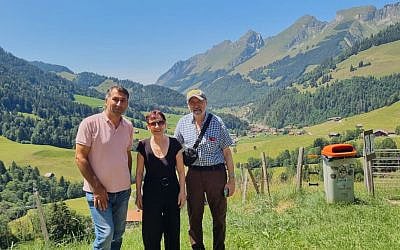
One of the world’s most renowned philologists, Prof. Dr. Michael L. Chyet, who speaks more than thirty languages, stated that Kurdish should become a language of the economy.
Emphasizing that economic value is one of the main factors determining the importance of a language, Chyet said that Kurdish is an exceptionally rich language but has not yet become a language of economic activity. He stressed that efforts should be made to address this shortcoming and highlighted the importance of ensuring that the ancient richness of Kurdish also finds its place in the economic sphere.
Mala Kurdan Federation
The Mala Kurdan Federation is a platform founded in Switzerland in 2022 by a group of Kurdish university graduates. In addition to branches in the United States, Canada, and the United Kingdom, the organization has branches throughout the four parts of Kurdistan and in nearly every European country. It operates in the fields of education, culture, and humanitarian assistance.
The federation delivers food and financial aid to Kurds affected by the war in Rojava, provides scholarships for students, and organizes English-language courses. It includes various departments dedicated to education, culture, and dialogue, as well as a religious body known as the Kurdistan Scholars Initiative. Bringing together Kurds from diverse political backgrounds—including secular, religious, and liberal circles—the organization aims to promote the common good of Kurdish society.
Following recent attacks on Kurdish regions by the terrorist organizations HTS and ISIS (Daesh), as well as calls for jihad against the Kurds, the Kurdistan Scholars Initiative announced that it had declared jihad against Arab terrorist groups, describing the decision as a historic first. Through this declaration, the Initiative stated that it considers armed resistance against extremist terrorist organizations to be religiously legitimate within the framework of the Kurdish Muslims’ right to self-defense.
Kurdish religious scholar Murshid al-Khaznawi braids a young girl’s hair in a symbolic act of solidarity, saying:
“They do not understand how precious our daughters are to us.” pic.twitter.com/nZ27m2dNim— Channel 8 English (@Channel8English) January 23, 2026
The spiritual leader of the Kurdistan Scholars Initiative, which is based in Germany, is the Syrian Kurdish religious scholar Sheikh Maşuk Mürşid Khaznawi. Sheikh Khaznawi, who declined an offer from the al-Julani government to take a position within religious affairs, has also been the subject of criticism from some Islamist circles in Turkey due to his views regarding Israel.