
Yes, I would let AI help me write a love letter
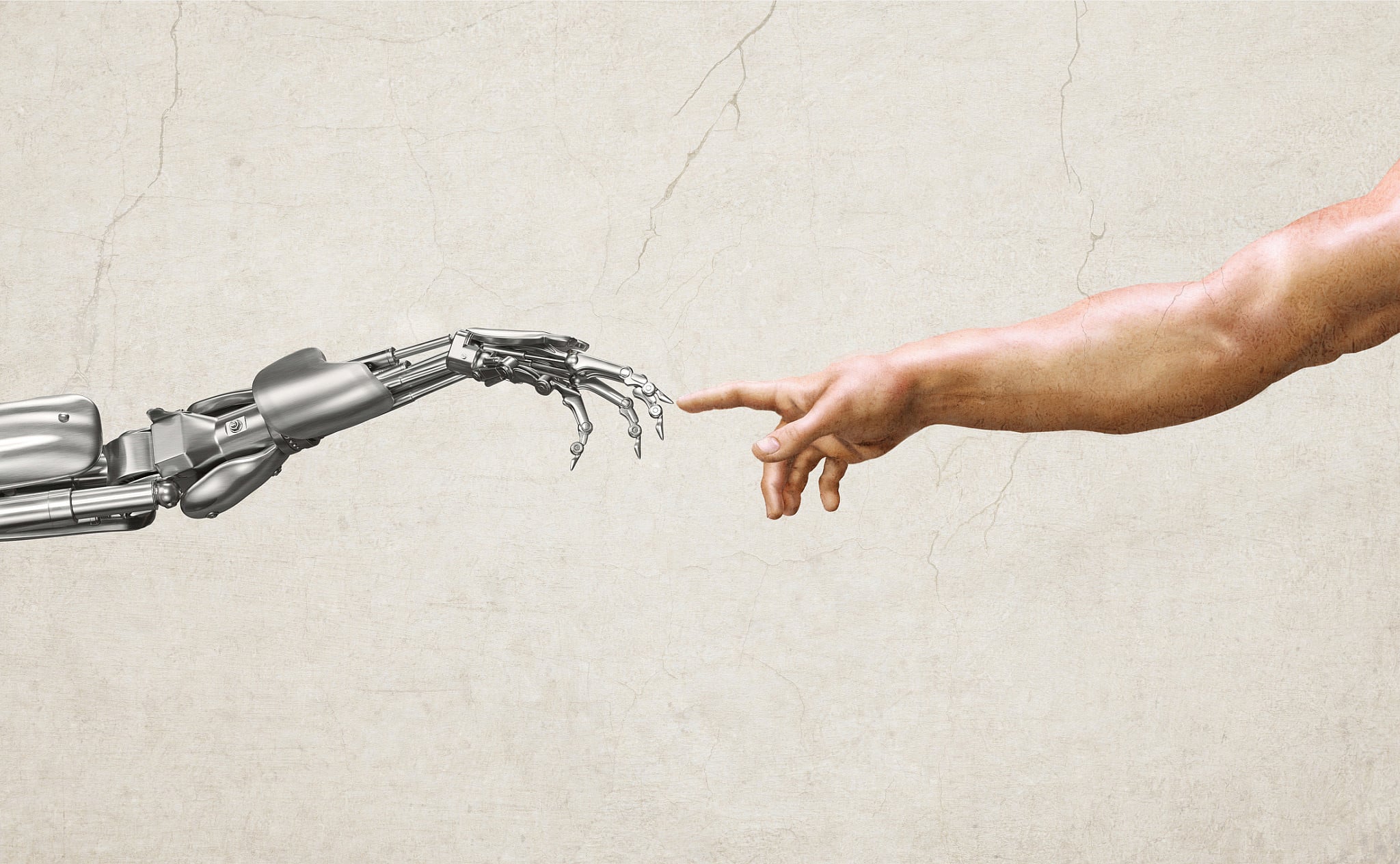
Rabbi Rachel Barenblat recently published a thoughtful essay on her blog, Velveteen Rabbi, called “The words of my mouth and the meditations of my heart (or: why I refuse AI)”. She offers seven reasons she chooses not to use generative AI for sermons, Torah, poetry, or other creative writing. (Velveteen Rabbi)
Rachel is a friend and colleague, and I appreciate both the seriousness of her concerns and the care with which she makes the case. I agree with a great deal of what she raises. I reach a different conclusion about what those concerns ask of us.
So here is my response, point by point.
Full disclosure: I used AI in writing this piece. I used it to help me organize my thinking, sharpen arguments, and edit the prose. The ideas and judgments are mine, and I reviewed and revised the finished piece myself.
1. There’s value in the wrestle
Absolutely. Writing is often part of how we discover what we think. AI can short-circuit that process when someone asks it to produce finished thought on demand.
It can also take part in the wrestle. I use it to question me, help organize a messy set of ideas, challenge an argument, suggest structural possibilities, or tell me where something I have written is unclear. I remain engaged throughout that process.
For me, the important question is whether the writer is still doing the thinking.
2. This matters for neurodivergent writers
There is another dimension here that deserves attention.
Some people have no shortage of ideas and still struggle enormously with executive function: sequencing those ideas, organizing them, initiating a draft, holding the structure of a long piece in mind, or actually finishing it.
AI can provide scaffolding for those tasks.
That does not make the resulting thinking less theirs. The same is true of a human editor, writing coach, dictation software, speech-to-text, or other assistive tools.
I would be very cautious about defining authentic authorship according to how much unaided cognitive labor preceded the finished page. That definition can inadvertently privilege people whose brains happen to be well suited to conventional writing processes.
3. Solidarity with creators and training without consent
I take this objection seriously. There are real ethical problems in the history of how some generative models were trained, particularly around copyrighted work used without consent or compensation.
I’m less persuaded that an unethical element in the creation of a technology necessarily requires rejecting the resulting technology altogether.
There is a Jewish legal image that keeps coming to mind for me. Gittin 55a discusses the marish hagazul, a stolen beam that someone has built into a large building:
וְעַל הַמָּרִישׁ הַגָּזוּל שֶׁבְּנָאוֹ בְּבִירָה, שֶׁיִּטּוֹל אֶת דָּמָיו, מִפְּנֵי תַּקָּנַת הַשָּׁבִים
The owner receives the value of the beam rather than requiring the whole building to be torn down, mipnei takkanat hashavim, “because of an ordinance instituted for those who repent.”
The theft remains theft. The person who was harmed is still owed restitution. Yet the remedy is not necessarily to dismantle everything that has been built around the stolen beam.
I find that a useful analogy here. If writers and artists were exploited in the development of AI, there should be accountability, compensation, licensing, and changes in how future models are trained. I don’t see why it necessarily follows that every subsequent use of the technology is itself unethical.
And some of that repair is already beginning. The landscape is changing through licensing agreements, compensation arrangements, opt-outs, and different approaches to training data. Those developments do not erase the original ethical problems, but they matter when we ask what responsible use looks like now.
For me, the questions are: Who was harmed? What restitution is owed? What practices need to change? And how can we use what has now been built responsibly?
4. Facts matter. Reality is real.
Agreed.
AI hallucinates. Sometimes spectacularly. It can invent quotations, citations, historical facts, books, and people.
Anything factual that matters needs verification.
I see source-checking as part of basic AI literacy. Generated prose is not a source. If an AI tells me that a rabbinic text says something, I want to see the text.
That standard is especially important because these systems can sound confident when they are completely wrong.
5. Transmission and honoring sources
This is especially important in Torah.
Rachel invokes the Jewish value of teaching b’shem omro, in the name of the person who said it. (Velveteen Rabbi) I agree.
If an AI generates an unattributed teaching assembled from unknown antecedents, I would not present that as Torah from a tradition I cannot identify.
There is a very different kind of use that I find genuinely helpful: locating a passage, comparing translations, working through difficult Hebrew, tracing a quotation, asking questions about the structure of a Hasidic teaching, or checking my understanding against the source.
“Help me understand what the Degel Machaneh Ephraim is doing in this paragraph” is a different request from “Give me a Hasidic teaching I can preach.”
The source remains the source. A great example is how I vaguely remembered the source on point 3 above from Gittin 55a about the marish hagazul and rather than spend hours trying to search for it, I simply asked Gemini to find it for me in plain language. Then when it reminded me of the source, I went and looked it up to confirm, rather than simply reproducing it without checking.
6. Environmental cost
Rachel is also right that generative AI has a significant environmental footprint. Datacenters consume electricity and water, and large-scale AI development has real material consequences. (Velveteen Rabbi)
Training very large models is especially energy-intensive, although the accumulated cost of millions of individual queries also matters.
I am wary, though, of treating AI as uniquely implicated in environmentally costly technology.
Flying on an airplane has an environmental cost. Heating food in a microwave uses electricity. Streaming video uses datacenters. Every phone and computer has an environmental and ethical footprint before we even turn it on.
Our devices depend on global mineral supply chains that include materials such as tantalum derived from coltan, along with cobalt, lithium, rare-earth elements, and others. Those supply chains have raised serious concerns about mining conditions, labor exploitation, environmental destruction, and conflict.
Most of us do not conclude from this that we can never use a cell phone or computer.
We ask harder questions about production, regulation, sourcing, consumption, necessity, and proportionality.
That is roughly where I land with AI.
Its environmental cost matters. It should affect how we develop it and how casually we use it. It gives us reasons to demand cleaner energy, greater efficiency, better sourcing, transparency, and accountability.
It does not automatically settle the question of whether any particular use is worthwhile.
7. AI slop
AI slop is real. Rachel acknowledges this while also distinguishing it from every possible use of AI. (Velveteen Rabbi)
There is an astonishing volume of cheap, derivative, misleading, and disposable material being generated.
I dislike it too.
I simply do not think its existence tells us very much about careful use by an individual writer.
Word processors made it possible to produce terrible prose more efficiently. Digital cameras made it possible to produce billions of bad photographs. Cheap recording technology produced mountains of forgettable music.
The quality of the work still matters.
8. Heart
This is where Rachel and I differ most.
She writes movingly about sermons and divrei Torah as love letters to Torah, God, tradition, and community, and about wanting the words she speaks to remain “the words of my own mouth and the meditations of my own heart.” (Velveteen Rabbi)
I respect that completely as a description of her own spiritual and creative practice.
I do not think it defines everyone else’s.
A piece of writing can involve AI and still emerge from a human being’s experience, memory, judgment, vulnerability, choices, revisions, and responsibility for what finally appears under their name.
The love-letter example Rachel gives is useful here.
If I type, “Write my wife a love letter,” copy the result into a card, and sign it, I have outsourced something intimate.
Suppose instead that I spend an hour in conversation trying to articulate something difficult. I discover a feeling I had not quite been able to name. I draft the letter. I ask whether one paragraph is confusing. I reject suggestions that do not sound like me. I rewrite several lines. Eventually I arrive at words that say precisely what I wanted to say.
I still recognize that letter as mine.
The technology participated in the process. It did not have the relationship, the memories, the longing, or the reason for writing.
I did.
Where I draw the line
I think Rachel and I locate authorship somewhat differently.
For me, authorship lives primarily in agency, discernment, and responsibility for the finished work.
AI can weaken all three. It is easy to imagine someone gradually handing over more and more of the thinking until very little remains except approval of a generated product.
It can also support those capacities.
For sermons in particular, I want the preacher to remain responsible for the encounter with the text, the theological claims, the interpretation, the moral judgment, and the final voice.
Research, translation, organization, questioning, critique, and editing can happen around that process.
The preacher still has to stand on the bimah and mean what they say.
That, for me, remains the essential test.