
In Defense of Noah
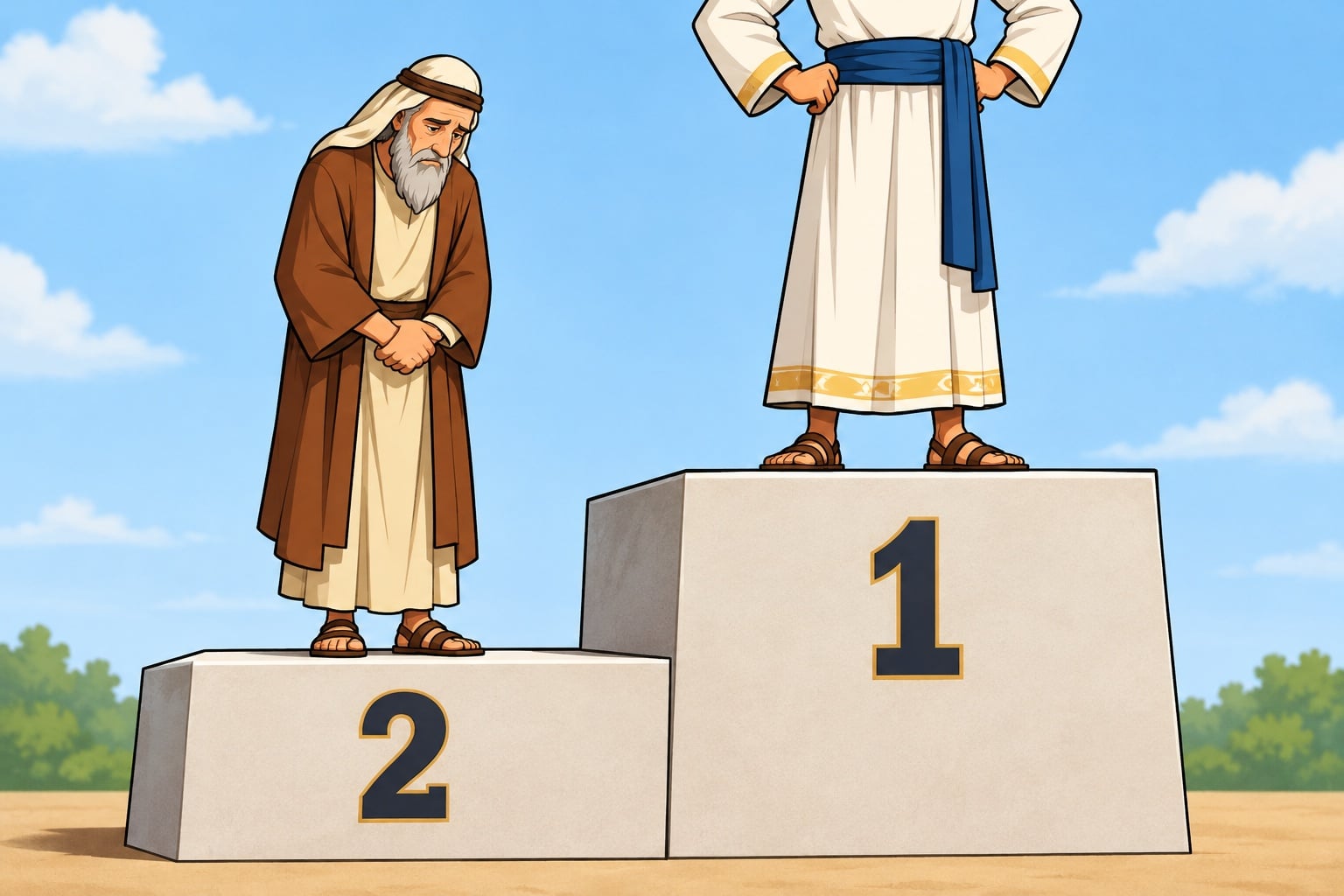
Today we stand between events of truly biblical proportions. Just a few days ago we read Bereishit, chronicling the creation of all life. In a day or so we’re going to read about Noah and the decimation of virtually all life.
Of all the thousands, possibly hundreds of thousands, maybe even millions of people on the planet, only Noah and his family were spared. The Torah calls Noah a “righteous person in his generation.” That’s probably a good quality to look for in a prototype for the sacred task of regenerating the human race.
But some commentators pounce on Noah. They take the phrase “righteous in his generation” to imply that in another generation Noah might not warrant such praise. Why do they have to do that? The Torah gives us no reason to dismiss Noah’s righteousness. And yet, some commentators seem determined to diminish his stature. I believe there are plenty of people who learned Torah this way, and if they came across Noah—let’s say, in the mall—they would whisper to their kids, “Hey, look, it’s Noah. He’s not so great, you know.” It’s just not nice.
Let’s look back at Bereishit to gain some perspective. The Talmud says that the world was created with ten utterances. God said, “Let there be light.” God said, “Let there be an expanse in the midst of the water.” God said “Let the water below be gathered into one area,” and so on and so forth: four, five, six, seven utterances, eight utterances, nine utterances. The last one: God blessed the seventh day and made it holy. Ten deliberate utterances, and life on Earth was resplendent.
Just one week later and we stand with Noah in a world that God no longer sees as good. God sets out to destroy all life, and God seals the decree with just one utterance: “I will blot out from the earth the man whom I created, men together with the beasts, creeping things, and birds of the sky, for I regret that I made them.”
God turns to righteous Noah and instructs him to build the ark.
It took ten utterances to create the world—ten utterances by God. Just one utterance to destroy it. Even in the creation of the human being, God said, “Let us make man,” as if partnering with angels in this endeavor. But to destroy man, God’s was the sole voice.
It takes ten times the power to create something than it does to destroy it.
That does not only apply to the world. It also applies to a reputation, a person, a good name. The greatest power human beings have over all of creation is the godly power of speech. We can use it to build up. We can use it to tear down—in an instant.
Thousands of years after Noah we carry that enormous power with us in the roles we play in our families, synagogues, communities, or in our places of work. Power to label colleagues, power to label neighbors, power to label organizations.
We should be mindful of the power that we wield with our words, and find opportunities to exercise that power to recognize the unheralded righteousness that others carry, for, unlike God, we do not possess the power to rebuild what one word can tear down.
Let’s also remember that it is, after all, through the efforts of a righteous person named Noah that we all are here today to wish one another “Shabbat Shalom.”