In Munich, words like “genocide” carry weight
There are places in the world where certain words demand extraordinary care.
Munich is one of them.
It was in Munich that Adolf Hitler launched the failed Beer Hall Putsch in 1923 — an early step on the road to the Holocaust. The city remains forever linked to the ideology that produced the most systematic genocide in modern history.
Which makes it striking that Alexandria Ocasio-Cortez, speaking at the Munich Security Conference, accused Israel of committing “genocide” in Gaza.
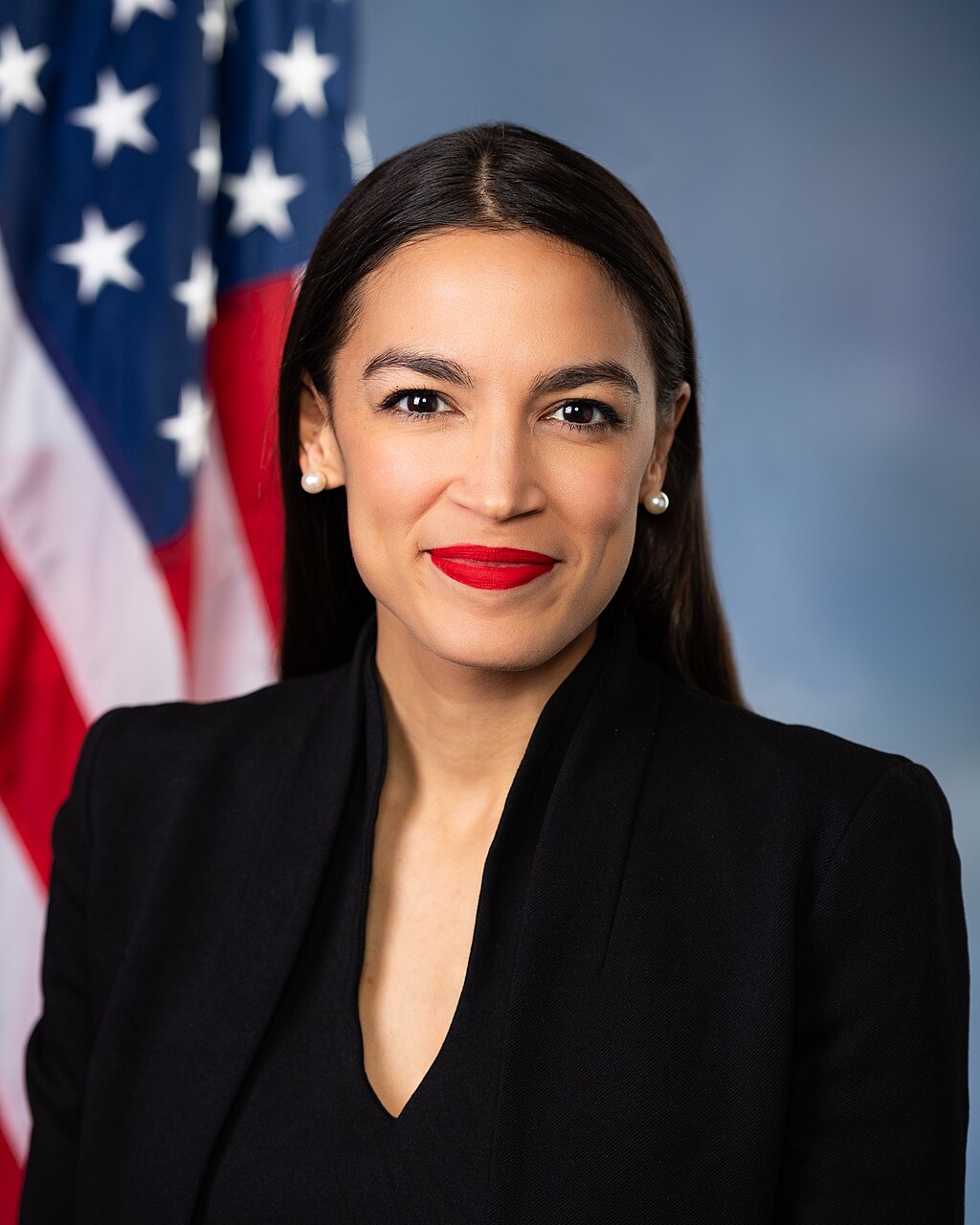
At a town hall held in conjunction with the conference, the New York congresswoman argued that U.S. aid “enabled a genocide in Gaza,” asserting that the United States must enforce the Leahy Laws and condition assistance when “gross human rights violations” occur. She added that the deaths of “thousands of women and children” were “completely avoidable.”
War is tragic. Civilian deaths are tragic. Every innocent life lost diminishes us.
But genocide is not a synonym for tragedy.
Under the 1948 Genocide Convention, genocide requires specific intent — the deliberate aim to destroy, in whole or in part, a protected group as such. It is not defined by casualty counts alone. It is defined by purpose.
Israel’s war in Gaza began after October 7, 2023, when Hamas terrorists murdered more than 1,200 people and abducted 251 others in the deadliest attack on Jews since the Holocaust. Hamas is a U.S.- and EU-designated terrorist organization whose founding charter and public statements openly call for Israel’s destruction.
To describe civilian deaths as “avoidable” assumes that Hamas could have been dismantled without force, or that a sovereign state attacked in such a manner had the option of restraint alone. No serious military analyst suggests that dismantling a terrorist army embedded in dense urban neighborhoods — protected by tunnels and human shields — could be achieved without devastating combat.
The Leahy Laws, introduced by former Senator Patrick Leahy in 1997, restrict U.S. assistance to specific foreign military units credibly implicated in gross human rights violations. They were crafted as targeted accountability tools — not as sweeping political instruments to brand an allied democracy fighting a terrorist organization as genocidal.
Military historian Danny Orbach, co-author of Debunking the Genocide Allegations, has noted that Israel undertook unprecedented measures to mitigate civilian harm: advance warnings before strikes, designated humanitarian zones, and facilitation of massive aid flows — even at significant military cost. One may debate the effectiveness of those measures. But they are fundamentally inconsistent with an intent to destroy a people.
Genocide is a word born of Jewish suffering. Raphael Lemkin coined it to describe what the Nazis sought to do to the Jews of Europe. When that word is deployed carelessly — especially in a city synonymous with the rise of Nazi ideology — it does not elevate moral discourse. It corrodes it.
As the father of an American murdered in an Iranian-sponsored Palestinian terrorist attack, I know what genocidal intent looks like. It looks like gunmen entering homes and slaughtering families. It looks like crowds cheering kidnapped civilians. It looks like charters calling for annihilation.
Reasonable people can debate U.S. policy. They can question tactics, humanitarian corridors, or aid conditions. Democracies thrive on such debate.
But when the gravest term in international law becomes a political weapon, it ceases to clarify and begins to inflame.
In Munich of all places, that should give every serious person pause.