
In Search of a Way Forward: The Stakes of Monday’s Gaza Vote
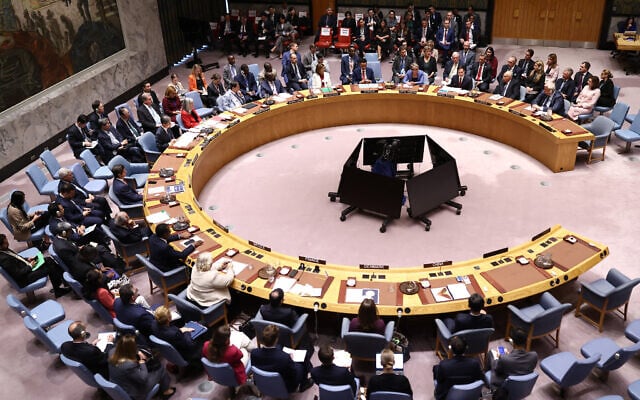
The United Nations Security Council is gearing up for what could be its most crucial decision in decades: whether to back President Trump’s Gaza peace plan and give the green light to an International Stabilization Force (ISF). At first, most people brushed off the idea as just another bit of diplomatic theater. But now, the plan feels urgent. The situation has changed—fast. The current ceasefire is shaky at best, and it’s made one thing painfully clear: Gaza needs more than a break from fighting. It needs a real future.
That sense of urgency only grew this week. The United States joined forces with eight Arab and Muslim-majority countries—Pakistan, Egypt, Qatar, Saudi Arabia, Jordan, Türkiye, Indonesia, and the UAE—and together, they put out a rare joint statement, calling for the Security Council to act, and soon. It’s not every day you see this kind of unified support for a US-written resolution, especially in Middle Eastern diplomacy.
The note also says, “We are issuing this statement as the Member States that gathered during High-Level Week to begin this process, which offers a pathway to Palestinian self-determination and statehood. We emphasize that this is a sincere effort, and the Plan provides a viable path towards peace and stability, not only between the Israelis and the Palestinians, but for the entire region,” concluding with the wish of the resolution’s “swift adoption.”
For these countries, the reason to act is obvious. Two years of devastation, thousands of innocent people dead, and the cycle just keeps threatening to repeat itself. A ceasefire isn’t a solution. It’s a warning. The American proposal tries to answer that warning with two big ideas: set up a transitional Board of Peace until 2027 to stabilize Gaza’s government, and send in a 20,000-strong stabilization force to protect aid routes, disarm militias, and help rebuild Gaza’s institutions. There won’t be any American boots on the ground, but, somehow, Washington managed to get key Muslim states to back a plan that came straight from the White House. As one blunt diplomat put it, “Nobody wants the Palestinian genocide to resume.”
Of course, not everyone’s on board. Inside the Council, Russia is pushing back with its own draft. Their version ditches the Board of Peace and says Gaza’s future shouldn’t be handed off to a group led by the US president. Instead, Russia wants the UN secretary-general to look into stabilization options and keep everything rooted in the established two-state framework. That’s Moscow’s way of saying they don’t trust Washington’s ad hoc solutions. China’s in a similar spot. They want tighter limits on the stabilization force, more oversight, and a clear role for the Palestinian Authority. These aren’t just technical demands. In a place as battered and divided as Gaza, legitimacy isn’t optional. It’s everything.
Still, there are signs the deadlock could break. Behind closed doors, some diplomats say China might abstain. Russia doesn’t seem keen to pick a direct fight either. If neither one uses their veto, the resolution could pass with less drama than anyone expected. Secretary of State Marco Rubio says momentum is real. Only trusted, willing countries will send troops, and more are stepping up.
Meanwhile, US Ambassador Mike Waltz laid it out in the starkest terms yet: if the world rejects this plan, it’s basically choosing between leaving Hamas in power or plunging back into war. That’s the choice, no sugar-coating. He penned a Friday op-ed lauding President Trump’s proposal for an international “Board of Peace” to reconstruct Gaza.
“The Board of Peace is the only path to a secure Gaza in which Palestinians can determine their own destiny, free from either terrorist rule or occupation,” he wrote in the op-ed published by The Washington Post.
The latest draft of the resolution mentions a “credible pathway” to Palestinian statehood. But it only comes after serious reforms in the Palestinian Authority and real progress in rebuilding. Supporters argue that without real stability, talk of statehood is just for show.
If the resolution passes on Monday, it won’t magically fix everything. The wounds in Gaza run deep. But it does crack open a door that’s always been slammed shut — a real shot at coordinated action. This time, instead of everyone working at cross-purposes, regional players, international partners, and the UN could finally pull together under one plan. Security, governance, recovery — all of it, in one place. Even people who hate the idea admit it’s better than just falling back into the same old chaos.
A mission with backing from all kinds of countries could actually help get daily life back on track. That means restoring basic services, bringing some order, and, for once, giving Palestinians a reason to think tomorrow might not look exactly like yesterday.
Honestly, the real weight of Monday’s vote isn’t buried in the details. It’s about showing the world is willing to try again. After all the broken promises, failed ceasefires, and growing hopelessness, the international community has one more shot to prove it can act together instead of just watching things fall apart. If member states step up and vote with some guts, Gaza might finally start moving toward something stable, something real. And for people who have been through as much as they have, even a sliver of hope is worth everything.