Incredible Mediators: Trump May Fly to Islamabad to Seal Iran Deal
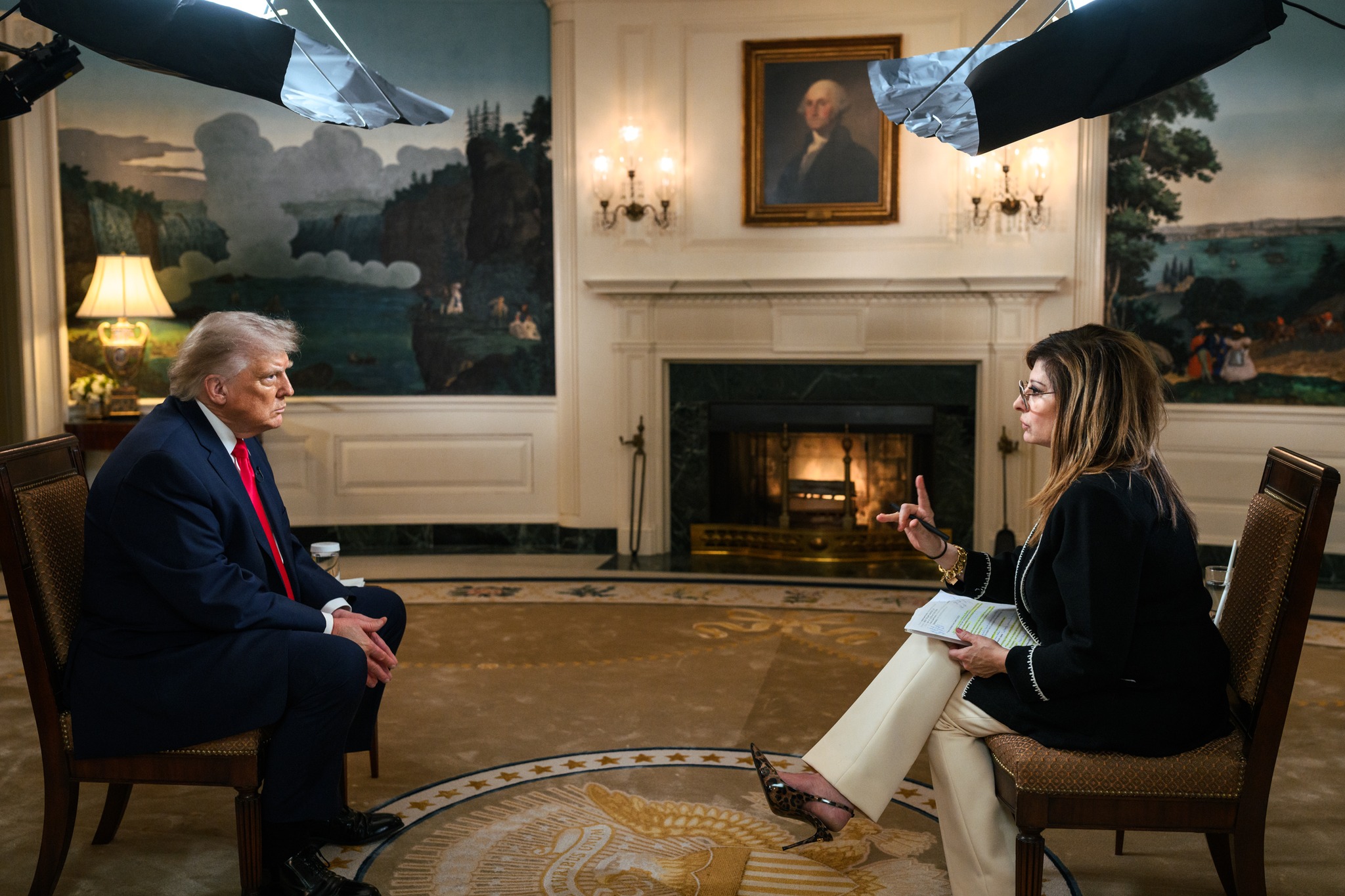
“The Pakistanis have been incredible mediators throughout this process, and we really appreciate their friendship and their efforts to bring this deal to a close.” With that statement, US Press Secretary Karoline Leavitt did more than acknowledge a partner—she revealed a shift in Washington’s approach to one of its most complex diplomatic challenges. At a moment when tensions could easily tilt toward escalation, the United States is not just engaging Pakistan; it is also counting on it.
???? TRUMP PRESS SEC. KAROLINE LEAVITT PRAISES PAKISTAN!
"I just want to make one point that's important to the President. The Pakistanis have been incredible mediators throughout this process and we really appreciate their friendship and their efforts to bring this deal to a… pic.twitter.com/tJHjx01cLi
— Eric Daugherty (@EricLDaugh) April 15, 2026
That reliance has been built quietly, through sustained effort rather than sudden opportunity. Field Marshal Asim Munir and Prime Minister Shehbaz Sharif have, over recent weeks, moved with a sense of urgency that reflects both the risks at hand and the opening before them. What began as facilitation has evolved into something far more consequential: the careful management of a fragile but functioning diplomatic process between Washington and Tehran.
Despite the high-level US-Iran peace talks in Islamabad ending without a conclusive agreement after 21 hours of intense discussions, Pakistan’s role as a host and earnest mediator has received widespread acclaim. The international community has praised Islamabad for its neutral facilitation, logistical prowess, and commitment to dialogue, all of which are seen as essential contributions to de-escalating the US-Iran conflict, maintaining a fragile two-week ceasefire, and paving the way for lasting peace in the Middle East.
I have to give a lot of credit to Field Marshal Asim Munir and Pakistan’s PM Shehbaz Sharif. Both were exceptional hosts and showed real statesmanship in helping mediate the conversation between us and the Iranians, two countries that have not had serious talks in a very long… pic.twitter.com/JwC0wjl8XI
— The Thursday Times (@thursday_times) April 13, 2026
Just a few days after a first round that didn’t yield clear results, signals from Washington indicate that the US and Iran might be ready to sit down for talks again—this time in Islamabad. While nothing has been officially arranged yet, the signs are unmistakable: the process is very much alive, and there’s a growing buzz around what many are dubbing Islamabad Talks 2.0, which could be happening in just a matter of days.
From the perspective of the US, there’s a pressing urgency that feels both strategic and calculated. President Donald Trump has suggested that talks could resume “within days,” reflecting a belief that the pressure exerted in recent weeks is starting to shift Tehran’s calculations. His statement that the conflict is “very close to being over” isn’t just a proclamation of victory; it’s more of a confident signal that sustained economic and military pressure is setting the stage for a deal.
President Trump: Iran Conflict ‘Very Close to Being Over’ — Tehran ‘Wants to Make a Deal Very Badly,’ Talks Could Resume Within Dayshttps://t.co/u4waFxOFkl
— Karoline Leavitt (@PressSec) April 15, 2026
Now, that process has entered a phase few would have predicted. US President Donald Trump has openly suggested that he may travel to Islamabad himself if a deal with Iran is finalized there. It is a striking possibility. A sitting American president arriving in Pakistan to seal peace with Iran would mark a historic convergence of diplomacy, symbolism, and strategic recalibration. More importantly, it signals that Washington believes the process has moved beyond tentative engagement and into the realm of real opportunity.
REPORTER: Would you ever go to Pakistan to seal the deal?
President Trump: I would. I would go to Pakistan, yeah. Pakistan has been great.
They've been so good. Islamabad, I'll be—I might go. Yeah. If the deal is signed in Islamabad, I might go.
The field marshal has been… pic.twitter.com/KvnYhZ749j
— Donald J Trump Posts TruthSocial (@TruthTrumpPost) April 16, 2026
From the perspective of Washington, the mission is straightforward and unwavering: Iran must never develop a nuclear weapon. Trump’s statements reinforce this priority, framing any possible agreement around dismantling Tehran’s nuclear aspirations. What really stands out is not just the strength of this position, but the confidence with which it’s being articulated now. The administration seems to believe that a blend of pressure and negotiation has brought Iran closer to a consensus than it has been in the past.
President Trump just dropped the hammer on Iran.
No 20-year limit. No sunset clause. NO nuclear weapons for Iran. EVER.
"We have a statement…that they will not have — beyond 20 years — that they will NOT have nuclear weapons. There's no 20-year limit." pic.twitter.com/qJzgk7ZKLu
— Derrick Evans (@DerrickEvans4WV) April 16, 2026
Pressure has been quite significant. The US blockade targeting Iranian oil exports and maritime routes has transformed the economic situation, tightening the grip on Tehran and raising the stakes of continuing the conflict. At the same time, the diplomatic path—centered in Islamabad—has remained open, creating a dual approach of both pressure and engagement.
.@POTUS: "We have a very good relationship with Iran right now, as hard as it is to believe. And I think it's a combination of about 4 weeks of bombing, and a very powerful blockade." pic.twitter.com/4rEZlxJcK1
— Rapid Response 47 (@RapidResponse47) April 16, 2026
The first round of talks in Islamabad, though inconclusive, laid the groundwork for this moment.
The pressure element is undeniable. US measures targeting Iran’s oil exports and maritime routes have tightened economic constraints and reshaped the negotiating environment. But pressure alone does not produce agreements. It is diplomacy—structured, persistent, and often painstaking—that turns leverage into outcomes. And in this case, that diplomacy is being routed through Islamabad.
The first round of negotiations in Islamabad, despite lasting almost an entire day, concluded without a formal agreement. However, it achieved something that might be even more crucial: it stopped a potential collapse. It opened up a direct line of communication, defined the boundaries, and highlighted the internal factors that affect decision-making in Tehran. For Washington, one lesson was particularly clear—the Iranian representatives at the table lacked the final say to seal a deal. Any real progress would need to align with the top leadership back home.
US Vice President JD Vance thanked the Prime Minister of #Pakistan and Field Marshal Syed Asim Munir, NI (M), HJ, Chief of Army Staff (COAS) and Chief of Defence Forces (CDF), for hosting Islamabad talks between the U.S. and #Iran. He stated that any shortcomings in the talks… pic.twitter.com/0OLuskNB3m
— Pakistan Armed Forces News ???????? (@PakistanFauj) April 12, 2026
That reality has shaped the next phase. Islamabad Talks 2.0: A second round of talks is expected within days, with Islamabad once again at the center. The urgency is not artificial. The ceasefire remains fragile, timelines are tight, and both sides understand that delay carries risks. Diplomacy, in this context, is not just about agreement—it is about preventing regression.
In the midst of everything, Pakistan has stepped into a role that’s both prominent and essential. Field Marshal Asim Munir’s visits to Tehran—where he’s been meeting with political leaders, military heads, and influential decision-makers—show a level of direct involvement that’s quite rare in mediation efforts. This isn’t just about symbolic gestures; it’s about being actively engaged and consistently involved, working to keep both sides just aligned enough to keep the dialogue going.
Pakistan’s Army Chief meets the Iranian President
Field Marshal Syed Asim Munir, NI (M), HJ, Chief of Army Staff (#COAS) and Chief of Defence Forces (CDF) met Masoud Pezeshkian, President of #Iran @OfficialDGISPR #AsimMunir #ISPR pic.twitter.com/W4HClEJWD1
— Pakistan Armed Forces News ???????? (@PakistanFauj) April 16, 2026
At the same time, Prime Minister Shehbaz Sharif has broadened the diplomatic landscape beyond just bilateral talks. His efforts across the region, from Riyadh to Doha, highlight the understanding that lasting peace needs a wider agreement. By bringing regional players together to support de-escalation, Pakistan has deepened its role in mediation, turning Islamabad into a center for coordinated diplomacy instead of just a passive participant.
I had the pleasure and honour of meeting my dear brother, His Royal Highness Crown Prince Mohammed bin Salman, in Jeddah today.
During the course of which, I conveyed Pakistan’s unwavering solidarity with the Kingdom and expressed my deep appreciation of its patience and… pic.twitter.com/C6fIobxM58
— Shehbaz Sharif (@CMShehbaz) April 15, 2026
This blend of military involvement, political outreach, and international collaboration has positioned Pakistan uniquely. It now has connections to both Washington and Tehran, along with the credibility to engage with regional powers. Achieving this is no small feat, especially in a conflict marked by years of distrust.
Washington’s public recognition of this role is quite noteworthy. It’s not every day that the United States explicitly names a single country as its go-to partner in a high-stakes negotiation. But that’s exactly what’s unfolded here. Pakistan has been labeled as an effective and trusted mediator—not just because of what’s been said, but due to the tangible results achieved.
The path toward peace between Washington and Tehran is still quite unclear. However, at this moment, it seems to pass through Islamabad, driven by the unwavering commitment of leaders who prefer talking things out rather than stepping back, and who are opting for action instead of taking a break. In this light, Trump’s choice to head to Islamabad is more than just a symbolic move. It sends a message that Washington recognizes a feasible way forward, no matter how slim it might be.
With global fuel prices on the rise amid increasing uncertainty, the world is eagerly anticipating the results of the US-Iran mediation efforts led by Pakistan.
As global fuel prices continue to rise amid growing uncertainty, the world awaits the outcome of US – Iran mediation by #Pakistan’s Prime Minister Muhammad Shehbaz Sharif and Field Marshal Syed Asim Munir #COAS & CDF#Islamabadtalks #Ceasefire #ISPR pic.twitter.com/Cq7YdxZm95
— Pakistan Armed Forces News ???????? (@PakistanFauj) April 16, 2026
If that path leads to an agreement, Islamabad will not simply host a historic moment—it will have helped create it. A deal signed there, potentially in the presence of the US president, would redefine Pakistan’s role in global diplomacy and underscore the power of mediation in an increasingly fragmented world.
For now, the moment remains poised between anticipation and outcome. The talks may resume within days. The deal may or may not follow. But one thing is certain: the center of gravity has shifted.
The world is watching, and for the first time in a generation, all roads lead to Pakistan.