
From Kibbutz to the global stage
India IMEC vs China BRI: Iran war reshapes economic corridors as Turkey emerges
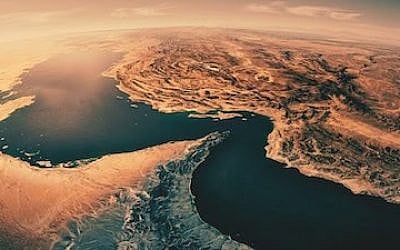
Economic Corridors, Not Just War: The Real Map of the US–Iran Conflict.
The fluctuations in the war between Iran and the United States are not only affecting financial markets — they are reshaping the global trade routes of the second quarter of the 21st century.
If we look at recent developments not merely as a security crisis but as a struggle between trade corridors, the picture becomes clearer.
On one side stands IMEC — the India–Middle East–Europe Economic Corridor, backed by the United States and its Western allies.
On the other side is BRI — China’s Belt and Road Initiative, developed in cooperation with Russia, Pakistan, and Iran.
As Pakistan and China have recently stepped in to mediate a ceasefire between Iran and the United States, they are not acting solely out of security concerns — they are directly protecting their own trade corridor.
As early as mid-March, I assessed that the war posed a significant risk to BRI, primarily due to its reliance on stability in Iran and the Persian Gulf.
At the same time, India has been strengthening its position: it continues to import oil through the Strait of Hormuz, operates the Chabahar Port, and benefits from expanded imports of Russian and Iranian oil.
The implication is clear — while BRI is affected by instability, India is consolidating its role as a key alternative axis.
In recent days, the military dimension of protecting trade routes has also become more evident.
Pakistan’s foreign minister met with his Chinese counterpart, and China presented a five-point plan for a ceasefire and the reopening of the Strait of Hormuz.
A few days earlier, a Chinese naval vessel arrived at the port of Karachi in Pakistan for a joint naval exercise (March 27–April 2), described as a drill aimed at protecting the China–Pakistan Economic Corridor (CPEC), a central component of BRI.
The message is clear: securing trade routes is an integral part of military strategy.
At the same time, China is expanding its activity in Africa, with agreements in Kenya and Tanzania around Lake Victoria — a move that signals a deepening foothold in alternative routes.
Meanwhile, alternative corridors are also taking shape — ones that are not favored by China and its partners. Initiatives such as VICMED, linking Lake Victoria to the Mediterranean, are gaining attention, alongside routes through Somaliland, Ethiopia, and the port of Berbera, supported by India, Israel, and the United Arab Emirates.
There is also the possibility of extending westward to Benghazi in Libya, should Egypt refrain from cooperating via Alexandria.
Turkey: A Third Player Reshaping the Game
Alongside IMEC and BRI, Turkey is working to establish its own independent trade corridor system.
At the center of this effort are the Zangezur Corridor and the Middle Corridor (TRIPP).
The Zangezur Corridor is designed to create a direct land connection from Kars in eastern Turkey to Nakhchivan, the Azerbaijani exclave, and from there through Armenia’s Zangezur region into mainland Azerbaijan — ultimately linking to trade routes that extend into Central Asia and China.
In parallel, a western branch is being developed from Kars to Turkey’s Mediterranean ports and to Istanbul, connecting onward to Europe.
Construction has already begun in Turkey and Nakhchivan, and the project is expected to become operational within four to five years. From Ankara’s perspective, this is a broad strategic move: strengthening connectivity across the Turkic world, bypassing Iran, and reinforcing Turkey’s role as a transit hub between Asia and Europe.
Turkey estimates that the corridor linking Iraqi Gulf ports to Europe through its territory could generate approximately $55 billion in economic value over a decade.
Turkish Transport Minister Abdulkadir Uraloğlu stated that Turkey, Iraq, and Qatar have already agreed on the project’s framework and a financing model of around $17 billion.
Qatar is also planning to transport liquefied natural gas via the Turkish route as a response to risks in the Strait of Hormuz.
In addition, Turkey is promoting a route through Jordan and Syria to its ports — a move that could bypass the Port of Haifa and undermine the relevance of IMEC, but also extend the route by approximately 800 kilometers, raising questions about its economic viability.
The use of Syria merely as a transit corridor, while bypassing the development of Latakia, also raises concerns regarding the project’s efficiency.
India’s Move in Hormuz Changes the Picture
India’s move to support the reopening of the Strait of Hormuz marks a turning point.
Its participation in an international initiative — led by the United Kingdom and involving around 60 countries — signals a significant strategic shift.
The Strait of Hormuz, through which roughly 20% of the world’s energy supply passes, has become the central pressure point of the crisis.
India’s move strengthens the pro-Western camp, increases pressure on Iran, reduces BRI’s room for maneuver — and accelerates the search for alternative trade routes, led by IMEC.
Ultimately, the war between the United States and Iran is not just a military confrontation — it is a struggle over the future map of global trade in the decades to come.
Related Topics
Related Posts