Infighting
The story comprises fewer than 75 words. Anyone listening to the Torah reading, who has a momentary lapse in concentration would not even know they’ve missed it. The end of this week’s parashah includes one of the shortest and most mysterious stories in the Torah. It is enigmatic, not least because it should not be there: Sefer Vayikra is a book of laws, not of narrative. With two notable exceptions, one aforementioned, there is no narrative in the entire book. The other exception, the story of the inauguration of the Mishkan, has a clear connection to the legal content that surrounds it. Exceptions aside, the narrative of the Torah pauses at the end of Sefer Shemot and continues where it left off at the beginning of Sefer Bamidbar. Sefer Vayikra is clearly an interlude: it is legal by nature and should not contain stories. Yet twice it does.
In the case of our story, its thematic link to Sefer Vayikra is very hard to see. Vayikra describes the structure of a society that has “קדושה-holiness” ingrained in its fabric and marked as its aspiration. Vayikra teaches the laws of sacrifices, Kohanim (priests), the Mishkan and the Beit Hamikdash, kosher food, the laws of family purity, societal purity, interpersonal conduct, Chagim (festivals), and more. All fit within this overarching theme of holiness. A particularly good example is this week’s parashah. It describes the laws of Kohanim, sacrifices, sacred food, the Chagim, and vessels in the Mishkan, before mentioning this story:
וַיֵּצֵא֙ בֶּן־אִשָּׁ֣ה יִשְׂרְאֵלִ֔ית וְהוּא֙ בֶּן־אִ֣ישׁ מִצְרִ֔י בְּת֖וֹךְ בְּנֵ֣י יִשְׂרָאֵ֑ל וַיִּנָּצוּ֙ בַּֽמַּחֲנֶ֔ה בֶּ֚ן הַיִּשְׂרְאֵלִ֔ית וְאִ֖ישׁ הַיִּשְׂרְאֵלִֽי: וַ֠יִּקֹּב בֶּן־הָֽאִשָּׁ֨ה הַיִּשְׂרְאֵלִ֤ית אֶת־הַשֵּׁם֙ וַיְקַלֵּ֔ל וַיָּבִ֥יאוּ אֹת֖וֹ אֶל־מֹשֶׁ֑ה וְשֵׁ֥ם אִמּ֛וֹ שְׁלֹמִ֥ית בַּת־דִּבְרִ֖י לְמַטֵּה־דָֽן: וַיַּנִּיחֻ֖הוּ בַּמִּשְׁמָ֑ר לִפְרֹ֥שׁ לָהֶ֖ם עַל־פִּ֥י ה’: וַיְדַבֵּ֥ר ה’ אֶל־מֹשֶׁ֥ה לֵּאמֹֽר: הוֹצֵ֣א אֶת־הַֽמְקַלֵּ֗ל אֶל־מִחוּץ֙ לַֽמַּחֲנֶ֔ה וְסָמְכ֧וּ כָֽל־הַשֹּׁמְעִ֛ים אֶת־יְדֵיהֶ֖ם עַל־רֹאשׁ֑וֹ וְרָגְמ֥וּ אֹת֖וֹ כָּל־הָעֵדָֽה (ויקרא כד:י-יד)
A son of an Israelite woman, who was the son of an Egyptian man, came out among the Children of Israel, and a fight broke out in the camp between the son of the Israelite woman and an Israelite man. The son of the Israelite woman pronounced the Name (of God) and cursed, and he was brought to Moshe; his mother’s name was Shelomit, daughter of Dibri, of the tribe of Dan. He was placed in custody (until) it was explained to them, by the mouth of God, (what they should do). God spoke to Moshe, saying: Take the blasphemer outside the camp, and all those who heard (his blasphemy) must lay their hands upon his head, and let the community stone him. (Vayikra 24:10–14)
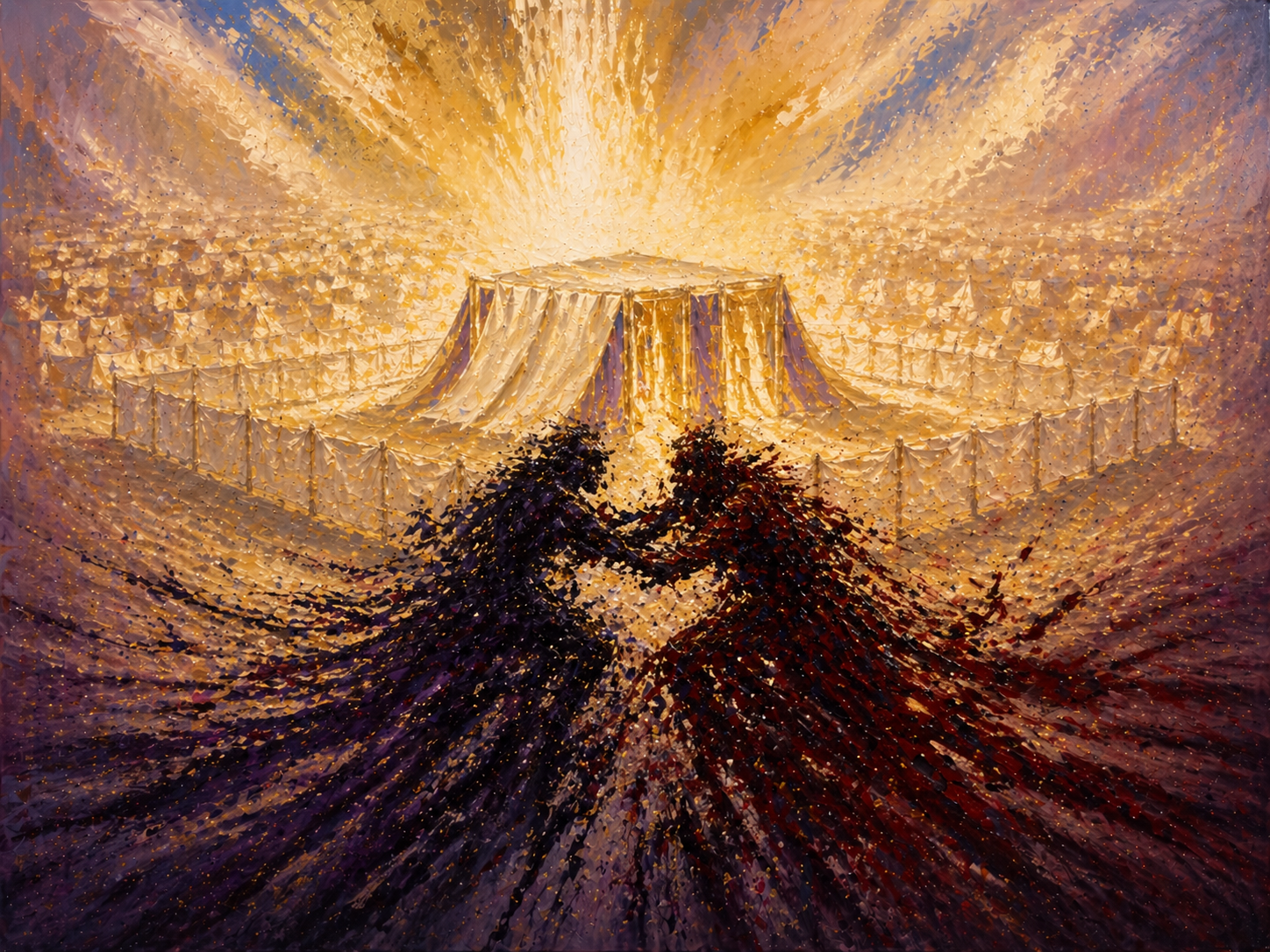
Who was fighting? It is not clear. No names are given. What were they fighting about? It is not clear. No reason is given. Why is this story told here? This is the most unclear of them all. All we know is that two Jews were fighting, one had mixed Jewish and Egyptian lineage, and one, by implication, did not. The former commits the unconscionable sin of “ברכת השם” – a euphemistic term used for levelling a curse at God’s name.
Rashi (ibid., 24:10) looks for hints that will shed some light on this murky episode. One of the explanations he quotes tells us of a disturbing backstory: The blasphemer was maternally descended from the tribe of Dan. His father was non-Jewish. He pitched his tent in the area of the Israelite camp assigned to the tribe of Dan. Another person from Dan told him that he could not pitch his tent there, as tribe membership followed paternal, and not maternal, descent. Their argument was brought to the court of Moshe, who ruled in favour of the paternal descendant of Dan. The blasphemer, enraged by the decision, cursed.
This is a terrible story. Almost everyone involved comes out badly. We can feel some sympathy towards the Jew who was descended from a Jewess and an Egyptian. Nobody chooses their parents. This, of course, does not justify his appalling reaction.
However, this backstory has a backstory of its own. Moshe had history with this man. The Torah details that the blasphemer’s father was Egyptian and his mother was Jewish. It does not say how this came about. The Midrash (Midrash Tanchuma, Parshat Emor 24) gives us the tragic details: During the Jews’ enslavement in Egypt, Jewish officers were appointed by their Egyptian taskmasters to oversee the slaves. One Egyptian taskmaster had an eye on the wife of one of the Jewish officers. One day, he dispatched him on a task so he could rape his wife. The Jew returned in time to find the Egyptian taskmaster leaving his house. The Egyptian, fearing that he had discovered the truth, beat him daily. It was on one of those days that Moshe, then a prince of Egypt, left Pharaoh’s palace and saw an Egyptian incessantly beating a Jew. It was this Egyptian whom Moshe killed when he famously saved a Jew from the blows of an Egyptian. Moshe had killed the rapist Egyptian father of the now-blasphemer.
Unfortunately, there is no rule which dictates that tragic stories have no tragic consequences, and this story shows us how tragic they can be. Yet, with such an intriguing and thick plot, our questions return even more forcefully: Why is none of this told in the Torah?
One principle can unravel this mystery: In the Torah, it is important to pay attention not only to the content of its stories, but also to how a story is told. The presentation of this story is no different. Placed deliberately in the middle of a book about holiness, it carries a clear and striking message: It doesn’t matter who was fighting; it doesn’t matter what they were fighting about. Two Jews had an ugly falling-out, and in the end, God’s name was desecrated. This is how the story will always be read. The names are not mentioned because they become irrelevant; the only identity that matters is their lineage: “ישראלי–Israelite.” The cause of the fight is not mentioned because the fight itself is the problem. Sefer Vayikra is an instruction book for a society aspiring to holiness. In a society aspiring to holiness, if two people fight, no matter how righteous the cause, or how indignant the parties are, a “חילול השם-a desecration of God’s name” will occur. It will always be read this way.
Jews were given the duty of being an “אור לגוים-a light to the nations”. By definition, there will always be a light shining on a torchbearer’s actions. It is an immense privilege and an immense responsibility.