
Influencers Are Qualified To Give Life Advice?
A strange shift has occurred in how young people determine who is “qualified” to give life advice.
Once, guidance came from parents, educators, clergy, therapists, or elders – people vetted by experience, training, or accountability. Today, a growing number of young adults turn instead to Influencers – people whose primary credential is visibility.
This is not just a cultural quirk. Digital platforms predictably exploit trust, authority, and emotional vulnerability, which can be psychologically harmful.
Parents and educators alike are confused by the premium placed on remarks by people that are clearly not qualified, have little life experience, and ironically are often the same age or at most a few years older than the followers and fans that look to these new pop culture icons as life gurus.
For those of us who work in the Influencer/Content ecosystem, and who have also taken the time to research this recent trend – together with leading thought leaders in the mental house space – it is clear that the cult-like following of some of the most popular Influencers can only be understood by appreciation the main psychological phenomena underlying this misplaced worship.
A generation of young people has been subtly, often unconsciously influenced, due to two major psychological effects and a range of secondary consequences. This is driven by social media addiction, which is intentionally fostered by algorithms that exploit typical age-related needs—such as the desire for acceptance—and an overly active amygdala.
I have summarized these phenomena below:
- The Two Primary Psychological Effects
- Parasocial Relationships
A Parasocial Relationship can best be defined as a one-sided emotional bond where an audience feels they know an Influencer personally, even though the influencer has zero reciprocal relationship.
Parasocial bonds activate the same attachment and trust pathways as real friendships. The brain processes the influencer less like “content” and more like “someone I know.” The result of the process is that when an influencer gives guidance, it does not land as an opinion, it lands as relational input and humans are wired to trust people they feel close to.
- Authority Bias
Authority bias is the brain’s tendency to assign greater accuracy and weight to the opinions of perceived authorities, even when that authority is irrelevant or unverified.
In simplistic terms, the fan/followers feel “I trust this person, therefore what they say must be right.” The operative word being ‘feel’ – In the ‘vibe generation’ there is no need to verify or do due diligence. There is no critical thinking. The pre-frontal cortex is not even consulted!
- The Secondary Psychological Effects
- The Halo Effect
If someone is attractive, wealthy, confident, or famous, people subconsciously assume they are also wise, ethical, or right. The Halo Effect is a cognitive bias where one positive trait contaminates how we judge unrelated traits. This is not theory; it is foundational psychology. Edward Thorndike identified it in 1920, and modern replications keep confirming the same thing.
- Social Proof Inflation
When popularity itself becomes evidence of truth. The circuitous logic sounds something like “If millions follow them, they must know something.” Social proof is the brain’s shortcut for uncertainty, but social proof was never meant to answer, “is this person qualified?” Its sole purpose was to address a single question: “am I alone?” Social media hijacks that heuristic and turns it into a counterfeit authority system.
- Epistemic Outsourcing
Gen Z is not lazy, they are overwhelmed. Perforce, they outsource thinking to Influencers and Algorithms. The problem is naturally that these sources are optimized for attention, not truth. Epistemic Outsourcing underscores one of the main ‘blind spots’ of Gen Z – facts do not matter when others are allowed to form beliefs for oneself.
(iv) Charismatic Legitimacy
If someone speaks with confidence, emotional intensity, and narrative clarity, followers grant them legitimacy because of who they seem to be, not because of what they know. Influencers gain authority not through credentials, but through perceived authenticity. Once again placing a premium of form over substance results in charisma replacing accountability.
- When the bubble bursts
The sad reality is because the trust is emotional and not rational, when the Influencer inevitably messes up or gets exposed or sells out, the fall out to the fans/followers – especially during their formative years – is not disappointment, it is betrayal.
That is why Gen Z cycles between: Obsession → Disillusionment → Cynicism → New obsession.
Rinse. Repeat.
- Influencers are not the main problem
On a deeper level, Influencers are not the main problem. Unexamined trust is. Sadly, pop culture has trained a generation to confuse visibility with wisdom; confuse confidence with competence and confuse relatability with reliability. That is not empowerment, that is vulnerability.
It is my submission that anyone who wants to be part of the solution rather than exacerbating the largest global pandemic in recent times, needs to have the courage and honesty to dispel the plethora of myths that caused Gen Z to mute their critical thinking and become zombies beholden to people that in most cases do not have greater life sagacity then their followers. They have simply mastered the algorithm and the art of virality. Neither of the latter two skills qualify a person to make claims that they can help millions to live healthier and happy lives.
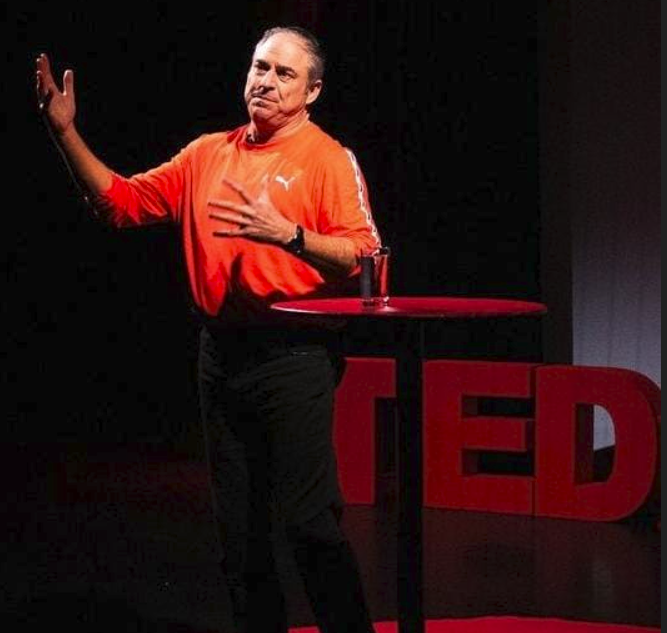
Antony Gordon is a Fulbright Scholar and graduate of Harvard Law School and Harvard Business School. Antony’s TEDx Talk has surpassed one million views and was recognized as one of the decade’s most influential TED Talks. He is a USA Today and Wall Street Journal Best Selling Author and the host of the critically acclaimed podcast, The Antony Gordon Show, one of the verticals in Lighthouse-Edutainment, a multi-media platform that he launched with the backing of The Yucaipa Companies after working as the Strategic Advisor for Jimmy Donaldson a/k/a MrBeast for several years.