Contributor
InshAllah Bangladesh: An Urgent Book Exploring South Asia
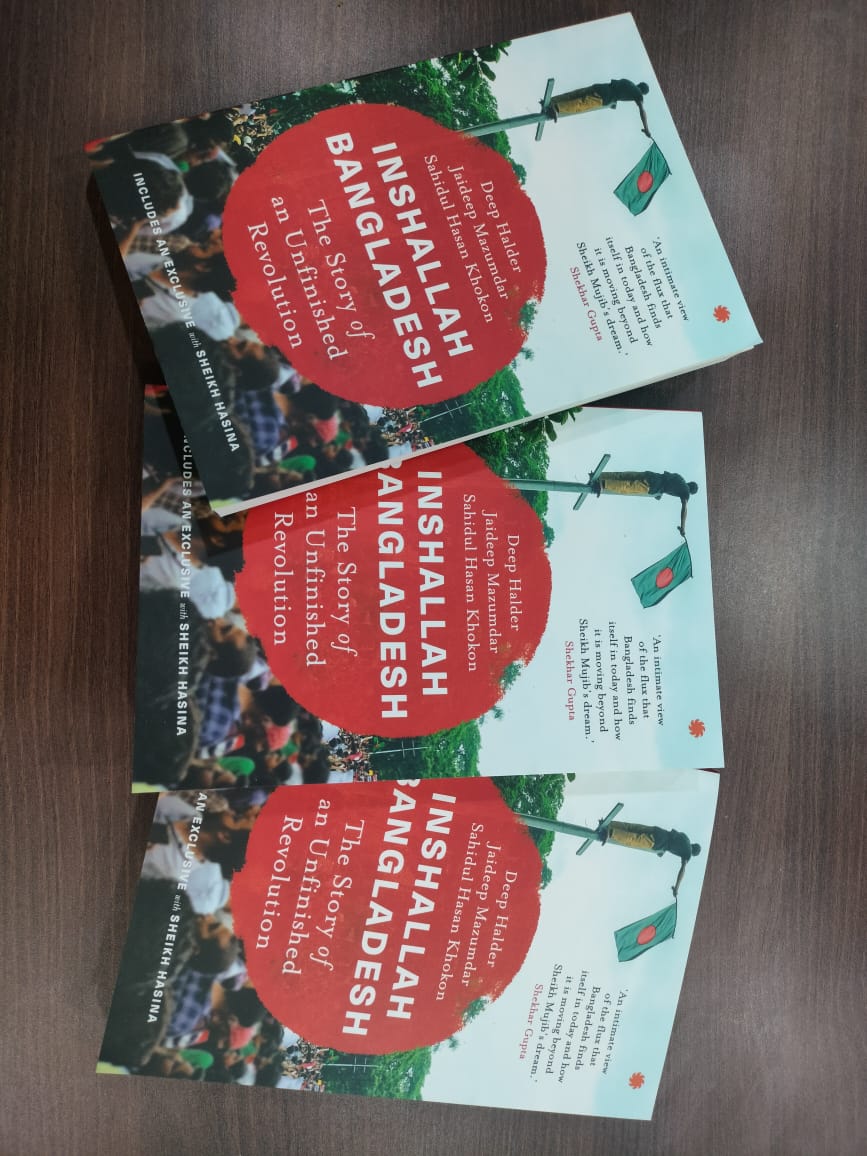
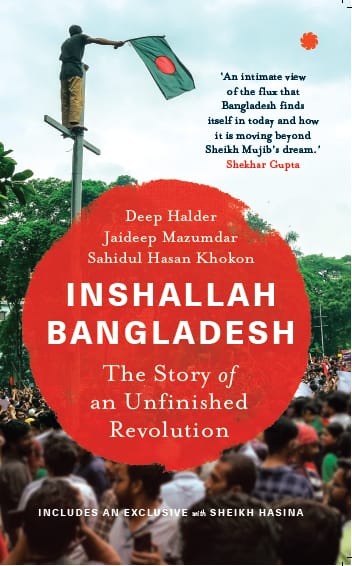
Dhaka, August 2024. Picture ambulances stacking up on the Dhaka-Mawa Expressway, student leaders with lathis (sticks) turning highways into their own checkpoints, and a journalist on the run—fake press card in his pocket, 25,000 taka shoved in his rucksack. That’s where Inshallah Bangladesh starts. Not with numbers or tidy explanations, but with the raw, metallic taste of survival. I led the research, watching Deep Halder, Jaideep Mazumdar, and Sahidul Hasan Khokon wrestle chaos onto the page. They didn’t just report the story—they dragged you into it. You’re choking on bidi (smoke), hearing the radical mob roar, seeing a country redraw itself after Sheikh Hasina’s helicopter flew out of Gonobhaban and out of sight.
July Revolution’s Reckoning
Forget the smooth timelines you see on cable news. This book doesn’t care about neatness. It cuts straight through the confusion after August 5, the way a field reporter jots down secrets no one else hears—unnamed majors whispering about betrayal in DGFI barracks, Awami League offices going up in flames while neighbours cheer from their balconies, Bangabandhu statues trashed at dawn and replaced with “Hazrat Adam AS” signs by night. Section I (Society) tears down the old stories: the Military General who ignored Hasina’s calls, Razakars crawling out of history’s basement, young Bangladeshis shouting “India go back” on TikTok, not in textbooks.
So what’s different here? The authors aren’t just observing—they’re inside the story. Sahidul Hasan Khokan’s preface isn’t some neat literary trick. His escape to Faridpur, hiding out over fish curry in a BNP leader’s house, is the real deal. That’s the axis the book spins on, swinging from power struggles (Section II: Hasina’s double game, the messiah Naquib Azad, India’s border headaches) to a society splintering in places no quota reform can patch.
When Hindus Stop Waiting for Secularism
Page 175 doesn’t just sting—it snaps. Two BBC reports, 24 years apart: in 2001, rumors of “Bangabhumi” camps along the border; in 2025, a rape video from Cumilla goes viral, used as a weapon, not just by Indian accounts but Bangladeshis too. This isn’t just outrage fodder. It’s cold numbers: Hindus dropped from 15% after 1971 to under 8% now. Land grabs, blasphemy arrests, 2,500 attacks in 330 days (thanks, Prothom Alo), and 2,010 more in just 17 days after Hasina’s fall.
Read ex-ambassador Mohammad Harun Al Rashid, writing from exile in Canada: “Secularism is a crime now. Media? Traumatized, self-censoring under Yunus’s jihadists.” Or Sumon Kumar Roy from the barely legal Bangladesh Sanatan Party: “Patience for what? My party’s blocked by radicals.” Every quote in the book ties back to transcripts. Every stat has an NGO or court file behind it. No activist filter—just voices piling up until “protection” turns into talk of “partition.”
And then there’s Chinmoy Krishna Das Brahmachari. ISKCON monk, now a jailed firebrand. Saffron flag over Chittagong, sedition at Dhaka airport, denied bail in a murder case. His warning—“Evict us, become Afghanistan”—echoes from local activists to Delhi’s policy crowd dreaming up “right of return” visas. Old ghosts are up again: Chittaranjan Sutar’s Bangabhumi, those six southwestern districts (Jessore to Patuakhali) as a Hindu refuge. Doesn’t sound so far-fetched when Yunus shovels dirt over 1971’s secular promise.
Mujib to Hasina
Sheikh Hasina’s Eid Al-Adha interview from exile—done on June 7, 2025, and unpacked in Chapter 7 (“Good Hasina, Bad Hasina”)—doesn’t hold back. She calls the July uprising nothing but a “terror attack disguised as students’ revolt,” says America pulled the strings through Yunus over St. Martin’s Island, insists she never resigned, and promises, “Inshallah,” she’ll come back to “save” Bangladesh from what she calls “imposters.” The book really leans into this split personality: there’s the “Apa” (elder sister) who welcomed journalists at Gonobhaban with big-sister warmth, fresh veggies, and ponds full of fish. But then there’s the other Hasina—the one who refused to step down, clung to power, and, in the eyes of her inner circle at Gonobhaban, ended up speeding her own downfall.
Then there’s Chapter 5 (“Mujib: The Man, the Myth”), which takes a sledgehammer to the founder’s spotless image. It traces Sheikh Mujibur Rahman’s journey from the hero of 1971 to the strongman of 1975, one-party BAKSAL rule, and what led to blowback. After Hasina, when people tore down his statues, it wasn’t just vandalism—it was a kind of patricide, a rejection of a myth. That rural dream he sold always hid a harsher urban reality. In a way, it’s the same story at Gonobhaban: what looks like a peaceful retreat, but behind the scenes, the grip stays iron-tight. Like father, like daughter.
Here’s why Hindu Homeland (Chapter 11) earns its spot on your shelf. It skips the sermon. Instead, it tallies the numbers—lives lost, flags raised, communities counted—and then throws out the one question everyone else in Dhaka tiptoes around: When Yunus buries the secular dream of 1971, does the idea of a “homeland” fade into the margins, or does it become a matter of survival? Nothing else in the book—forget the General Waker’s double-cross or Naquib Azad’s would-be saviour routine—hits with the same force. This is the pivot. Right here, Bangladesh stops being just “India’s headache” and turns into the subcontinent’s raw, exposed nerve.
Why Read This Now
Inshallah Bangladesh doesn’t pretend to tell the future. It’s a dispatch from a country where “anti-national” meant Awami League yesterday, Hindu families today, and secular bloggers tomorrow. Halder’s patient storytelling builds, then hits you hard. Khokan brings the fear; Mazumdar connects Dhaka to Delhi. I chased every fact—court documents, toll plaza photos, viral videos—so every word stands.
Don’t buy this book because Bangladesh is “India’s problem.” It’s the subcontinent’s mirror. Unfinished business from 1971, Islamism fighting with the old dream of a language nation, borders about to blow. With Yunus still holding on and Chittagong ports up for grabs in January 2026, this book gives you facts sharper than any slogan. Juggernaut’s 2025 edition isn’t just a book—it’s a warning. Read it. Do it before the next ambulance convoy leaves the Dhaka city.
(Written by Lead Researcher of the Book)
Related Topics
Related Posts