
A Jewish Lens on Statecraft and Strategy
Interim Evidence Is Not a Verdict, and the Jury Is Not In
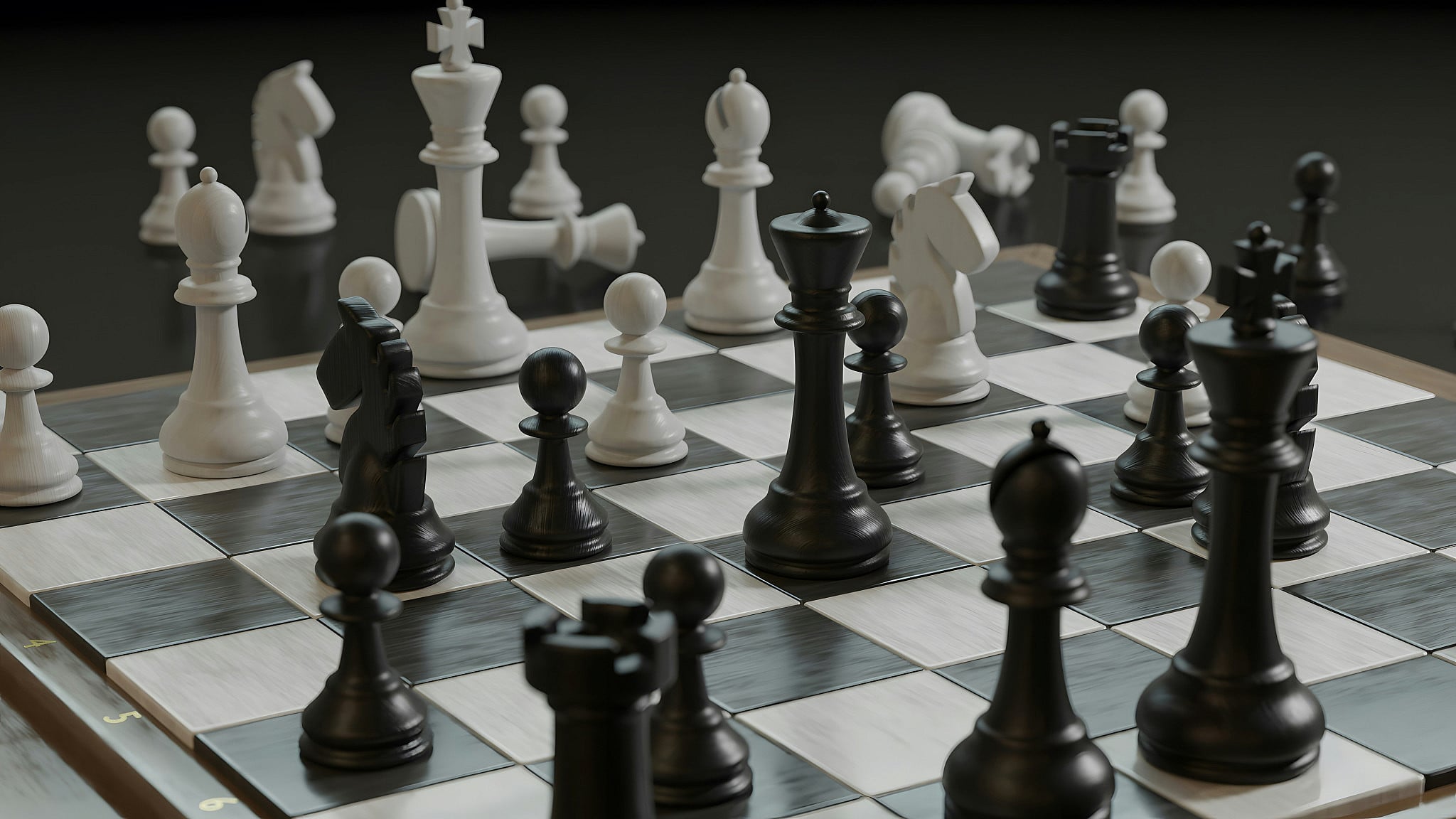
The game is still being played. One move may change the position, but it does not decide the game. (Unsplash)
In my last post, I argued that the war with Iran should not be measured against unattainable notions of total victory, but against the strategic realities that existed before October 7 and before the United States entered the conflict. By that measure, I concluded that Israel and the United States had improved their strategic position notwithstanding the uncertainties and imperfections of war. I reached that conclusion before the MOU or its terms were released.
Having now read the MOU, my earlier analysis seems harder to defend as to the United States. At a minimum, US deterrence has been damaged, and I am “out on a limb” in maintaining that the US did not suffer a substantial strategic defeat. The limb will break if the MOU’s terms become the final agreement and are fully implemented. But we are not there now and will likely never be.
On its face, the MOU is very favorable to Iran. It contemplates sweeping sanctions relief, the return of frozen Iranian assets, a massive reconstruction fund, Israeli withdrawal from southern Lebanon, and a reduced American regional presence. In return, Iran principally repeats its longstanding claim that it does not seek nuclear weapons – a claim it has made for years while doing the exact opposite. This gross imbalance – the appearance of almost a complete US surrender – is the elephant in the room of my prior argument. But it is not the whole story.
The real question is not whether the reported MOU favors Iran. It plainly does. The question is whether it is proper to treat an interim diplomatic framework as the final verdict on the war’s outcome. While still out on a limb, I maintain that the outcome is not US surrender.
I hasten to add that Israel’s gains remain intact: it is strategically much stronger than before October 7 and has achieved regional dominance. It also now knows it cannot rely on the US and must become much more militarily independent. Better to know and act now than suffer later. This may be the most important “silver lining” of what now seems a diplomatic disaster.
But drafting an MOU is easy. The hard part is negotiating and implementing a final agreement. Iran never complied with the JCPOA, and Trump cannot afford to sign a final deal that is effectively the JCPOA, or worse. Trump spent his entire campaign and much of his presidency ridiculing that deal. Neither he nor the Republicans can afford to expose themselves to the scorn of a new agreement that is substantially the same or worse than the JCPOA. I maintain a final agreement will not be signed or, if it is, it will be DOA – one that will fail implementation.
This is primarily because the MOU assumes cooperation from several sovereign governments that neither Trump nor the mullahs control – Israel and the Gulf states, all but one of whom (Qatar, which plays both sides) have substantial objections to the MOU, even if they are reticent to say so. Why incur Trump’s wrath now if the deal is DOA at the end of the day?
The Lebanon provision illustrates the problem immediately. If Israeli withdrawal from southern Lebanon is one of the operative requirements of the reported MOU, that provision cannot be implemented by Washington and Tehran alone. It depends upon Israel. Israel has repeatedly said it will not withdraw merely because an agreement to which it is not a party requires it. Since October 7, its security doctrine has changed in fundamental ways. Israel has made clear that Hezbollah will not be allowed to reestablish itself along Israel’s northern border and that any withdrawal must be accompanied by security arrangements sufficient to prevent that from happening. Such an arrangement, such as with the Lebanese army if it is at all possible, is at best years away and will require substantial US funding of the Lebanese army and very gradual testing in the field.
Whether one agrees with Israel’s position is beside the point. Israel is a sovereign state with its own interests. If it refuses to carry out that part of the deal, a document cannot do so on its own. Iran is unlikely to sign or perform an agreement if its first condition is not possible. If the White House’s description is accurate, Iran gets nothing if it fails to perform. Iran’s interim freedom to sell oil on the open market for US dollars is disturbing but temporary. It is an unfortunate cost for lower gas prices now. Iran’s assets, valued at over $50 billion, remain frozen.
The same problem of a deal hinging on a third party exists elsewhere. If reconstruction funding depends upon the Gulf states, then Saudi Arabia, the UAE, Bahrain, Kuwait, and others are not bystanders. They also have their own strategic interests, their own domestic politics, and their own reasons to be skeptical of an arrangement that may strengthen Iran without improving regional security via verifiable Iranian concessions. Recent reports suggest precisely that skepticism. If those states don’t believe the deal serves their interests, their cooperation will not be forthcoming. The same outcome with Iran emerges: if it does not get what it bargains for, it will not perform, and presumably it gets nothing. And this assumes a final agreement is signed.
It is difficult to imagine either the US or Iran signing an agreement they know they cannot perform, one where essential US allies have refused to cooperate in advance. It is even more difficult to imagine such an agreement being implemented: if either side breaches, the deal fails.
Much of the present debate focuses on what the MOU says. Far less attention is being paid to whether it can be implemented and whether the preconditions for that – US ally agreement – can be met. These are different equations. A framework whose most critical provisions to Iran depend on the cooperation of multiple sovereign actors should not be mistaken for a completed strategic reality simply because two governments have signed a piece of paper.
If President Trump intended from the outset to accept sweeping sanctions relief, restore frozen assets, reduce the US military presence, and obtain little more than Iran’s “promise” that it will not build nuclear weapons, one must wonder why he struck Iran’s nuclear infrastructure in the first place. There is an argument that he had to carry out his pre-war threat and/or that he thought victory would be easy. But serious analysts should hesitate before concluding that the MOU represents the administration’s desired end state, or that the end state is even possible.
No one but Trump knows why he signed such an imbalanced MOU. But several explanations are plausible without concluding the deal is set in stone. He may have wanted to reopen the Strait of Hormuz and stabilize energy markets. He may have been testing Iran’s willingness to commit major concessions to writing. He may have preferred extended diplomacy to renewed war, at least for the moment and perhaps until after the midterm elections. Or he may simply have concluded that ending hostilities now was preferable to continuing them, even if no final agreement is ever reached. I don’t know, and neither does anyone else. The jury is still out, though I do think US deterrence has decidedly been damaged.
For my part, I maintain severe skepticism that a final agreement will ever be signed or fully implemented. But today, Israel remains in southern Lebanon. Hezbollah has not regained its prewar position but rather has been decimated. Iran’s military and nuclear infrastructure have suffered substantial damage. Israel retains unprecedented operational freedom in much of the region. The Strait of Hormuz is open, and the Gulf states are shipping oil again. The US retains overwhelming military capability to degrade Iran again if necessary, even if its deterrent credibility has been damaged. But the reported MOU remains an interim framework whose most important provisions depend on implementation by independent actors who have not shown they are willing to do so.
That is why I still believe that reports of American, and certainly Israeli, defeat remain exaggerated. The MOU may yet become the basis for a disturbingly one-sided final agreement. It may ultimately vindicate those who now proclaim US surrender. But we are not there yet. Interim evidence is not a verdict. The jury is not in. The final chapter has yet to be told.
Related Topics