Iran Is Weaker. The Houthis Are Not.
Two decades of reshaping religious authority, tribal power and mass mobilization carried the Houthis to the Red Sea. Holding what they have gained — and eventually passing it on — is a different task.
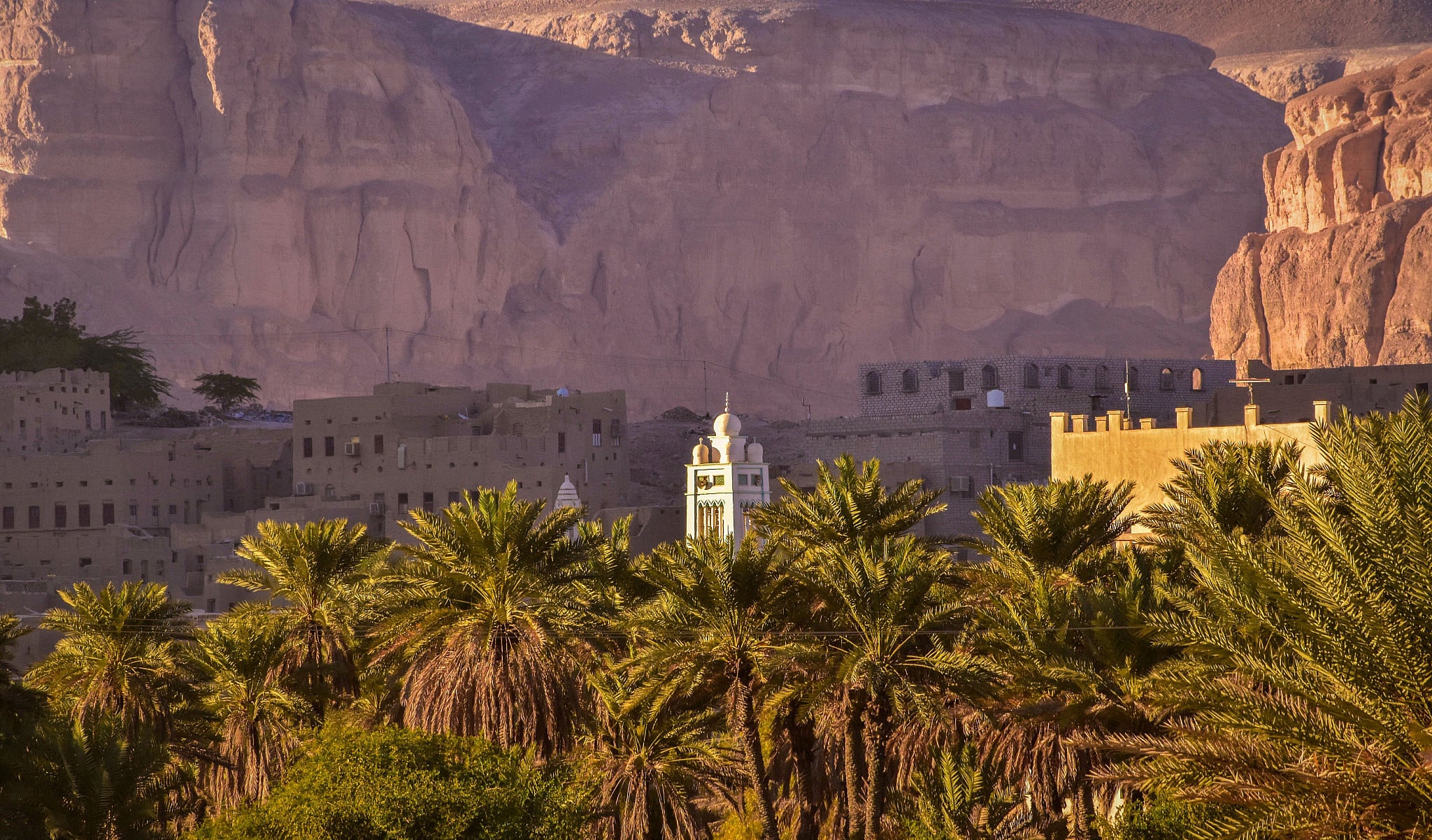
The Houthis began in the mountains of Saada, a landscape whose isolation had sustained Zaydi political autonomy for centuries. Their advance toward Bab el-Mandeb therefore marks something more consequential than another shift on Yemen’s endlessly changing military map. A movement born in geography that protected it from the outside world has reached geography that gives it leverage over that world.
Iran played an indispensable role in this transformation, supplying weapons, technology, training and strategic support. But Bab el-Mandeb has always been there. What has changed is the Houthis themselves: a local Zaydi revivalist movement has acquired the military capacity, administrative machinery and political endurance to turn Yemen’s geography into strategic power of its own.
At one of the weakest moments in the Islamic Republic’s history, the movement it helped build is expanding its territorial reach, threatening Saudi Arabia and acquiring greater leverage over a global maritime artery. Iran once exported power to the Houthis. The more interesting question in 2026 is how much power the Houthis can now export back.
The roots of Houthi power long predate its alliance with Iran. For almost a millennium, much of Yemen’s northern highlands was ruled by Zaydi imams. Unlike Twelver Shiism, Zaydism has no Hidden Imam whose return as the Mahdi must be awaited: legitimate religious and temporal authority could be claimed by a living descendant of Ali and Fatima who possessed the requisite learning and demonstrated his capacity to lead — including by rising against an unjust ruler. An imam was neither infallible nor necessarily hereditary, and could himself be challenged.
The Houthis retained this intensely political understanding of religion while quietly rewriting its rules. Abdul-Malik never assumed the imamate. Instead, Houthi theology elevated the concept of ʿalam al-huda, the “Guiding Sign”: a descendant of the Prophet presented as divinely guided and, crucially, owed a degree of obedience that the contestable Zaydi imam never enjoyed. It is less a restoration of the old imamate than an attempt to extract its sacred legitimacy while eliminating one of its chronic vulnerabilities — competition for the right to rule. While Iran’s revolution used velayat-e faqih to allow a jurist to exercise authority during the Hidden Imam’s absence, the Houthis developed their own theological solution from Yemeni material.
The military expression of this political order had been taking shape for years. In 2022, researchers at West Point’s Combating Terrorism Center estimated that the Houthis’ General Mobilization Authority had recruited some 130,000 men; this June, Sheba Intelligence reported an explicit plan to recruit up to another 100,000 through district officials and tribal mobilization. Those networks were not simply inherited: the Houthis had spent a decade systematically reducing the autonomy of northern tribal power — exploiting divisions within the great Hashid and Bakil confederations during their advance on Sana’a and, in 2014, neutralizing much of Hashid’s Bani Suraim through the so-called Black Line Agreement, which opened the route through Khamer — before subordinating traditional sheikhs to Houthi-appointed mushrifeen while retaining tribal structures as instruments of recruitment. By 2024, neighborhood aqils and tribal sheikhs were running ten-to-thirteen-day military courses whose graduates could return home as part of a dispersed reserve rather than remain permanently assembled.
By September, Reuters was reporting that the Houthis had assembled roughly 100,000 fighters. The evidence had been there; whether it was misread or simply offered no obvious point at which the build-up could realistically have been stopped is another question. The Houthis had done to the tribes what they had done to the Zaydi imamate: preserved a useful political institution while removing much of its capacity to challenge the center.
The army reached Mocha in days, but the Houthi state cannot acquire a decade of political penetration at the same speed. The Tihama coast is not an extension of the Zaydi highlands: its predominantly Sunni population, commercial networks and long history of uneasy relations with mountain rulers present a different political environment from the one in which Houthi power was built. Mocha therefore tests whether the political technology developed in Saada can function on social terrain that did not produce it.
The geography imposes a different constraint. The system that could return trained recruits to their villages cannot disperse Mocha, a coastal supply road or an island in the middle of Bab el-Mandeb. From positions around Mocha, less than 80 kilometers north of the strait, the Houthis can threaten vessels with a wider and cheaper range of weapons than they could from their northern strongholds. Mayyun is more valuable still — but only if men, weapons and supplies can reach it reliably from the mainland. Already, counterattacks have targeted Houthi positions around Mocha, while the supply corridor through Dhubab has become critical to sustaining positions farther south.
Territorial control therefore creates things that have to remain findable: routes, garrisons, administrators and revenue systems. It is tempting to read that shift as an opening — finally, something fixed enough to strike decisively. But the Islamic State lost its territorial caliphate and Sri Lanka destroyed the Tamil Tigers through campaigns that ultimately occupied the ground on which those organizations depended and severed the networks sustaining them. Neither has been attempted against the Houthis on anything approaching that scale, for reasons Yemen’s terrain made plain to Nasser long before it made them plain to Riyadh. Severing Iranian supply would address a different problem: Tehran remains important to advanced Houthi capabilities, but it did not build the tribal, recruitment and administrative networks through which the movement rules.
The Houthis have survived the destruction of things that once appeared indispensable to them before. Hussein al-Houthi was killed in 2004; his death produced a martyr, while the movement that survived him eventually produced a state. The Saudi intervention halted the Houthis’ first drive south in 2015, but the years of war that followed also gave them the environment in which to build the military and administrative machinery they possess today. More recently, Israeli strikes have demonstrated that senior officials and formal institutions can be reached. The organization beneath them has remained.
Succession may show whether the same capacity extends to the movement’s highest authority. After Hussein’s death, the religious standing of his father Badreddine helped secure Abdul-Malik’s eventual ascendancy. This time, the preparation may be occurring before the vacancy: reports that Abdul-Malik favors his 28-year-old son Jibril have resurfaced this September, a decade after Jibril was first named as a prospective heir. The claims remain unverified. But what is being inherited has changed more radically than the method of inheritance. Hussein left behind a rebellion rooted in Saada. Abdul-Malik’s successor would inherit Sana’a, a mass mobilization system, a governing apparatus, a Red Sea coastline and positions overlooking one of the world’s principal maritime chokepoints. The first Houthi succession inherited a rebellion. The next will have to reproduce a state.