International Holocaust Remembrance Day– Part II
Continuation of Part I of the Letter to Tova Friedman
Returning to the Holocaust survivor I met at the Museum of Tolerance, whom I mentioned in my previous post, I asked him whether he thought all Germans were evil. He replied, “If you were evil, you would not be here on a Sunday afternoon when the sun is shining bright.”
I also remember meeting the painter and Holocaust survivor Kalmon Aron at the American Jewish University in Los Angeles in 2001, on my way to the Gindi Auditorium to meet Perla Karney, who is now Artistic Director at the Dortort Center for Creativity in the Arts at Hillel at UCLA. She introduced me to composer William Goldstein, which led to my television interviews with Kalmon Aron and William Goldstein, as well as with Susanne M. Reyto in 2004, on a program I called Metamorphosis.
For the stage decoration, I chose sunflowers inspired by Simon Wiesenthal’s The Sunflower, in which he recounts being confronted by a dying German soldier who admitted to horrific crimes against Jews and begged for forgiveness. Wiesenthal refused and later invited prominent thinkers, writers, and religious figures to reflect on whether forgiveness would have been possible or appropriate. The sunflowers in the studio were therefore symbolic. The introductory music, Transfigured Night by Arnold Schoenberg, was also chosen with intention.
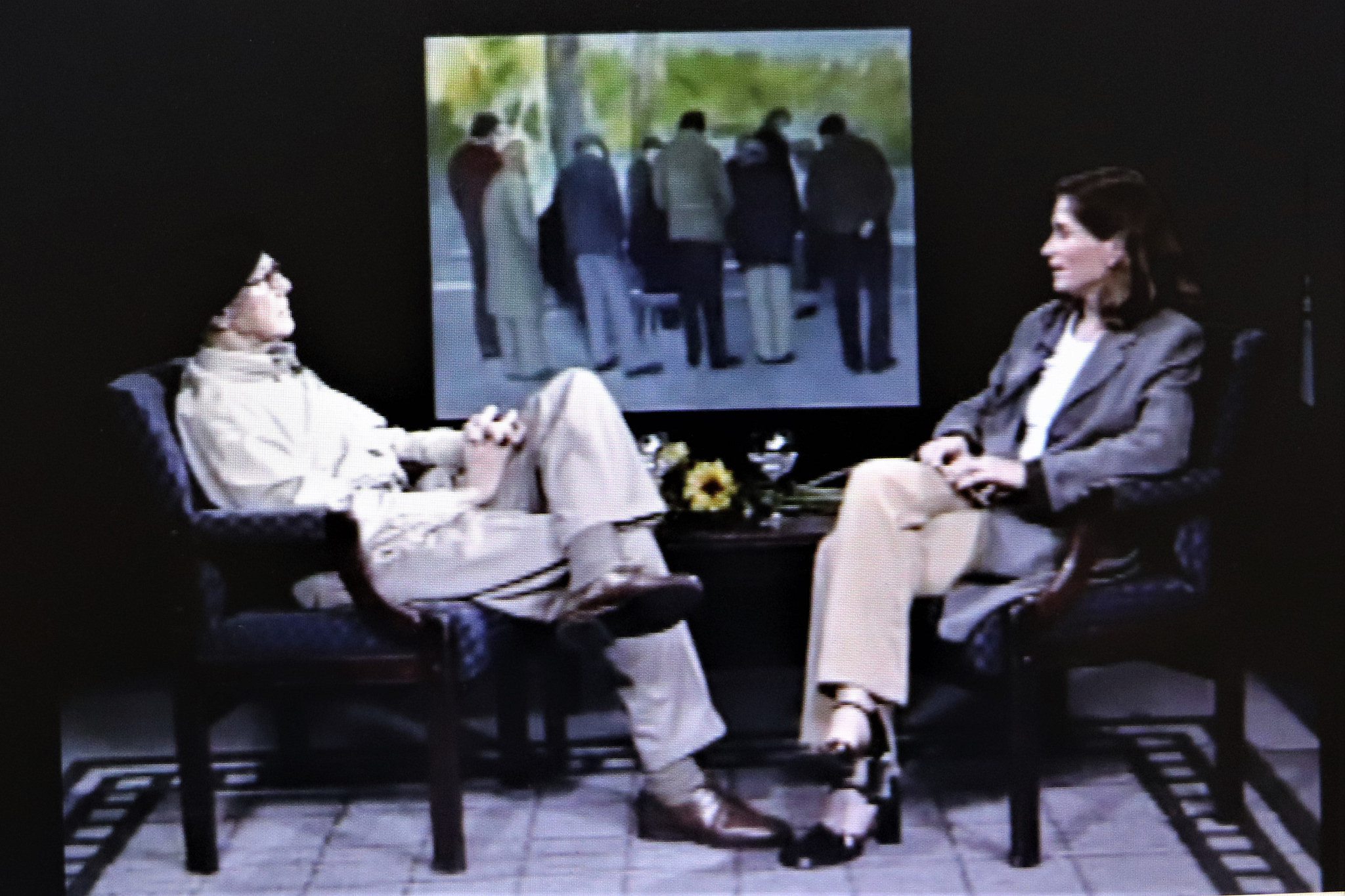
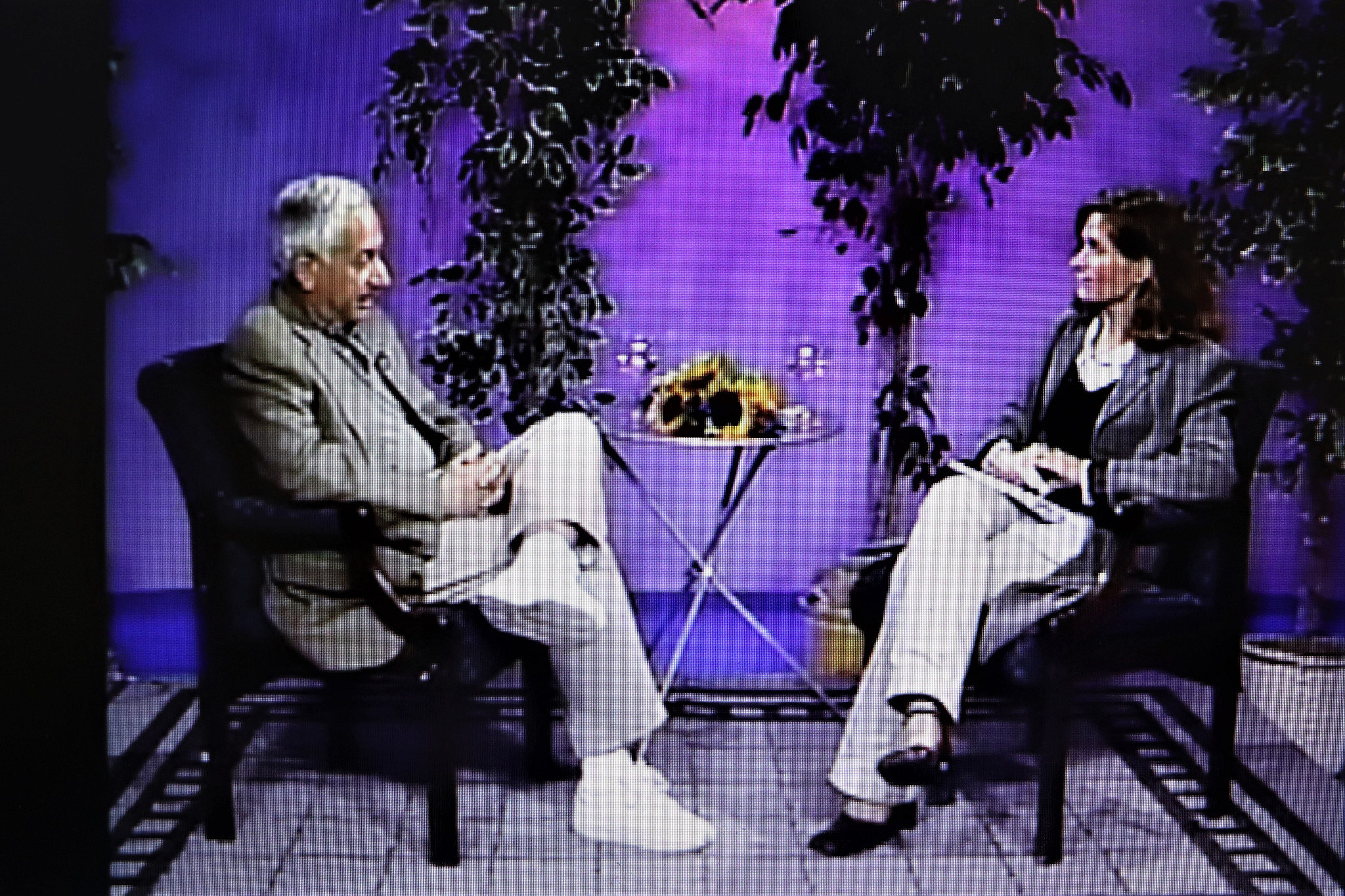
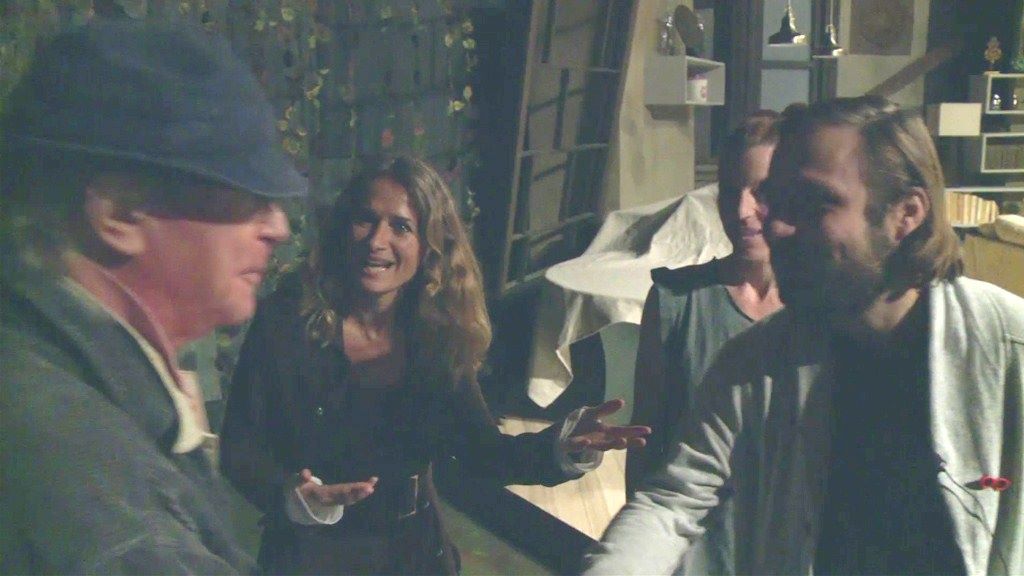
During the interview, I asked Kalmon Aron whether he had felt hatred toward Germans. He answered, “Yes, at first I did.” The interview had to be conducted twice because the first session was interrupted by heavy rain that caused part of the ceiling of the public access television studio on Nebraska Avenue in Santa Monica to collapse. We had to remove his paintings quickly and place them back into his car, and we redid the entire interview a week later. At the end of the second session, he unexpectedly handed me five hundred dollars. I had not asked for it and did not expect it. He simply said, “You worked so hard.”
Through your speech, Ms. Friedman, we were reminded once again of the brutal conditions at Auschwitz-Birkenau, including the entrapment created by the fences, the constant anxiety caused by guards and their dogs, and the forced acceleration of childhood through systematic dehumanization. You described learning that from one day to the next, you were no longer Tova but the number 27633, and that you acquired an adult vocabulary far too early. When others had not yet entered school, you already knew words such as selection and child selection.
I remember your descriptions of hunger and thirst, the unbearable smell, and the dark, depressing barracks with their uncomfortable bunk beds. I also remember the small moments of joy you described, such as seeing a bit of sunshine under distressing circumstances. You shared the lesson your mother taught you, not to cry, because crying would be perceived as weakness. You explained that during the Nazi era, weakness, whether physical or mental, was often a death sentence.
I remember your account of the separation of your family members, including the moment you saw your father cry as he said goodbye to his parents, knowing he would most likely never see them again. You said that you lost one hundred and fifty members of your family in the Holocaust. You also spoke about your mother’s early death at the age of forty-five, only a few years after liberation, as a consequence of her lasting emotional pain. All of this is deeply tragic and should never have happened.
I remember your lifelong dream of visiting Israel, which you realized at the age of eighteen. As you said, it was not simply a place on a map, but the heart of a three-thousand-year-old history shaped by faith, longing, loss, and return. For you, Israel symbolized hope.
I also remember your reflections on the present-day situation of your grandchildren and of other young people who now face the risk of being attacked or discriminated against if they disclose their Jewish identity or speak positively about Israel and Jewish culture. You described the difficult dilemma they face, whether to hide their identity to stay safe and protect their academic or professional future, or to choose honesty and visibility while accepting the potential consequences.
This made me think of the couple in Washington, D.C., last year, two young Israeli Embassy staff members who were killed in a shooting outside the Jewish Museum. They were about to become engaged and had been attending a reception hosted by the American Jewish Committee. It also made me think of October 7, 2023, at the Nova music festival, where approximately twelve hundred people were brutally murdered and others taken hostage, some of whom did not survive, including Hersh Goldberg-Polin, shortly before he was supposed to be reunited with his parents.
I therefore see a long history of attacks against Jewish people across centuries. In the thirteenth century, Jews were expelled from England and targeted in parts of Germany and France. During the Black Death in the fourteenth century, Jews were falsely accused of causing the plague and were massacred. In Spain and Portugal, violent pogroms and forced conversions shaped Jewish life, culminating in the expulsions of the fifteenth century. A striking example from the nineteenth century is the Dreyfus Affair in France, in which the Jewish army officer Alfred Dreyfus was falsely accused of treason. These events demonstrate that antisemitism was not confined to one place or period, but has been a recurring threat throughout history.
I also recall seeing the memorial plaque of the German Jewish journalist Theodor Wolff in Nice, in what had once been the unoccupied zone. I temporarily lived near the area of the former Jewish ghetto, located on what is now called Rue Benoît Bunico in the old town. From there, one can still sense how Jewish residents were historically confined to a small quarter, restricted in their movement from one street to another, and at times forced to use underground tunnels to reach other streets, courtyards, or essential community spaces.
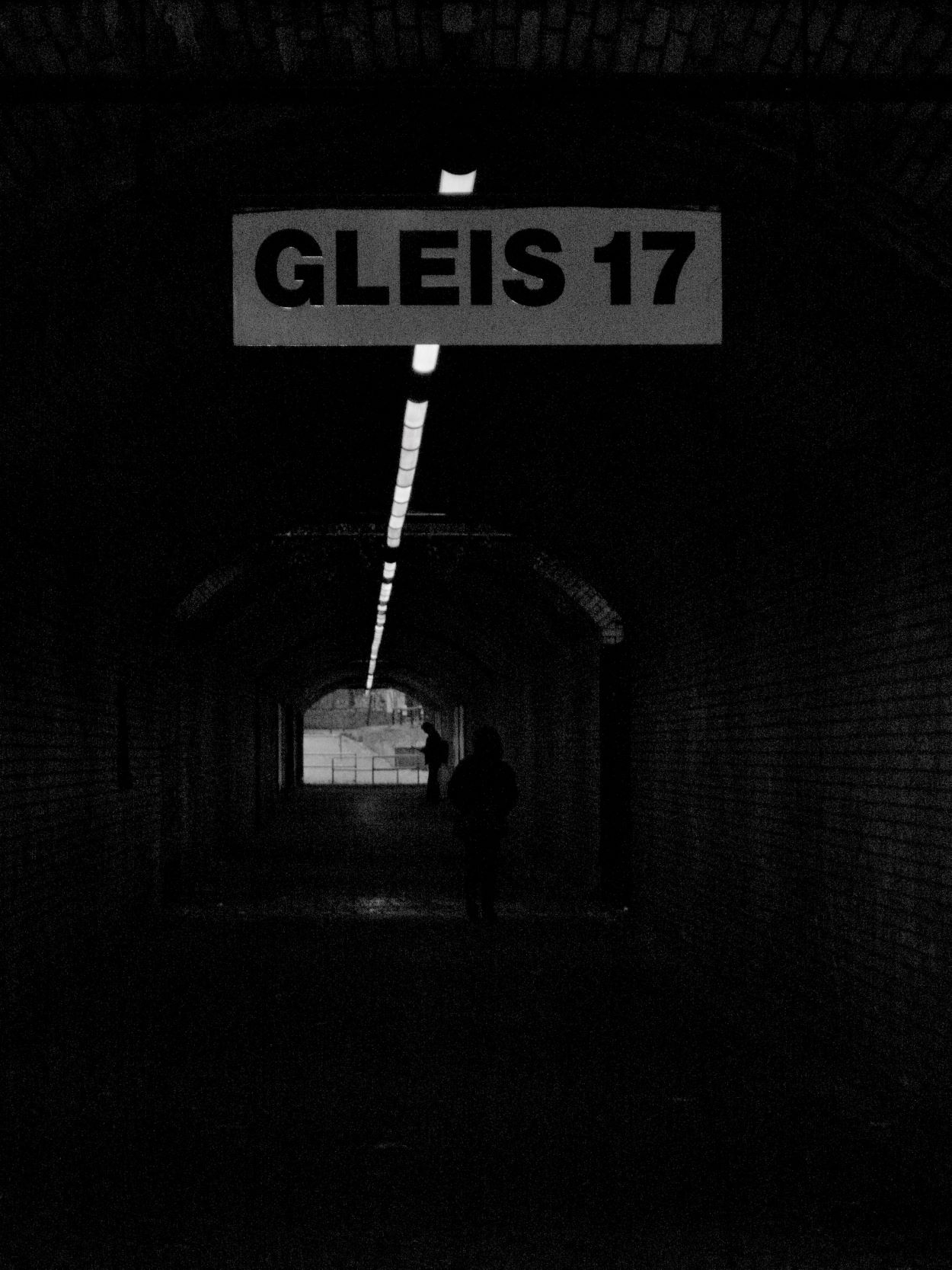
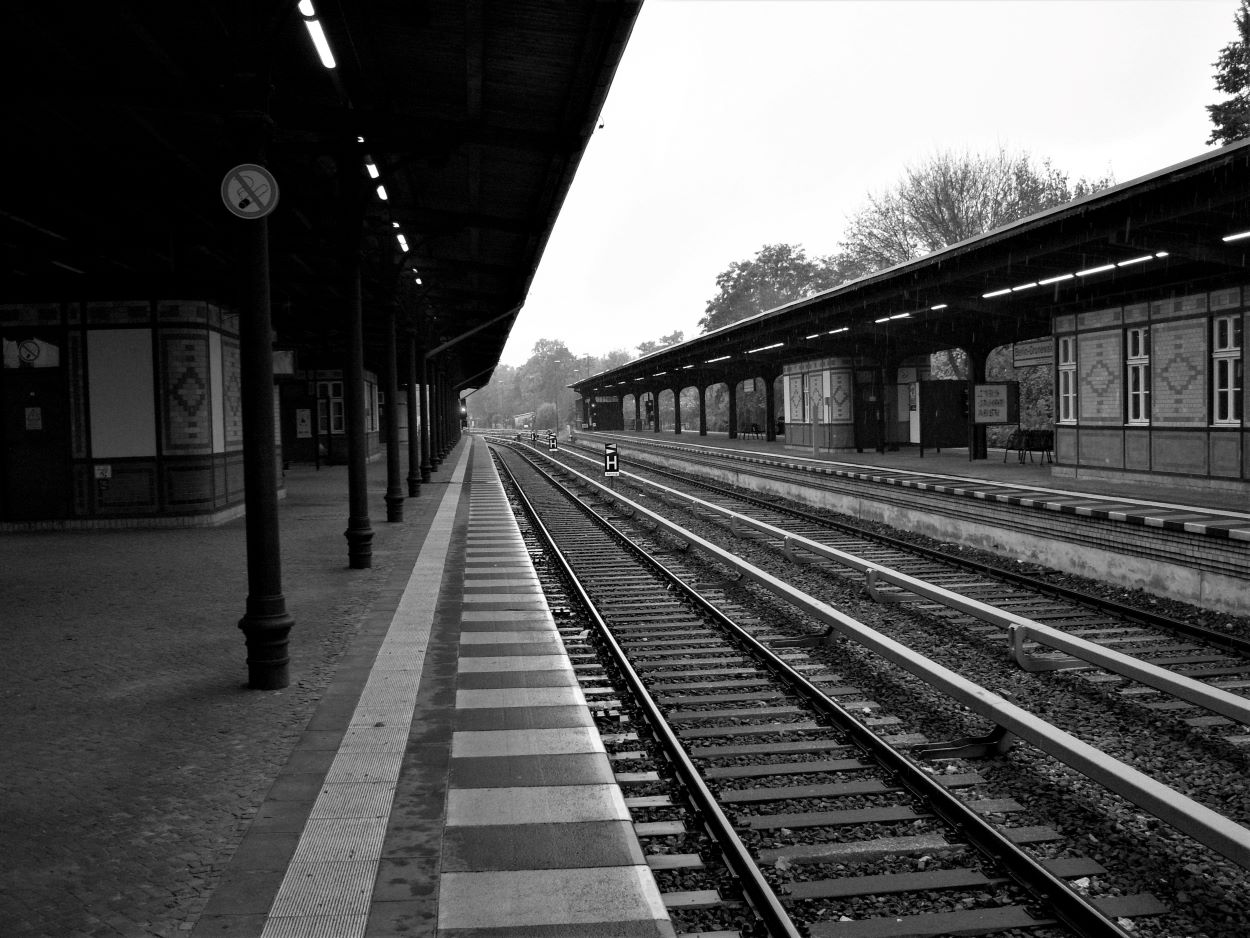
I visited the Jewish cemetery in Nice several times. I have been to Track Seventeen in Berlin, from where thousands of Jews were deported to Auschwitz. I once took a group of Americans to Berlin’s Jewish Museum and later visited it again myself. I have been to other memorial sites, including the Los Angeles Holocaust Museum, the Skirball Cultural Center, Drancy, which served as a transit camp where tens of thousands of Jewish men, women, and children were held under harsh conditions before being deported mostly to Auschwitz and other extermination camps, as well as the Shoah Memorial in Paris and Rue des Rosiers. I visited these places not out of obligation, but out of a desire to understand the depth of the history and the despair it contains.
For these reasons, I fully understand the need of Jewish people to live free from attacks, false accusations, and harassment, and the desire to prevent anything like the Holocaust from ever happening again. I fully support Israel’s right to exist as a Jewish state.
You emphasized the importance of making your testimony widely accessible, including through platforms such as TikTok, especially in light of the rise in antisemitism. You also reflected on how difficult it is to know what advice to give young listeners today. I share your concern. Please allow me to describe a recent experience.
After I published an article about the art exhibition “Art and Epilepsy: Conquer Your Own Rhythm” on my Times of Israel blog, a former American colleague now living in Asia publicly commented on my Facebook post. He wrote that he was horrified that I would allow myself to be promoted by Israel, calling it a “kiss of death”, and claimed that Israel was committing genocide with Trump behind it. And then, in his own words, he said, “And now the Jews want to be nice.”
My article was not about Gaza and had nothing to do with it. I felt that by making this public claim, my former colleague sought to diminish not only me, but also Ted Meyer and Pamela Schoenberg, who curated the “Art and Epilepsy” exhibition and is the wife of Randol Schoenberg, the grandson of composer Arnold Schoenberg. Arnold Schoenberg, known for developing the twelve-tone technique, emigrated in 1933 because the Nazi regime classified his music as degenerate.
At first, I spent hours drafting and revising responses. I reminded him of my first article in the Times of Israel, in which I wrote about peace as something that begins with inner calm and extends outward. I explained that my work promotes nonviolence, dialogue, and the sharing of perspectives.
A few months ago, I decided not to comment on Gaza any longer, since I am not a Gaza expert or a political journalist. I also decided not to look at images of violence anymore, as I had reached my limit of exposure to aggression. I now rather focus my attention again on leaders such as Nelson Mandela, who said, “If you want peace, you must work for justice,” and the Dalai Lama, who said that world peace must develop from inner peace and that peace is not merely the absence of violence, but the manifestation of human compassion.
In recent years, it has become increasingly important for me to seek justice for my brother and my mother, guided by what I learned through my self-study of the history of Nazi Germany. When I was a student at the John F. Kennedy Institute at the Free University in Berlin, I studied the representation of the Holocaust in American film and the early American Jewish novel, but no course was offered on Aktion T4, nor had this program been discussed during my years at various Gymnasiums in Ludwigsburg. This new interest had nothing to do with denying the Holocaust or diminishing the suffering of Jewish families. I wanted to make sense of my experience in Germany. My motivation was understanding and remembrance, not antisemitism.
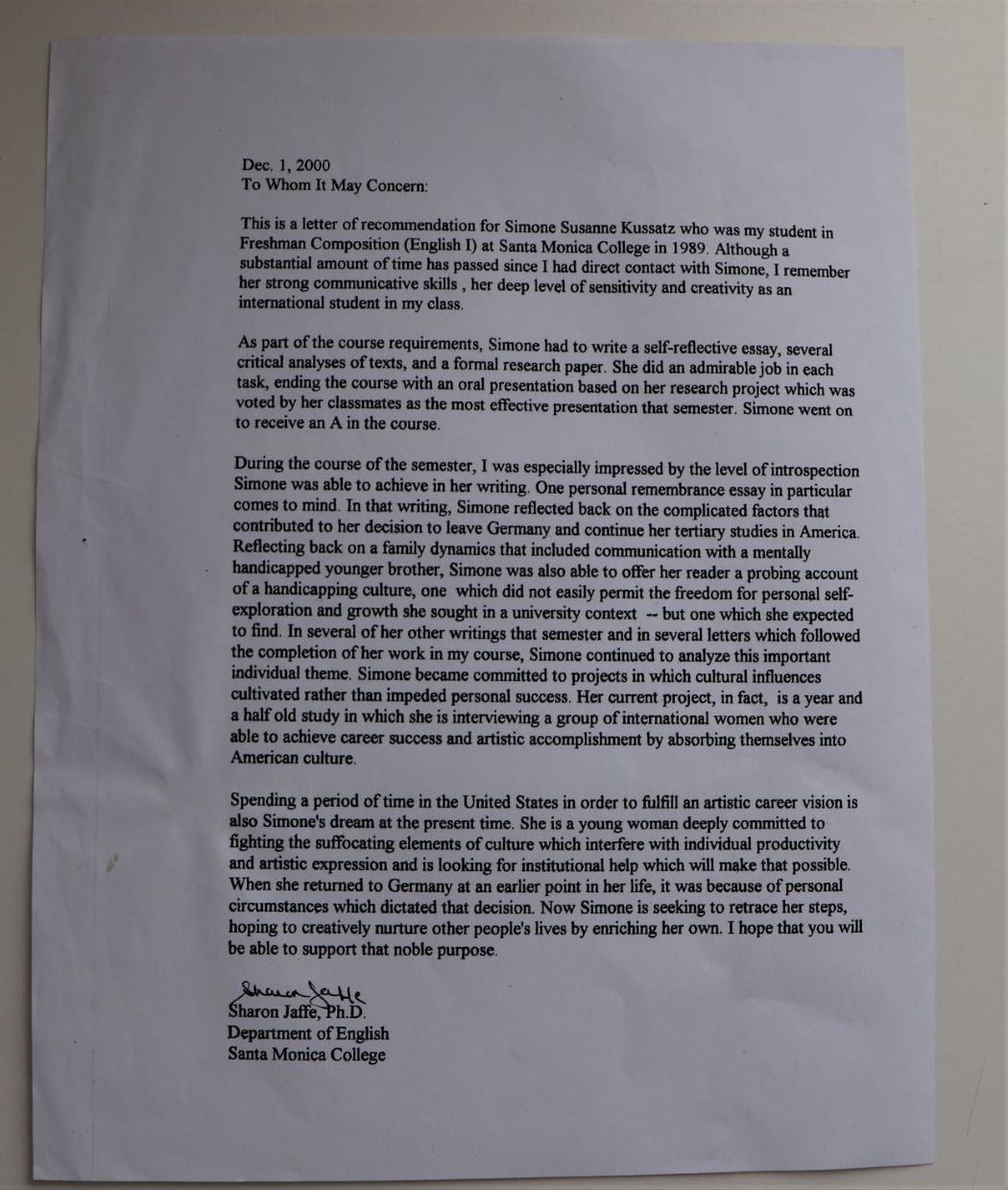
During my first longer stay in Los Angeles, I had the formative experience of writing about my interactions with my brother, who had a severe intellectual disability and epilepsy, in an English composition class taught by Sharon Jaffe at Santa Monica College in the late 1980s. This later developed into a research paper on epilepsy and an admission essay for UCLA. In German schools at that time, personal experience could not serve as the basis for academic inquiry. In the United States, by contrast, personal experience could become the driving force that leads to expertise.
During my second extended stay in Los Angeles, I noticed that people with disabilities were far more visibly integrated into public life. I remember a UCLA student moving confidently across campus in her wheelchair and attending lectures. She had a motor impairment. I had not observed this level of inclusion at the Free University in Berlin, where I graduated in 1999. However, this may have changed since then. I also had not seen public buses in Ludwigsburg or Berlin at that time that allowed people in wheelchairs to board.
In Los Angeles, boarding a wheelchair on a bus required that people with physical disabilities be given priority. Others waited patiently while the bus driver acted with care and compassion, ensuring that the person using the wheelchair was safely secured. These moments reinforced for me that remembrance is not only about honoring the past, but about how dignity, vulnerability, and human worth are upheld in the present.
This letter continues in my next post.
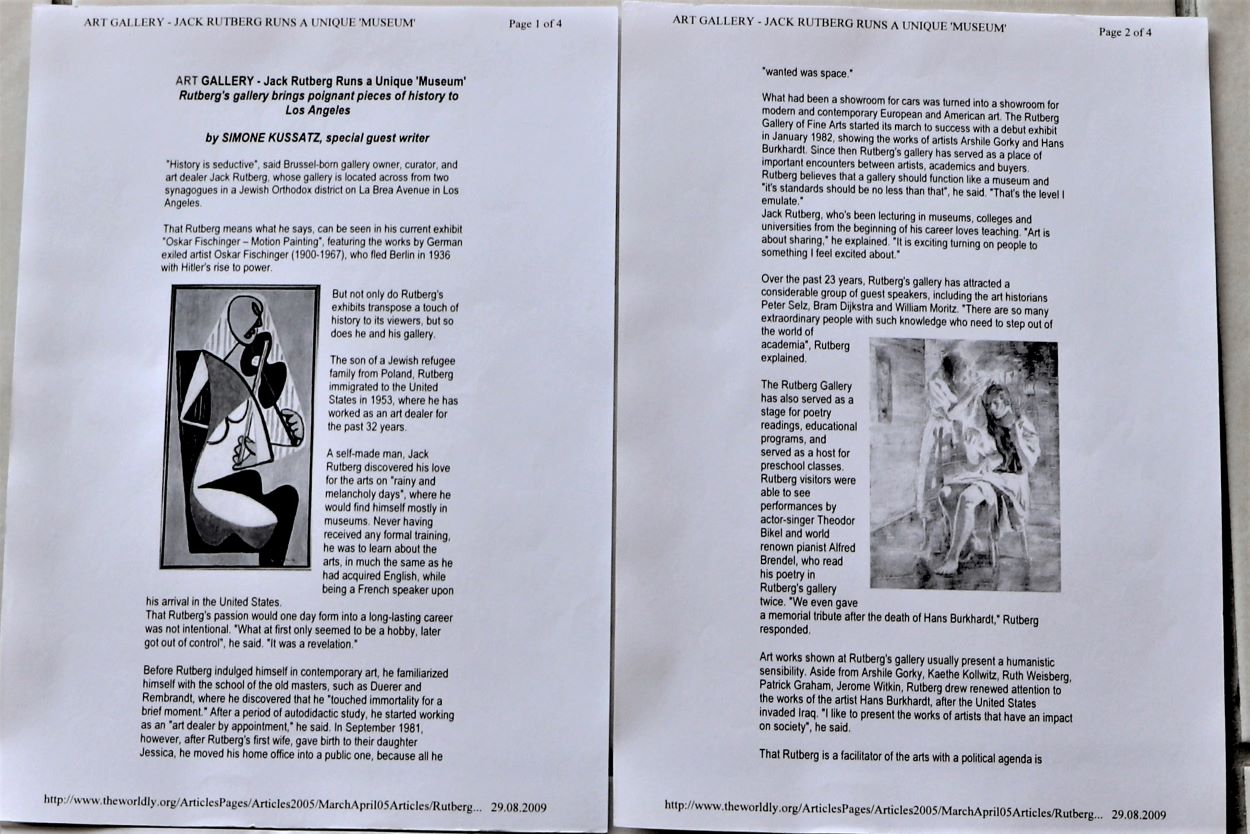
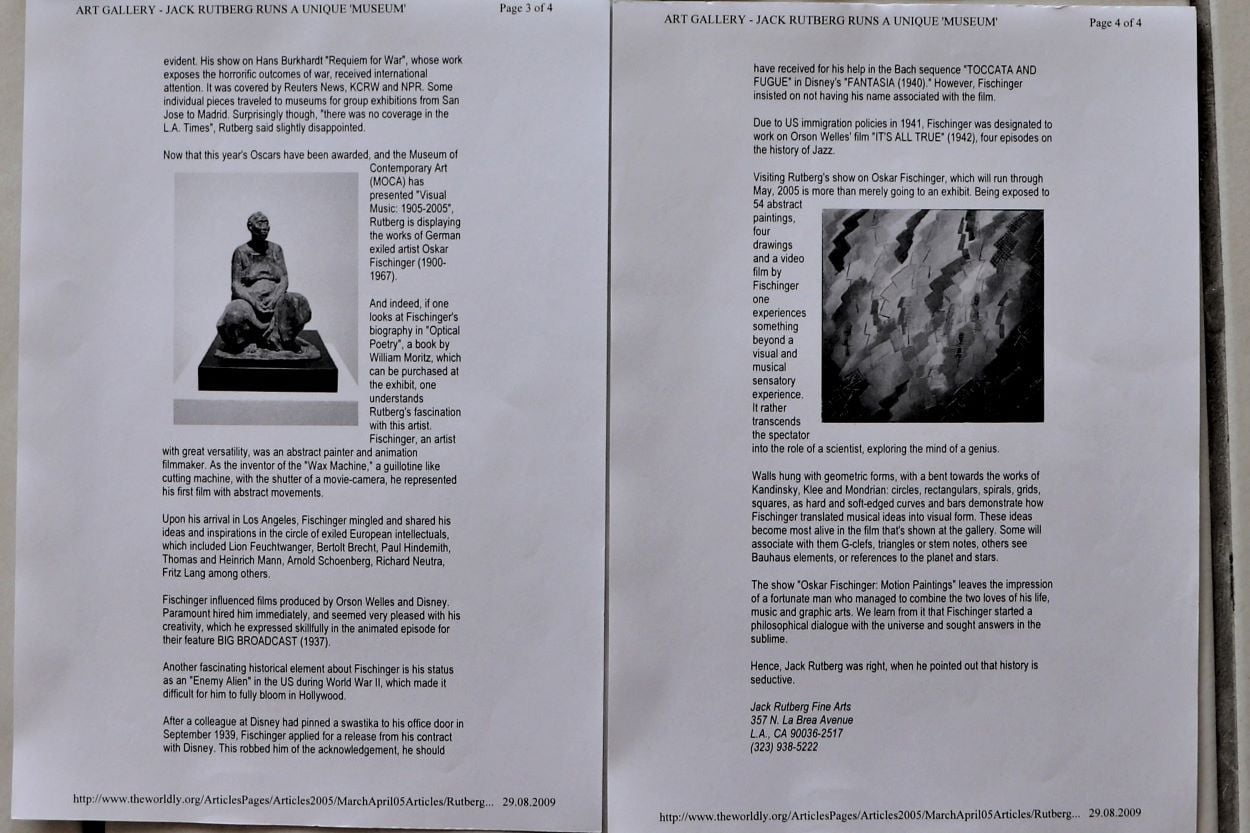
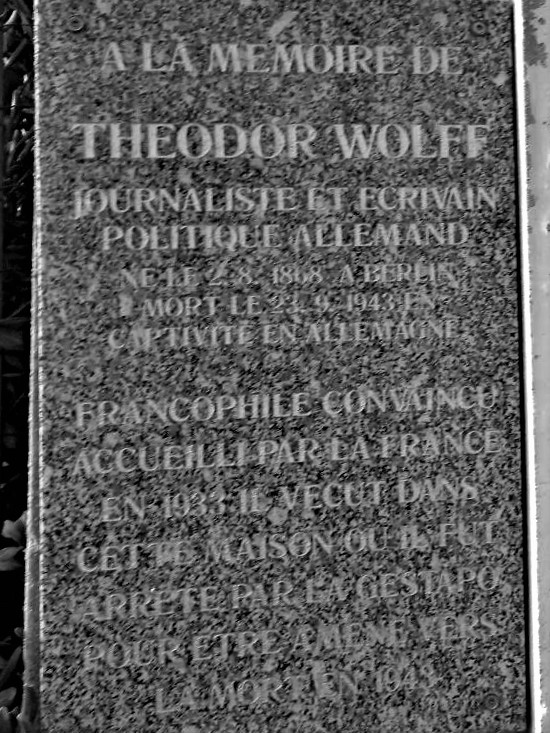
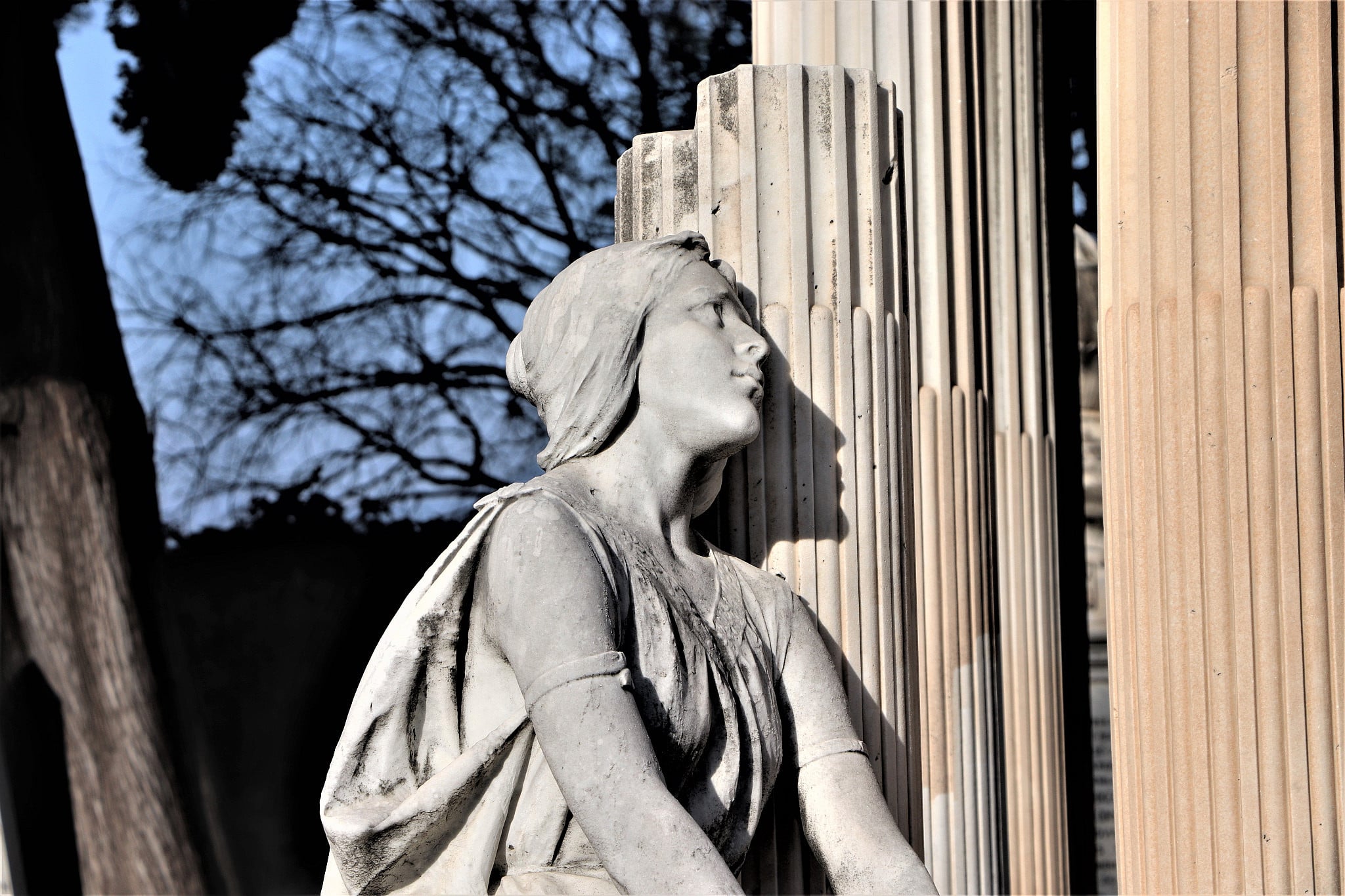
German-Jewish writer and journalist, long-time editor-in-chief of the Berliner Tageblatt. A leading voice of liberal democracy, he was forced into exile after 1933 and lived in Nice. Arrested by the Gestapo in 1943, he died in imprisonment in Germany.
Simone Suzanne Kussatz / ARETE