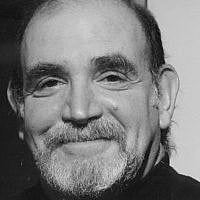
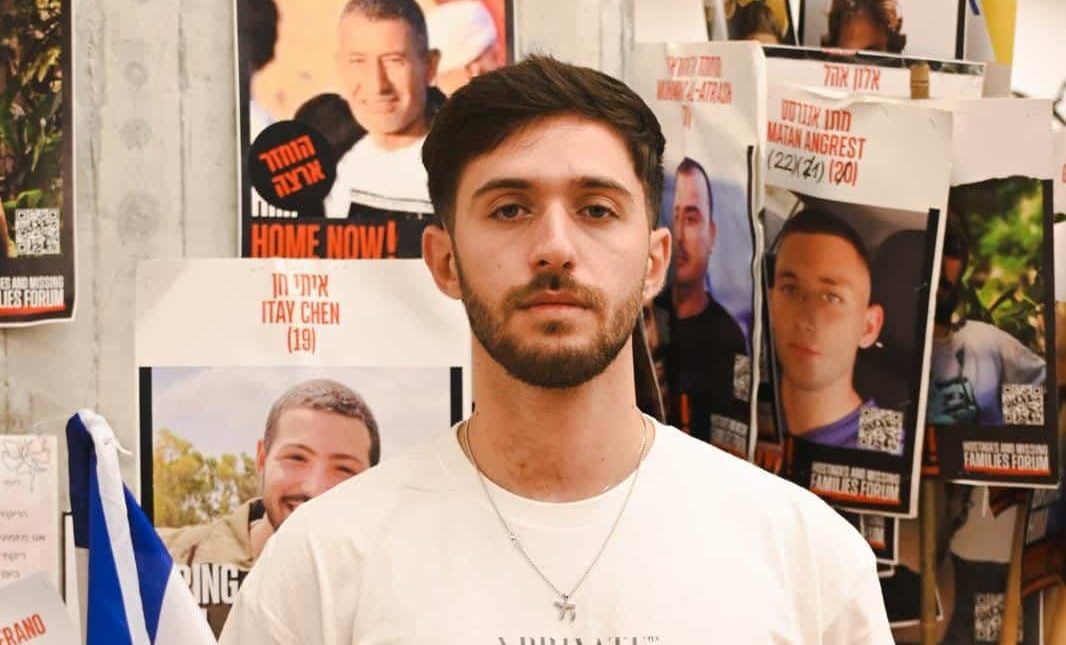
Invest in love: An evening with Omer Shem Tov
Hate misshapes its perpetrators, reducing them to balls of rage, to big boisterous mouths of otherness. Leveraging the human desire for passion and intensity to stave off the tedium of everyday living, politicians know the best way to promote themselves is to hate someone else, sometimes an entire people. But hate withers its victims and makes us all smaller.
On October 7th, our new sacred day of grief, New York’s mayor thought it was OK to peddle more antisemitism. A few days later, a South African lawyer won a Nobel Peace Prize for, among other things, accusing Israel of genocide. Jew-hatred is everywhere. It warps and shrinks us. We subconsciously and incrementally internalize its message. If so many hate Jews, have we done something to deserve it? Are we somehow unworthy of love? We begin to doubt ourselves and our mission.
But in higher education, the price of hate exceeds self-doubt, and as Jews, we must grapple with the cost. Ironically and unfortunately, the burgeoning nonprofit industry fighting antisemitism has not reduced hate for Jews but has somehow normalized it as a standard feature, a default of modern living. Our precious young people are becoming unfamiliar with collective love; we are at risk of raising a generation who have forgotten how to give and receive love. What if more philanthropists put down the boxing gloves and showed more love to organizations where Jewish pride is already flourishing? What if we did a better job of sharing stories that highlight the best of humanity so that our students have higher expectations of goodness?
I have been reflecting on these concerns for some time, but last week, on October 7th, my questions intensified. On that day, I had the privilege of interviewing Omer Shem Tov on behalf of the Rabbi Lord Jonathan-Sacks Herenstein Center at Yeshiva University. Omer was 20 when he was abducted from the Nova Music Festival and brought captive to Gaza. I turned to the audience: how many people in a room of 1,300 Yeshiva University students, staff, and faculty were 20 years old? All over the standing-room-only audience, hands went up in the air.
At that age, released from his army service, Omer had finally been enjoying some freedom. He was saving for a big post-army trip to South America: having fun, partying with friends, listening to music. He dreamed about acting or becoming a DJ. Instead he spent 505 days in captivity, 50 of those days in an isolation cell 120 feet under the ground in absolute darkness.
Together, we watched haunting video footage of Omer’s father handing Red Cross representatives his son’s inhaler and demanding Omer get it. We saw his mother screaming his name repeatedly as she begged for his release. We saw him emaciated. Thousands walked the streets with posters of his face.
Omer described his pervasive anger at everyone and everything during his first weeks in captivity. He had been robbed of the joys of his age with no sense of what the future held. But one day, something changed inside. As if in a state of revelation, Omer started talking to God, not negotiating, not blaming, but with gratitude for being alive. He made minor requests of God. He made blessings over the meager rations he was given in front of terrorists who stood guard. He called God his “Abba,” Father. He had absolute faith that his Father would reunite him with his family. He sat on the edge of his seat and told college students to give their parents much more love simply because they can.
I asked him what he would say to his captors if given a chance, and he shrugged. He would not dignify them with a response. He was not prepared to live in a state of perpetual indignation and revenge. He has every right to be outraged, but he has made an intentional decision not to live that way. He wants to live in light and to spread it. He has been to hell and has chosen not to stay there.
When he exited the tunnels, he sang his way out. He softly intoned the words to “Shir Ha-Ma’alot” – a song of ascents from Psalms – with two other hostages. He sang it for us, and the audience joined along. Music is healing. “One good thing about music,” said Bob Marley, “when it hits you, you feel no pain.” Music is harmonizing; it has the power to turn strangers into friends and friends into family. There we were – a room filled with affection, hope, and redemption – on one of Judaism’s darkest anniversaries. It was breathtaking.
After the interview, Zusha and his band took the stage to play neo-Hasidic soul music. Omer sang quietly in the seat behind me. He used to love house music – the four-on-the-floor beat – but prefers calmer, more serene music now. I encouraged him to return to the stage and saw how lovingly Zusha embraced him. Together, they sang and swayed to the lyrics of Zusha’s song “Don’t Leave Me On My Own.” Omer was not alone anymore. In that large, historic auditorium, Omer was held by love and held others with it.
I have spent a week reflecting on the impact of that night and why so many students told me those few hours changed them for the better. The evening’s magic came down to a frisson of emotion. It bypassed hate altogether. It conferred worthiness to everyone in the room. It altered something in us, we who are parched for a good word, even a crumb, from actors and athletes, world leaders and neighbors.
We are emotionally starving. We need to identify more heroes, expand their platforms, provide more concerts, and more opportunities to sing together. It is time we articulate the hunger for wonder, the hunger for God, the hunger for belonging in a society that increasingly alienates us. Last week, the person who was able to feed our hunger had been physically starved himself.
If a former hostage can have more love in him after October 7th than before it, maybe we who have never lived in a terrorist’s dark tunnel can do the same. Omer taught me that it is time to make a bigger investment in love.