Iran at the Brink: A Nation Demanding Its Future
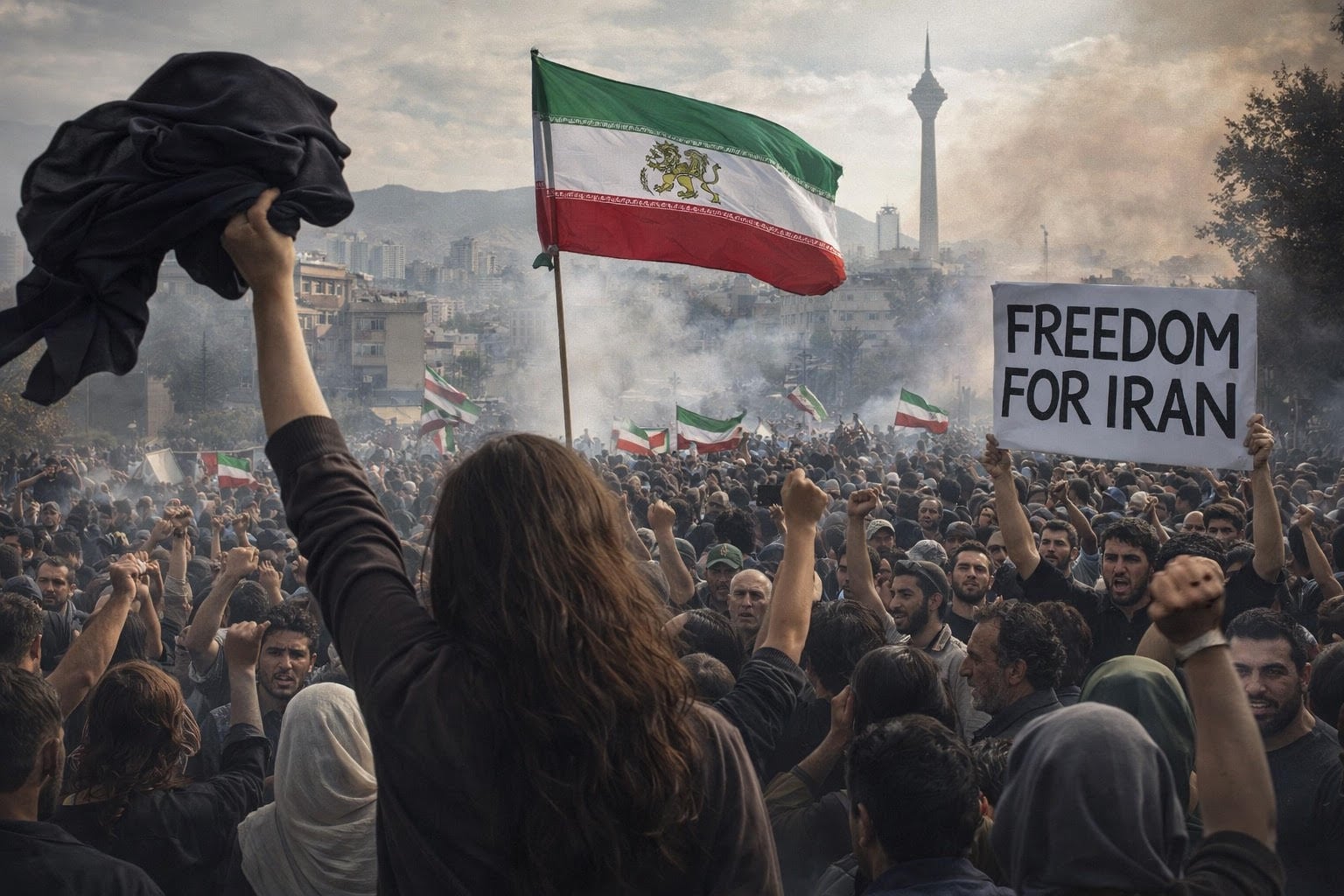
As 2026 begins, Iran stands on the edge of a profound transformation.
Across the country—from the historic corridors of Tehran’s Grand Bazaar to distant cities, towns, and villages far from the capital—Iranians are making a choice that history will not forget. They are risking their lives to reclaim their future.
This is not a localized unrest or a fleeting moment of dissent. It is a nationwide reckoning.
For nearly half a century, the Islamic Republic has governed through fear, repression, and ideological force. What once claimed revolutionary legitimacy has now exhausted it. After almost 47 years, that legitimacy has eroded beyond repair—not because of foreign pressure, but because of the will of the people themselves.
The message echoing through Iran today is unmistakable: the country wants to be free.
Men and women, young and old, workers, students, merchants, and professionals are united by a shared exhaustion with corruption, censorship, economic suffocation, and the denial of basic human dignity. These protests are not driven by slogans alone; they are driven by lived experience—by generations who have known nothing but restriction, and by elders who remember what was lost.
What makes this moment different is its breadth. This movement is not confined to Tehran or sparked by a single incident. It stretches across provinces and social classes, cutting through fear that once kept people silent. When the Grand Bazaar—historically the heartbeat of Iran’s economy and political life—stands alongside distant villages, it signals something deeper than protest. It signals a collective withdrawal of consent.
Iranians are no longer asking for reform within a broken system. They are demanding an end to it.
History shows us that when a government loses moral authority in the eyes of its people, force can delay change—but it cannot prevent it forever. The courage being displayed today is not reckless; it is resolute. It is the courage of a nation that understands the cost of silence is greater than the cost of resistance.
As the world watches, it is critical to understand this moment not as chaos, but as clarity. Iranians are articulating a future rooted in freedom, dignity, and self-determination—values that transcend politics and borders.
The coming months will matter. The choices made by those in power, and the response of the international community, will shape what follows. But one truth is already clear:
After nearly five decades, Iran’s people are done waiting.
They want their country back.