Sports, Politics, Broadcast and Media Specialist
Iran Reveals the Selective Morality of Progressive Activism
Many readers have sent me messages and emails in relation to the current state of affairs in relation to Iran. They have generally asked for my opinion, analysis and asked for me to write about the progressive response to the issue. Whilst I cannot say I am an expert on Iranian political history and theory, I have decided to weigh in on the progressive silence in relation to Iran and what the refusal to fight for Iranian freedom reveals about modern activism.
For more than a decade, the progressive left has claimed the mantle of global moral authority. It has positioned itself as the voice of the oppressed, the watchdog against authoritarianism and fascism, the conscience that speaks when governments fail. Its language is absolute: justice, liberation, resistance, human rights.
And yet, as the people of Iran confront one of the most violent theocratic regimes in the modern world, at extraordinary personal cost – that same movement has responded with a silence so pronounced it can no longer be dismissed as oversight.
This silence is not incidental. It is ideological. And it reveals something deeply troubling about how contemporary activism now defines justice – not as a universal moral principle, but as a selective political posture. In this silence lies the clearest exposure yet of a movement that speaks endlessly about oppression while carefully choosing which oppressions count.
Iran: The Human Rights Crisis Too Inconvenient to Acknowledge
If human rights were truly the organising principle of progressive politics, Iran would be its central cause. Iran is not a contested narrative. It is not a matter of interpretation or framing. It is a documented reality of state violence, enforced conformity, and systemic terror. Under the Islamic Republic, freedom of expression, belief, assembly, and association are not merely constrained – they are actively punished. Protest is criminalised. Dissent is extinguished. The justice system functions not as a safeguard of rights, but as an instrument of fear. (https://www.amnesty.org/en/location/middle-east-and-north-africa/middle-east/iran/)
Women are compelled by law to adhere to religious dress codes and are beaten, imprisoned, or killed for defiance. Journalists and activists disappear into prisons. Ethnic and religious minorities live under constant surveillance. LGBTQ people are not marginalised in theory but executed in practice. This is not disputed by serious observers anywhere in the world including Amnesty, an organisation the movement relies on heavily in relation in relation to other issues (https://www.amnesty.org/en/latest/news/2023/iran-womens-rights/)
And yet, despite the clarity of this repression, despite the scale and severity of the abuses, the global activist machinery that mobilises instantly around Israel remains conspicuously absent when it comes to Iran. The question is no longer why Iran is oppressive. The question is why that oppression is tolerated by those who claim to oppose it when it comes to Iran.
Selective Outrage as a Political Worldview
The contemporary “Free Palestine” movement insists that its cause is universal – that it stands against oppression everywhere. But movements are defined not by slogans, but by priorities.
In practice, outrage is rationed. Israel is treated as uniquely illegitimate. Iran is treated as a peripheral concern. A liberal democracy is examined obsessively, condemned relentlessly, and held to impossible moral standards. A theocratic dictatorship is contextualised, softened, or simply ignored.
This is not because Iran’s abuses are less severe. They are objectively and almost definitely in every way possible worse. It is because Iran does not fit the ideological story the movement has committed itself to telling – a story in which all injustice flows from Western power, all victims are defined by that framework, and all complexity must be flattened to preserve moral certainty.
Justice, in this worldview, is no longer universal. It is conditional. Therefore, Iran just doesn’t fit the bill.
The Regime That Breaks Progressive Theory
Iran exposes the central contradiction of modern left-wing activism: its inability to confront non-Western authoritarianism without collapsing its own framework.
Iran is not a colonial project. It is not Western. It is not Jewish. It is not democratic. And yet it is brutally oppressive. To advocate for a free Iran would require the left to confront a deeply uncomfortable truth – that some of the most violent systems of repression in the Middle East and globally are not imposed by Israel or the West, but by Islamist regimes that define themselves explicitly against liberal values.
That recognition would demand a reckoning with years of apologetics disguised as anti-imperialism. It would force the movement to admit that opposition to the West is not the same thing as justice.
So Iran is avoided. Not because its suffering is unclear, but because it is ideologically destabilising.
The LGBTQ Betrayal the Left Refuses to Confront
Nowhere is this moral incoherence more glaring than in the movement’s relationship with LGBTQ rights. A significant proportion of pro-Palestine activism in Western cities is driven by LGBTQ groups, pride organisations, and queer collectives. Their language is rooted in liberation, safety, and identity-based justice.
And yet, Iran – where homosexuality is punishable by death, does not inspire mass uproar ¹. Nor does Hamas-ruled Gaza, where LGBTQ Palestinians live in fear, hide their identities, or flee – often into Israel, the very state their supposed allies demonise ².
This is not a theoretical contradiction. It is lethal. It reveals that, for much of the movement, LGBTQ rights are not universal principles. They are instruments – deployed against political enemies and withdrawn when inconvenient.
This is not solidarity. It is moral opportunism dressed as virtue.
Israel as Obsession, Iran as a Blind Spot
The obsessive fixation on Israel functions as displacement – a way to avoid confronting harder truths about power, culture, and authoritarianism.
By casting Israel as the singular villain of the Middle East, the movement simplifies a complex region into a morality play. Everything becomes legible. Everything becomes emotionally satisfying. Blame is concentrated. Moral certainty is preserved.
Iran disrupts that simplicity. Iran asks a question the movement does not want to answer: What happens when the oppressor is not Western, not Jewish, and not liberal?
Their silence is the answer.
The Human Cost of Progressive Silence
Iranians pay the price for this selective morality.
Women who remove compulsory veils knowing they may be beaten or killed. Students who protest knowing prison or execution may follow. Families will bury their dead without international outrage.
Iranian Jews – among the oldest Jewish communities in the world, living under an antisemitic regime while being erased from progressive discourse entirely.
The message to Iranians is unmistakable: your suffering does not serve our narrative.
That is not neutrality. It is abandonment and it’s reprehensible and morally corrupt.
Why Jews Recognise This Pattern Instantly
From a Jewish perspective, this pattern is painfully familiar.
Jews have long been told that some oppressions matter more than others, that some victims are more deserving than others, that outrage is a finite resource allocated according to political convenience.
We recognise when moral language is weaponised. We recognise when double standards are disguised as sophistication. We recognise when silence masquerades as nuance.
Israel’s existence complicates progressive hierarchies because it is a Jewish state that refuses the role assigned to Jews in modern moral politics – permanent victim, never agent; subject of history, never actor.
Iran exposes that hierarchy completely.
What “Free Iran” Actually Requires
Calling for a free Iran is not a slogan. It is a concrete moral position.
It means opposing the Islamic Republic as a system and in its entirety, not merely critiquing isolated policies. It means standing unequivocally with Iranian women, dissidents, and minorities as well as the overwhelming majority of modern Iranians.
It means recognising that the regime’s collapse would be a moral victory for human rights, regional stability, and global security. It also means abandoning the fiction that opposing Israel is synonymous with justice.
A free Iran would dismantle the ideological scaffolding that has allowed repression to be excused under the banner of resistance.
Iran Before Theocracy: A History the Left Pretends Not to Know
Iran’s current repression is often treated as inevitable, as though authoritarianism were intrinsic to Iranian society. This assumption is not only false – it is intellectually lazy.
Before 1979, Iran was not a theocratic dictatorship. It was a complex, modernising society with secular institutions, political parties, an independent judiciary, and an active civil sphere. Iranian women voted, worked, studied, and participated openly in public life. Cultural and intellectual life flourished ³.
Iran’s democratic trajectory was not abandoned by its people – it was violently derailed. The Islamic Revolution replaced an imperfect but pluralistic system with an absolutist religious state that fused clerical authority with political power and eliminated dissent in the name of divine legitimacy ³.
This history matters because it demolishes the claim that Iranians are unsuited to democracy. It clarifies that today’s protests are not Western impositions but restorative demands – attempts to reclaim a future that was stolen.
To ignore this history is to deny Iranians their agency. To dismiss their struggle is to side, however quietly, with those who erased their democracy.
The Reckoning That Cannot Be Avoided
History has a way of clarifying what politics obscures.
The left will be judged not by its slogans, but by its silences. Not by where it marched, but by where it refused to stand.
The question is not whether Iran’s regime will fall.
The question is who will be remembered as having stood for freedom when it mattered – and who chose ideology over humanity.
Justice That Is Conditional Is Not Justice
You cannot claim to fight oppression while ignoring Iranian women.
You cannot claim to defend LGBTQ lives while excusing regimes that execute them.
You cannot claim to oppose authoritarianism while rationalising theocratic terror.
And you cannot obsess over Israel while averting your eyes from Iran and still speak credibly about justice.
The moral test of our time is not whether we oppose the easy villains. It is whether we confront the “inconvenient ones”.
If the global left cannot bring itself to stand for a free Iran, then it must finally admit what its silence has already revealed:
Its outrage is not principled.
Its activism is not universal.
And its claim to moral authority no longer holds.
-
- Created based on Policy Responses & Deterrence Challenges to Iran (Jan 2026) Advanced visuals: Response timeline, deterrence radar, sanctions impact, proxy degradation. Sources: CSIS, IISS, Atlantic Council, RAND, State.gov, EU (2024–2026).
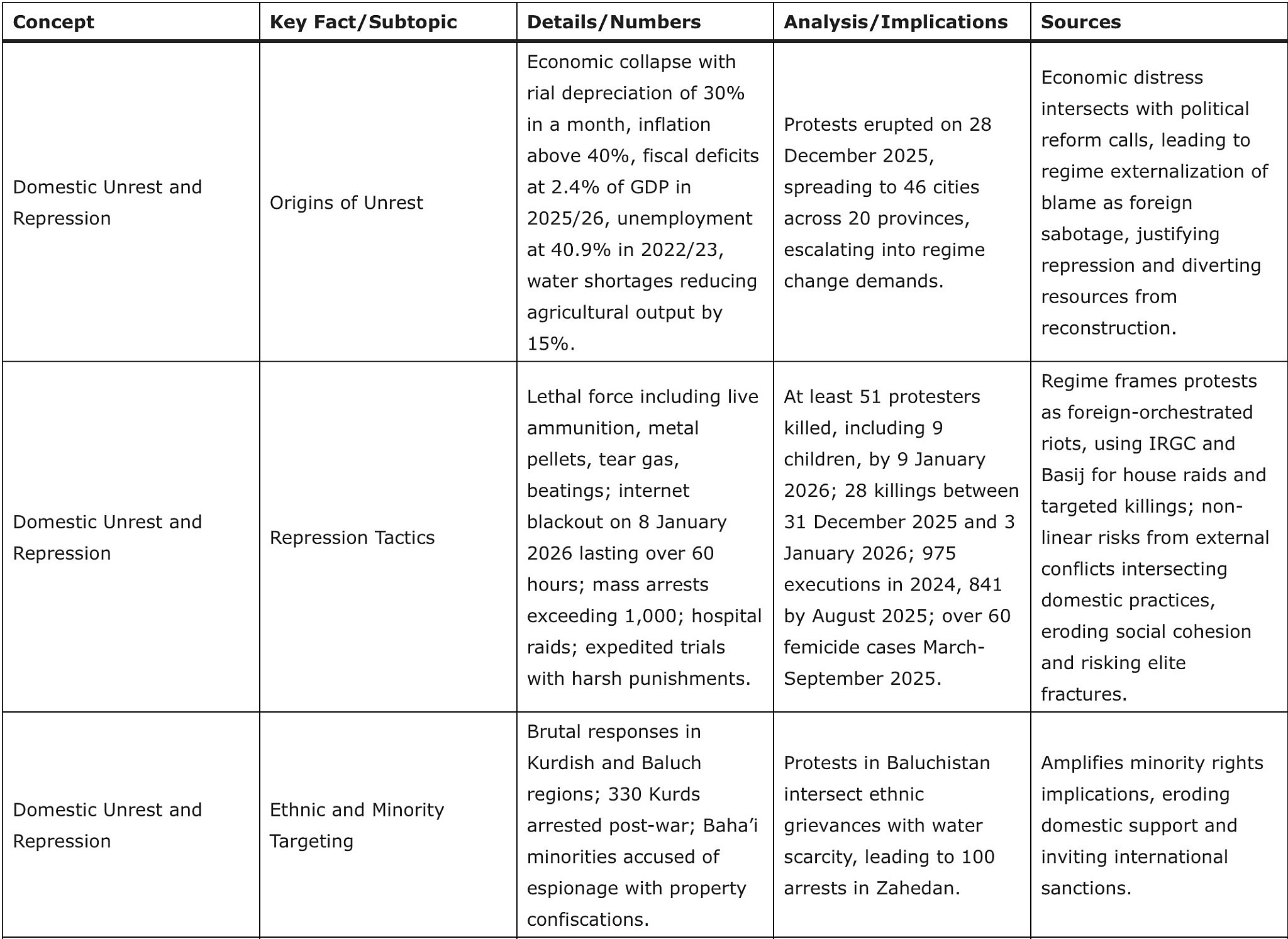
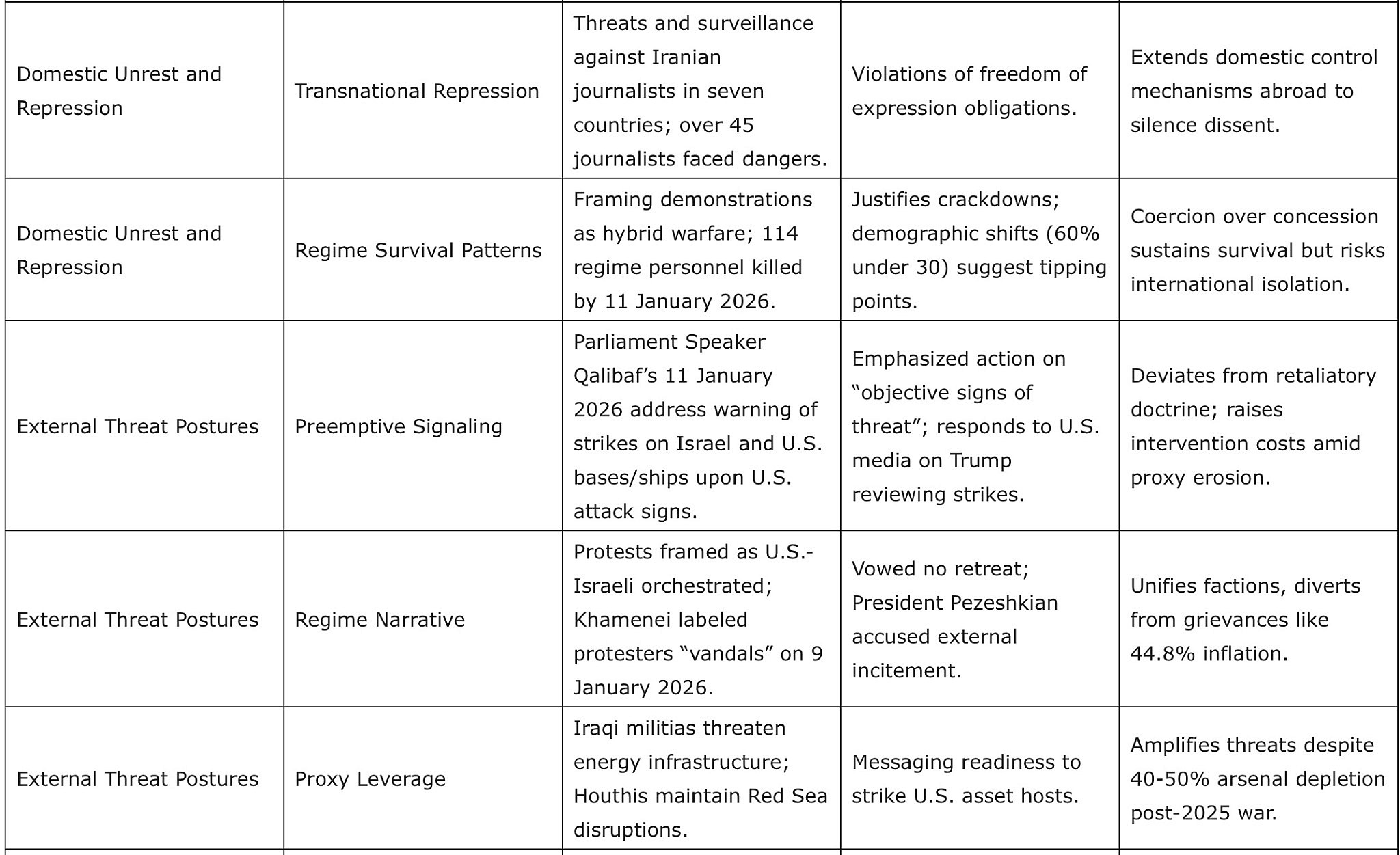
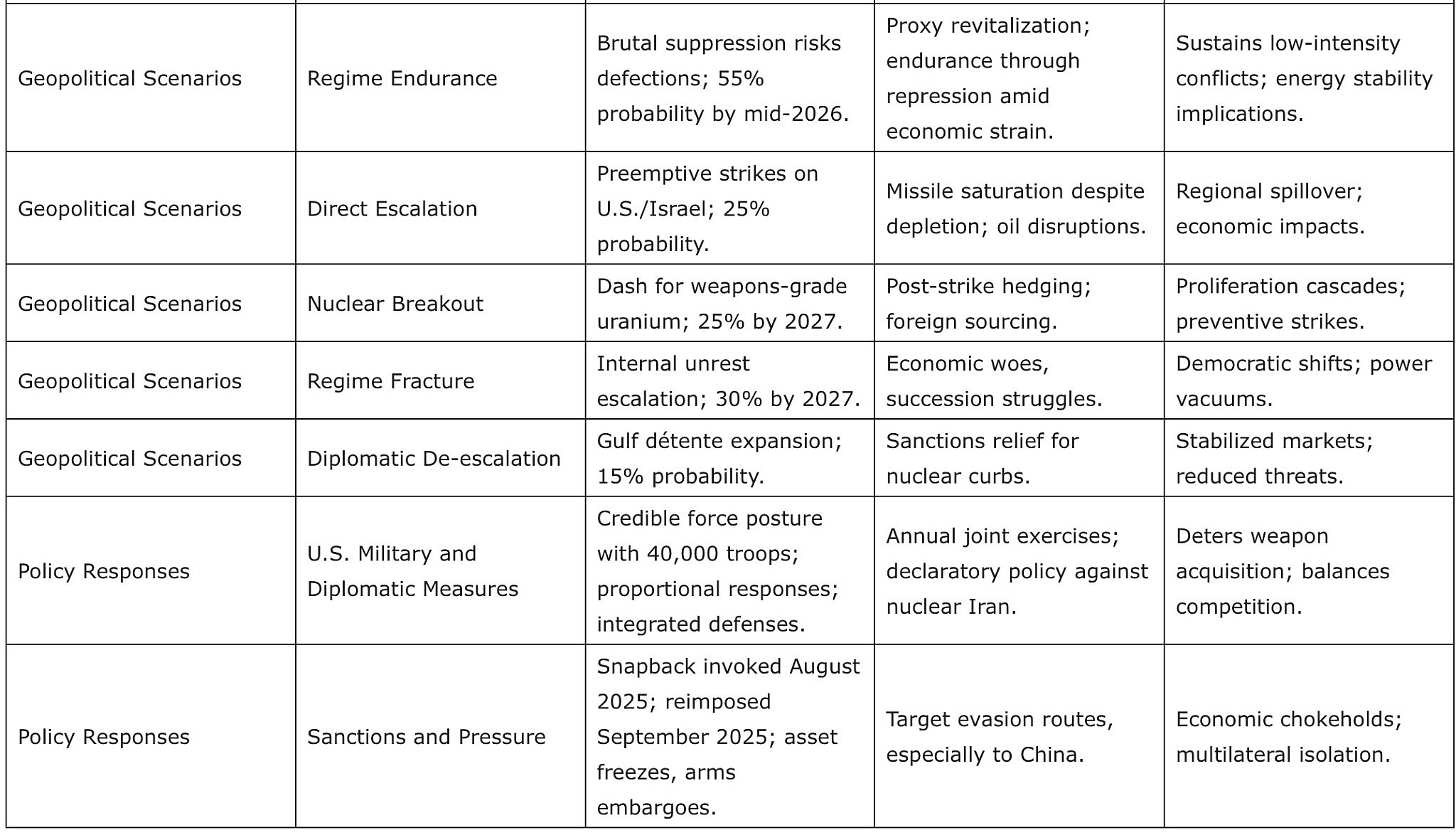
↑ Above table created using Policy Responses & Deterrence Challenges to Iran (Jan 2026) Advanced visuals: Response timeline, deterrence radar, sanctions impact, proxy degradation. Sources: CSIS, IISS, Atlantic Council, RAND, State.gov, EU (2024–2026) – Chatham House, OSINT.
³ https://www.britannica.com/event/Iranian-Revolution
Related Topics
Related Posts