
Iran Sold America a Dummy
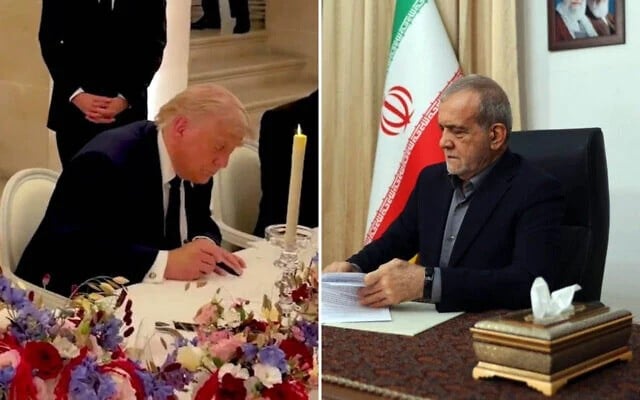
The MOU may end the war, but it has not ended the danger – and Israel knows the job is only half-done
Few people expected the US-Israel war against Iran to end this way. I certainly did not.
At the beginning, there was a rare, almost electric clarity in the air. After years of threats, proxies, rockets, drones, tunnels, enrichment, denial, delay, and diplomatic theatre, something decisive was finally being done. Not because war is desirable. It is not. Not because military action is clean. It never is. But because the Iranian regime had built an architecture of danger so vast that doing nothing had become its own form of recklessness.
The goals were not mysterious. Stop Iran’s nuclear march. Break its ballistic missile shield. Cut oxygen to Hezbollah, Hamas, and the wider proxy empire. Reopen the future for a region held hostage by Tehran’s revolutionary ambitions. Give the Iranian people, long brutalized by their own rulers, a glimpse of daylight.
And then came the MOU. Suddenly, the music changed.
Instead of strategic completion, we have strategic suspension. Instead of dismantlement, we have delay. Instead of a transformed regional equation, we have a document that appears to push the hardest questions into another 60 days of talks, while offering Iran immediate breathing space, oil access, possible funds, and the political oxygen of survival. Iran’s nuclear stockpile is not clearly removed. Its ballistic missiles remain. Hezbollah remains. Hamas remains. The regime remains. The problem has not been solved; it has been rolled carefully, ceremonially, and dangerously down the road.
That is why Israelis are seething. And they are right to be.
Israel was not a side issue in this war. Israel was the target at the heart of the matter. Israeli civilians were the intended victims of Iran’s long strategy. Israeli towns, northern communities, soldiers, families, reservists, children, and evacuees have lived under the shadow of Tehran’s proxies for years. Yet, in the critical diplomatic moment, Israel appears to have been treated less as a sovereign partner than as a security attachment to an American bargain.
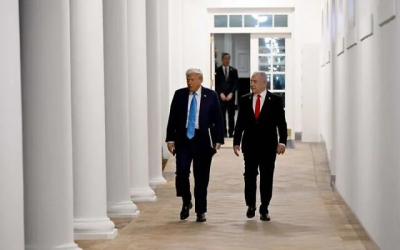
This is not how allies should be handled.
I say that with deep respect for the United States. No serious friend of Israel can casually dismiss the scale of American support, military cooperation, intelligence sharing, diplomatic cover, and strategic partnership. Israel’s alliance with America is one of the pillars of its national security. But friendship does not require silence. Gratitude does not require blindness. And strategic loyalty cannot mean applauding an agreement simply because it has been signed in a grand room, under soft lights, with the language of peace draped over unfinished business.
The central problem is not that diplomacy happened. Diplomacy is necessary. Diplomacy can save lives. Diplomacy can open doors that missiles cannot. The central problem is that this diplomacy appears to have rewarded the very behavior that made war necessary in the first place.
Iran closed or leveraged the Strait of Hormuz and helped force a global economic panic. Now the strait reopens, but Iran claims sovereignty, leverage, and future tolls. Iran advanced its nuclear program to a terrifying point; now it keeps the “status quo” while negotiations continue. Iran built a ballistic missile arsenal that placed Israel and the region under threat; now we are told missiles are somehow less central than nuclear weapons, as though missiles are harmless toys until a nuclear warhead is placed on top of them.
But Israelis know better.
Ask the families who have run to shelters. Ask the residents of the North who have lived in suspension. Ask communities emptied by Hezbollah’s rockets. Ask the parents who can identify the sound of sirens before their children can spell the word “peace.” Ballistic missiles are not an academic category. They are instruments of terror, pressure, blackmail, and war.
A missile without a nuclear warhead can still destroy a home, a school, a hospital, a power station, a city block, a childhood.
This is why the MOU feels so troubling. It appears to separate the Iranian threat into convenient diplomatic compartments: nuclear today, missiles later, proxies somewhere else, Lebanon as a clause, Gaza as a footnote, Israeli security as an assumption. But Iran does not operate in compartments. Iran operates as a system. Its nuclear program, missile program, oil revenue, proxy militias, ideological messaging, and internal repression are not separate files in a ministry cabinet. They are parts of one machine.
If you fund one part, you strengthen the whole. If you legitimize one part, you embolden the whole. If you delay one part, the machine uses the time.
That is why this agreement may prove far more dangerous than its calm diplomatic language suggests.
There is a strange temptation in international politics to confuse quiet with security. When the guns fall silent, the world exhales and calls it peace. Markets recover. Leaders congratulate themselves. Analysts discover the elegance of restraint. But Israel has learned, painfully and repeatedly, that quiet can be a mask. Quiet can be rearmament. Quiet can be tunnel-digging. Quiet can be uranium enrichment. Quiet can be Hezbollah rebuilding south of the Litani while diplomats praise “de-escalation.”
Israel cannot afford the luxury of mistaking quiet for safety.
This is not paranoia. It is memory.
October 7 taught Israel what happens when murderous intent is underestimated. The long war in the North has taught Israel what happens when a terror army is allowed to entrench itself under the cover of civilian complexity. Iran’s nuclear deceit has taught Israel what happens when inspectors are delayed, access is negotiated, and promises are treated as achievements.
So yes, I welcome the end of immediate hostilities if it saves innocent lives. I welcome any arrangement that genuinely prevents a nuclear Iran. I welcome any diplomacy that dismantles Hezbollah’s threat, weakens Hamas, protects the Iranian people, secures shipping lanes, and makes the region safer.
But I cannot celebrate a document that may end the fighting without ending the danger.
There is a difference between stopping a war and winning the peace.
The United States may have chosen economics over completion. Perhaps the fear of oil shocks, inflation, market panic, and political consequences became too heavy. Perhaps Washington looked at Hormuz, global recession, ammunition reserves, and November elections, and decided the cost of finishing the job was too high. These are not trivial considerations. Great powers always calculate. Democracies always count costs.
But Israel lives with consequences more intimate than market charts.
For Israel, Iran is not a distant file. It is the regime behind Hezbollah’s fire. It is the ideology behind “death to Israel.” It is the sponsor of those who turned Israeli homes into killing fields. It is the strategic centre of a campaign designed to surround, exhaust, delegitimize, and ultimately destroy the Jewish state.
That is why Israel must now do what Israel has always done at decisive moments: absorb the shock, study the reality, strengthen its alliances where possible, and prepare for every scenario without illusion.
This is where resilience and renewal become more than beautiful words. They become national method.
Israel’s answer to this MOU cannot be despair. Despair is not a strategy. Israel’s answer must be vigilance, innovation, clarity, unity, and readiness. It must accelerate missile defense, deepen intelligence reach, rebuild the North, strengthen civil resilience, expand defense production, and invest even more boldly in the technologies that will define the next battlefield. This is not merely about surviving the next round. It is about innovating the future of Israel in a region where yesterday’s assumptions keep collapsing.
The Iranian regime may believe it has outplayed America. It may believe it has bought time, cash, oil markets, and diplomatic legitimacy. It may even call the agreement a victory.
Let it talk.
Israel should listen, but not tremble.
Because beneath the anger in Israel today there is also something steadier: a national instinct sharpened by history. Israelis know the job is half-done. They know that no MOU can erase the duty of a state to protect its citizens. They know that international guarantees are useful only when backed by enforceable power. And they know that when the final responsibility comes, it will not rest in Versailles, Islamabad, Geneva, Washington, or Tehran.
It will rest in Jerusalem.
Iran may have sold America a dummy. It may have persuaded the world that a pause is a solution, that paper can substitute for dismantlement, and that temporary calm equals peace.
But Israel has not survived by believing every beautifully packaged promise. Israel has survived by seeing clearly, adapting quickly, and refusing to outsource its future. So let the diplomats sign. Let the analysts spin. Let the markets cheer. Let Tehran boast.
Israel will watch. Israel will prepare. And if the day comes when words fail again, Israel will do what it must do – not out of rage, not out of recklessness, but out of the oldest obligation of any free people: to defend life, protect home, and secure tomorrow.