
Iran’s AI revolution is moving faster than we think
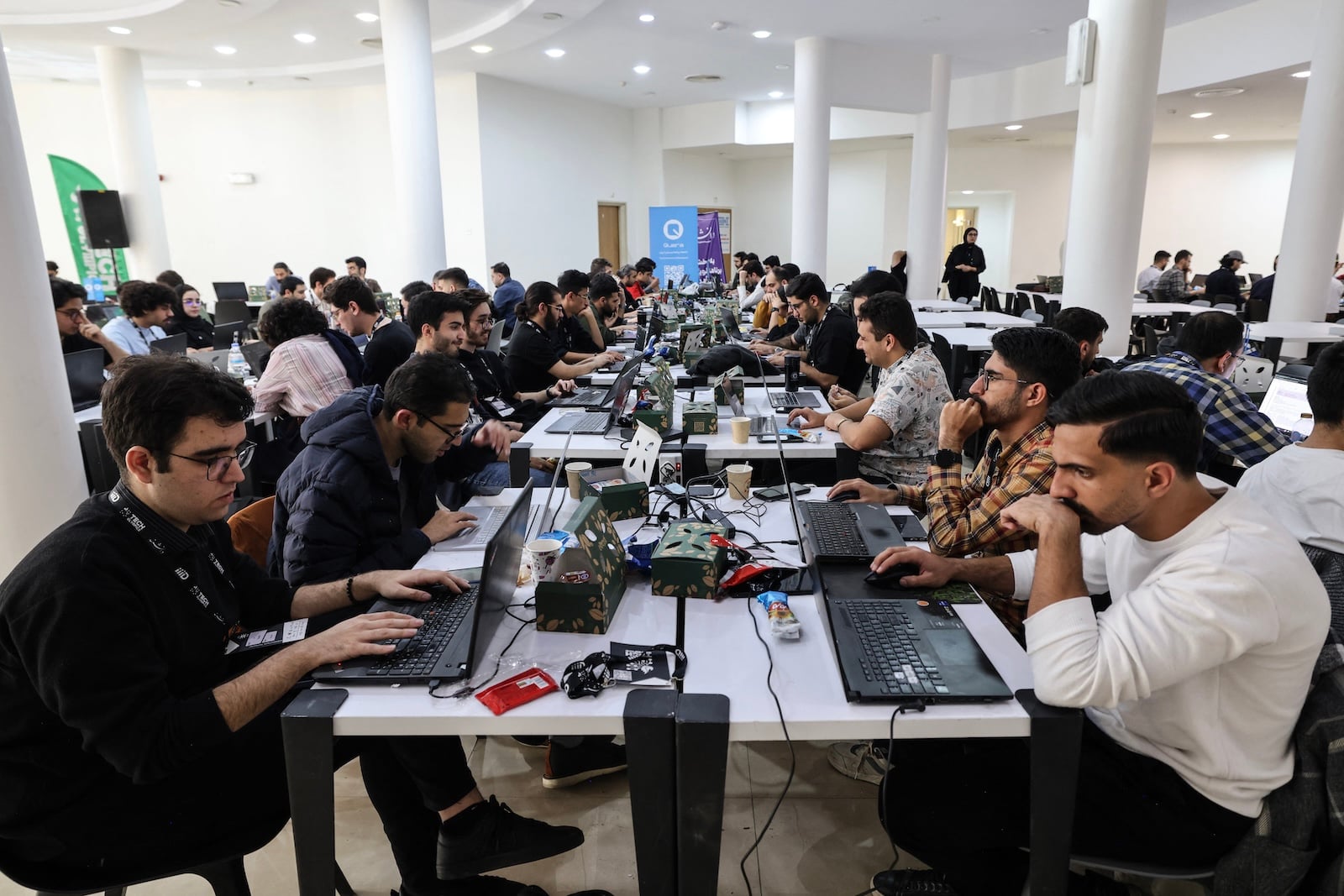
Iran is entering the global artificial-intelligence race with striking urgency, viewing the technology not only as a scientific or economic priority, but as a source of national power, internal control, and future leverage against rivals such as Israel and the United States. Despite sanctions and deep economic strain, Iran’s senior officials and security bodies increasingly describe AI as a field the country must master on its own, free of dependence on Western platforms that could one day restrict access. Government, academic and military institutions are now working in coordinated fashion to build domestic AI capabilities, develop national platforms and ultimately embed AI across Iran’s cyber and military systems, including offensive capacities.
At the political level, Supreme Leader Ali Khamenei has made AI development a personal strategic directive. Since 2024, he has warned that an international body – akin to the nuclear oversight regime – might eventually restrict Iran’s access to advanced AI. Iran, he argues, must therefore build sovereign capabilities and avoid remaining a mere “consumer” of foreign systems. President Masoud Pezeshkian has echoed this approach, calling for legislation and a national AI blueprint that unites research bodies, ministries and the Majlis.
A wide network of senior officials reinforces this message. Former Vice President Mohammad Mokhber urges investment in AI education, youth training and infrastructure for “knowledge-based companies.” The secretary of the Iranian Association for Artificial Intelligence warns that sanctions on hardware and software already hamper progress, and could become a near-total blockade if Western states decide to restrict AI technologies as they did advanced weapons. IRGC-affiliated academics explicitly link AI research to military strategy, arguing that AI could dramatically accelerate battlefield decision-making.
Military commanders go even further. The late IRGC commander Hossein Salami described AI as essential to precision targeting, including in naval warfare. The IRGC Navy claims it is integrating AI into missile and aviation systems, and the Army Ground Forces now declines to procure equipment that is not “smart.” For Iran’s security establishment, AI is not only a technological revolution but a military one they believe the country cannot afford to miss.
Institutionally, Iran is also moving quickly. In June 2024, the Majlis approved a National Artificial Intelligence Document that anchors Khamenei’s vision and sets goals for infrastructure, human-capital development, international research leadership and economic resilience. In late 2025, it approved a National Artificial Intelligence Organization under the presidency to coordinate regulation and represent Iran globally. Tehran has also launched a domestic experimental AI platform – used in fields such as medicine, transportation and education – that aspires to reduce reliance on Western systems.
Hacking, phishing, disinformation
Yet while Iranian officials highlight “defensive cyber uses,” Western technology companies have documented rising Iranian attempts to harness AI for offensive cyber activity. Microsoft, Google and OpenAI have all exposed Iranian efforts to use large language models to enhance hacking, phishing, disinformation and vulnerability research.
The disinformation group STORM-2035 used AI tools to generate multi-language content during the 2024 US election cycle, amplifying divisive narratives and promoting pro-Iranian messages. The group inserted AI-generated posts into influence networks targeting audiences in the US, Europe and the Middle East while posing as local citizens.
Another IRGC-linked persona, “CyberAv3ngers,” used commercial AI tools to scan industrial control systems, disguise malicious code and widen targeting. Google’s Gemini platform also detected Iranian attempts to probe Israeli defense systems, satellite infrastructure, UAV technologies and Hebrew-language phishing, effectively learning operational techniques from AI models.
APT-42, another major Iranian group, attempted to trick AI systems into providing “red-team” style attack guidance. These cases reveal both Iran’s growing sophistication and its limits: Iran still relies heavily on Western models because its domestic platforms lag far behind. The political push for sovereign AI reflects Tehran’s fear that foreign systems may soon shut Iran out.
Iran’s trajectory mirrors global trends in AI-enabled cyber operations. From North Korean fraud to covert influence campaigns by multiple states, Tehran is studying existing models and adapting them to its own geopolitical battles. While much of Iran’s AI exploitation is still experimental, the infrastructure now being built could eventually give the Islamic Republic new tools for autonomous cyber weapons, influence campaigns and battlefield AI in future confrontations with Israel and the West.
Iran’s AI push should not be dismissed as rhetorical. It is a deeply strategic national project touching Iran’s economy, governance, military posture and foreign policy – and it is advancing with surprising speed.
–
The full version of this analysis by Dr. Avi Davidi was published by The Jerusalem Institute for Strategy and Security.