
Iran’s Hidden Front: Sleeper Networks in America
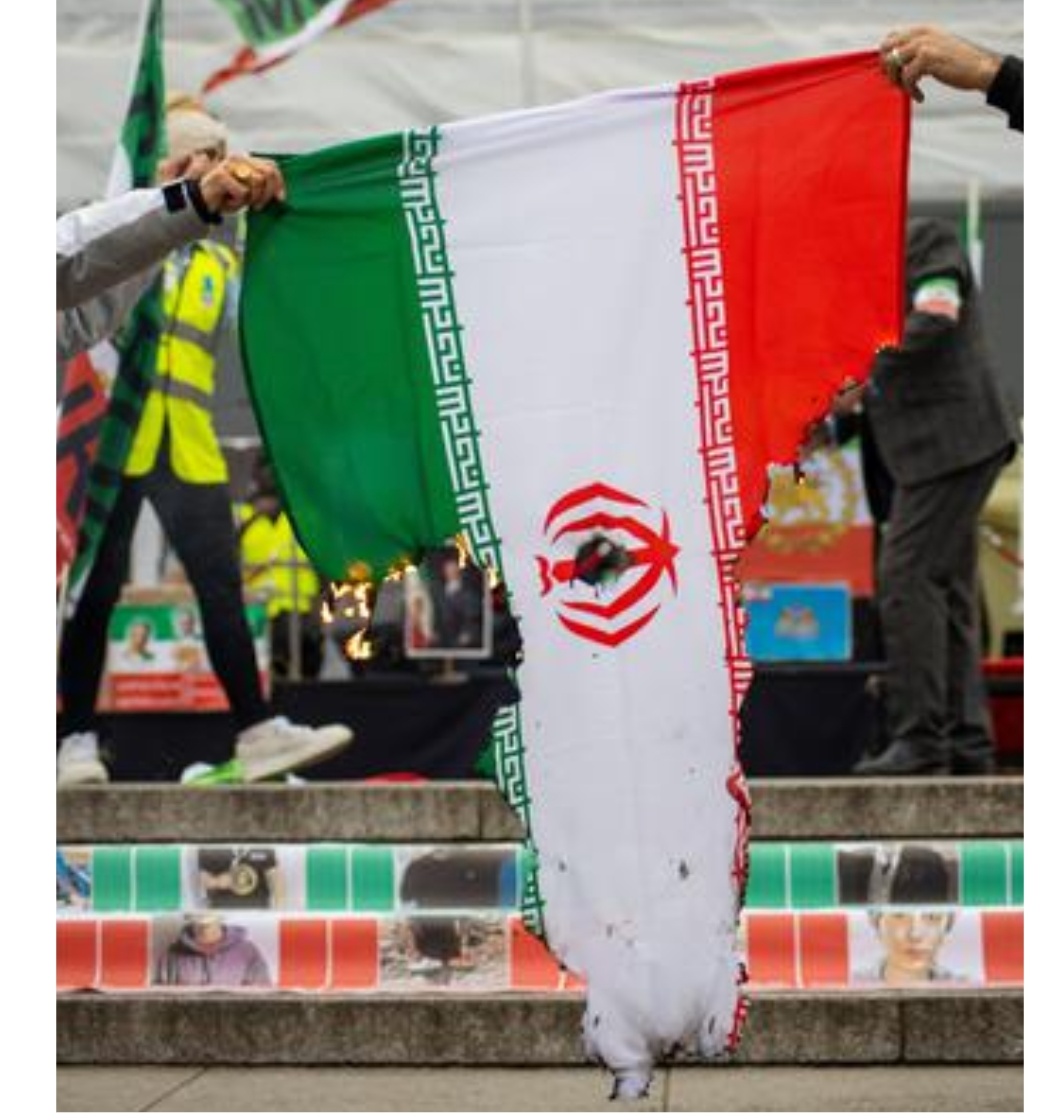
One month into the war between the United States, Israel and the Iran regime, the visible battlefield dominates the headlines: missile strikes, damaged military infrastructure, and an intensifying regional confrontation. Yet the most consequential front of this conflict may not be visible in the skies over the Middle East. It may lie quietly within Western societies themselves.
Modern wars are no longer confined to conventional military theaters. They extend into intelligence networks, ideological infrastructures and covert influence operations that operate far from the battlefield. The Iran regime has spent decades cultivating precisely such networks through its intelligence and security apparatus — particularly through the Ministry of Intelligence and Security (MOIS), the Quds Force and the Islamic Revolutionary Guard Corps (IRGC).
The current war began after the United States eliminated one of the most dangerous Islamic terrorist figures in the world — a figure closely aligned with the legacy of Osama bin Laden and Qassem Soleimani. That event triggered a new phase of confrontation between Washington, Jerusalem and Tehran. But while missiles and air defenses capture global attention, the regime’s most durable tools of retaliation remain asymmetric.
All three of the regime’s core security institutions — MOIS, the Quds Force and the IRGC — have long invested in building networks capable of operating abroad. These networks may include surveillance assets, propaganda channels, ideological sympathizers and, in certain cases, sleeper operatives who remain dormant until activated. Intelligence services have repeatedly warned that such structures exist precisely to give Tehran options beyond conventional warfare.
For this reason, the conflict cannot be understood solely through the lens of military power. The Iran regime’s strategic culture is rooted in a hybrid doctrine that blends intelligence operations, propaganda, proxy militias and ideological mobilization.
In the United States, the FBI has repeatedly warned that Iranian intelligence agencies conduct espionage and influence activities on American soil. Over the past decade, investigations have uncovered surveillance efforts targeting dissidents, attempted intimidation campaigns and plots linked to Iranian intelligence networks abroad.
One area of particular concern involves the presence of influence structures connected to the MOIS within academic environments and Persian-language media networks operating outside Iran. Universities, think tanks and diaspora media outlets offer opportunities for information gathering, narrative shaping and monitoring of opposition communities.
It would be irresponsible to suggest that every academic or journalist studying Iran is part of such efforts. But intelligence analysts have long observed that authoritarian regimes often exploit open societies by embedding influence operations within legitimate institutions.
Another dimension of concern involves political activism and public demonstrations connected to the conflict. In recent weeks, “No to War” protests have appeared sporadically across several Western cities. Critics argue that some of these activities are amplified through propaganda ecosystems aligned with the Iran regime and supported by external actors, including elements of the Chinese propaganda apparatus operating internationally.
Certain lobbying and activist organizations — including groups such as NIAC, People’s Forum, Code Pink and other ideological networks combining Islamist and Marxist narratives — frequently shape the discourse surrounding Iran policy in Washington. While many activists sincerely oppose war on moral grounds, the financial and ideological networks behind such mobilization deserve scrutiny. In a time of geopolitical confrontation, it is legitimate for federal authorities to examine whether foreign influence operations are attempting to manipulate domestic political activism.
The ideological dimension of the conflict has become even more volatile following the issuance of radical religious decrees by several Shiite clerical authorities calling for the killing of Western leaders. Reports have circulated that four prominent religious authorities issued fatwas targeting figures such as former President Donald Trump and Israeli Prime Minister Benjamin Netanyahu.
For extremist believers who interpret such decrees literally, the promise of martyrdom and religious reward can serve as powerful motivation. Throughout modern history, radical interpretations of religious doctrine have played a central role in mobilizing individuals toward acts of political violence.
The threat environment created by such rhetoric is complex. It does not necessarily require structured terrorist organizations. In many cases, individuals or loosely connected networks may feel compelled to act independently while believing they are fulfilling religious obligations.
For the United States, the potential targets extend beyond political leaders. Iranian dissidents, intellectuals and activists who openly oppose the Iran regime remain vulnerable abroad. Among them are advocates of democratic reform as well as supporters of monarchist alternatives and the political movement surrounding Crown Prince Reza Pahlavi.
Many of these voices have become increasingly influential in shaping global conversations about Iran’s future. From the perspective of Tehran’s leadership, such figures represent a direct challenge to the regime’s ideological authority.
Ironically, the Iran regime often fears humiliation at the hands of its own population more than confrontation with foreign powers. Military clashes with the United States or Israel can be framed domestically as resistance against external enemies. But the regime’s legitimacy erodes when large segments of Iranian society openly reject its authority.
For this reason, propaganda remains central to Tehran’s survival strategy. If the United States and Israel were to withdraw from the current conflict without imposing significant strategic consequences, the regime’s propaganda machine would almost certainly portray the outcome as a victory for revolutionary Shiite ideology over Western power.
The iternal political evolution of the regime adds another layer of uncertainty. The potential rise of Mojtaba Khamenei within the ruling structure suggests continuity rather than reform. Many analysts believe his emergence would represent the consolidation of a harder and more security-oriented leadership.
Such a transition could intensify the regime’s reliance on covert intelligence operations and external militant networks.
Within this context, concerns about Iranian intelligence infrastructure abroad become more urgent. Critics argue that American security institutions still struggle to fully identify the regime’s long-term targets inside the United States — particularly among intellectuals, political activists and members of the Iranian diaspora who openly oppose the ruling system in Tehran.
The ideological dimension of radical Shiite militancy is also poorly understood in Western policy circles. Effective counterterrorism requires not only technical surveillance capabilities but also deep knowledge of the ideological frameworks that motivate extremist actors.
The challenge for the FBI is therefore both operational and intellectual.
Meanwhile, the broader geopolitical confrontation continues to intensify. Intelligence reports indicate that Western intelligence services — including the CIA and Israel’s Mossad — are actively targeting networks connected to the IRGC and MOIS. These efforts reflect growing recognition that the regime’s global intelligence infrastructure represents a strategic threat.
The survival of the regime itself may now be entering a fragile phase. Yet history shows that regimes under pressure often become more dangerous rather than less.
The Iran regime has repeatedly demonstrated a willingness to target civilian infrastructure, hospitals, schools and residential areas through missile strikes and proxy warfare. A government that employs such tactics against civilians cannot be expected to adhere to ethical norms when confronting political threats.
Its covert networks abroad therefore resemble what one analyst described as “fire beneath the ashes” — dormant structures capable of igniting suddenly if activated.
The regime has long functioned as a hub for militant organizations across the region. Its strategic alliances with groups such as Hamas, Hezbollah, Hashd al-Shaabi and the Houthi movement illustrate the extent of its regional militant architecture. Some American policymakers have described this system as an attempt to hold the international order hostage through proxy violence and ideological warfare.
Within the regime’s leadership structure, controversial figures remain deeply embedded. Ahmad Vahidi, a senior IRGC commander long accused of involvement in the AMIA bombing in Argentina and suspected of connections to global militant networks, remains a symbol of the regime’s enduring ties to international terrorism.
The broader structure of power surrounding the Khamenei family has often been described by critics as a vast economic and political empire extending across multiple continents. Through diplomatic missions, cultural institutions and financial channels, the regime has invested billions of dollars in influence networks and covert operations across the Western hemisphere.
In this environment, complacency would be a strategic mistake.
There is no simple solution to the threat posed by the Iran regime’s global networks. But the problem cannot be ignored. American security institutions must confront the challenge with intellectual clarity and operational seriousness.
Some analysts argue that the FBI must undertake a comprehensive reassessment of the Iranian threat inside the United States — one that treats radical ideological networks with the same seriousness once directed toward other forms of international terrorism.
The stakes are significant. This year marks twenty-five years since the attacks of September 11. Yet the broader struggle against extremist ideological terrorism has not ended. It has simply evolved into more complex and decentralized forms.
The conflict with the Iran regime will likely be long, layered and strategically complicated. The visible war in the Middle East may dominate headlines today. But the quieter battle — the one unfolding through intelligence networks, ideological mobilization and covert influence — may ultimately prove just as consequential.