
The Mirage of Peace: Why the Reported US-Iran Deal is a Nightmare for Israel
The recent news emerging from Islamabad—that the United States and Iran are on the cusp of signing a peace agreement—is being framed by some as a reprieve from the exhausting, high-stakes war that has engulfed our region for months. But for those of us watching from within Israel, reading these reports feels less like a sigh of relief and more like the bracing for impact.
As a journalist who has consistently challenged the reckless adventurism of the current government, I find myself in a rare and uncomfortable position: watching a supposed international diplomatic breakthrough that appears, by all accounts, to be a catastrophe for Israel’s long-term security. While Netanyahu’s cabinet has spent months fanning the flames of conflict with a self-defeating lack of a coherent “day-after” strategy, the American administration now seems intent on buying a fragile, cosmetic peace at the expense of our fundamental existential needs.
A Deal Built on Sand
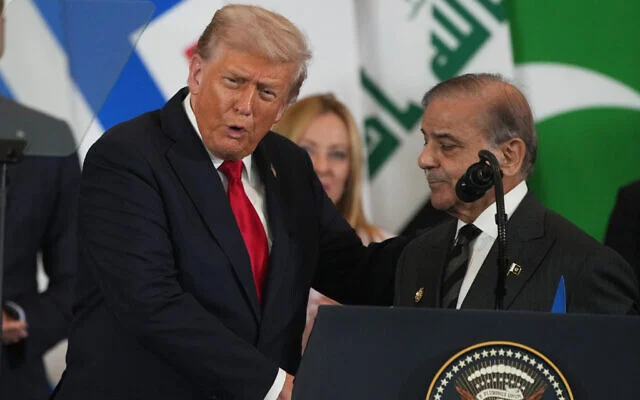
The reported framework, hyped by Pakistani Prime Minister Shehbaz Sharif and seemingly desperate to be finalized by President Trump, is fraught with contradictions. One moment we hear of an imminent signing; the next, Tehran offers a cold shoulder, denying the timeline and publicly reaffirming that it will not compromise on its “fundamental principles”—a polite way of saying their nuclear ambitions remain intact.
The core of the deal as reported—a sixty-day ceasefire, the removal of the blockade on Iranian ports, and vague “technical discussions” regarding nuclear programs—is little more than a band-aid on a gaping wound. For Israel, this is not a resolution; it is a retreat.
Where is the language regarding the dismantling of the ballistic missile program? Where is the ironclad assurance that the vast, terror-sponsoring network of proxies—the very entities that have made life in our north and south a living hell—will be neutralized? The silence on these issues is deafening. If this agreement is finalized in its current form, it essentially rewards the Iranian regime for its aggression, allowing them to lick their wounds, restock their coffers through reopened ports, and continue their work underground while we are pressured to lower our defenses.
The Netanyahu Vacuum
We must, however, hold a mirror to our own leadership. The current Israeli cabinet, defined by its hardline rhetoric and performative nationalism, has managed to isolate Israel on the global stage precisely when we need strong, calculated diplomacy. Netanyahu’s habitual refrain—”As long as I am prime minister, Iran will not have nuclear weapons”—has become a hollow mantra.
By failing to build a sustainable, regional coalition that offers a credible alternative to American unilateralism, the Prime Minister has left Israel vulnerable to exactly this kind of backroom deal-making. He has treated our national security as a tool for domestic political survival, leaving the defense establishment to pick up the pieces of his failed strategic vision. When Trump announces, via social media, that he has achieved a consensus among regional powers, and Israeli officials respond by admitting they are “not aware” of a finalized deal, it exposes a humiliating truth: Israel is no longer at the table; we are merely the menu.
The Price of Expediency
The tragedy of this moment is that it risks repeating the errors of the past. A “peace” that leaves the Islamic Republic’s nuclear and terror infrastructure intact is not peace; it is a temporary truce that gives Tehran the time it needs to achieve its goal of regional hegemony and, ultimately, our destruction.
The Iranian regime is currently in a state of transition and instability, following the death of Ali Khamenei and the subsequent rise of his son. This is a moment of profound internal weakness for Tehran. Instead of leveraging this instability to permanently degrade the regime’s capacity to threaten the region, Washington seems intent on providing it a lifeline in exchange for a few months of quiet.
For those of us in Israel, this is not just a diplomatic disagreement; it is a matter of survival. We need an end to this war, yes. We are exhausted. We have buried our dead and supported our traumatized citizens in places like Arad and Dimona. But we deserve a peace that is durable, not one that simply resets the clock for the next, inevitable, and potentially far more devastating confrontation.
If this deal goes through, it will be a testament to a double failure: a failure of American policy to understand the existential stakes for its most important ally, and a failure of the current Israeli government to steer our ship through these treacherous waters. We are being sold out by our friends and outmaneuvered by our enemies, all while our own leadership remains fixated on its internal wars. It is time for a new approach—one that prioritizes true security over the thin illusion of a “deal.”