
Iran’s Revolutionary Guard Isn’t Going Anywhere
Revolutions succeed when the existing regime’s armed forces suffer military defeat or switch sides. Otherwise they falter. And it’s rare that an army turns on its leaders out of love for country or sympathy with compatriots. In Venezuela, the “Maduro diet” of food shortages and million-percent hyperinflation starved the country; the average citizen lost 20% of their body weight and nearly a third of the population fled. Their suffering made no difference to the army, whose commitment to its patron, Nicolás Maduro, never wavered.
Autocratic regimes keep their security services well fed and sufficiently divided to avoid a coup – knowing the motivation will not be to better the lot of the country but to claim all the spoils. When they miscalculate, the result is more often civil war between competing military forces, as in South Sudan, than regime overthrow by a united military.
There are, of course, exceptions. Growing doubts over continued regime viability (Egypt in 2011), external threats (the Philippines, 1986), or sectarian ties to protesters (Tunisia, 2011) have all led to military overthrows as the army’s perception of its self-interest shifts. But it’s rare. Autocracies, even the most repressive, are remarkably stable; the Kim dynasty in North Korea has lasted 76 years and counting.
What about Iran? Those hoping for a regime-decapitating redux of Maduro’s recent exfiltration by US Delta Force commandos are, unfortunately, dreaming. It’s not even clear much will change in Venezuela – the Maduro regime and its coercive apparatus continue without Maduro. US President Donald Trump’s long-term objectives remain unclear, but what is clear is that political reform and Venezuela’s national welfare are not near-term priorities. Opposition leader María Corina Machado should have held on to her Nobel medal.
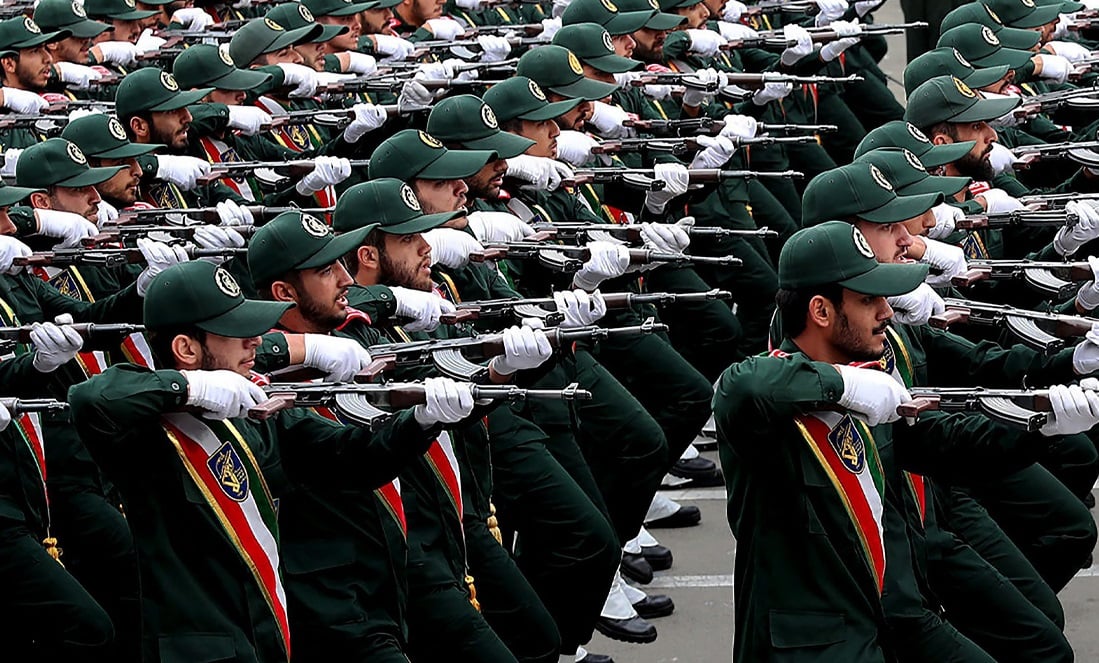
Iran is an international menace that has used its oil wealth to fund a worldwide network of proxy militias focused on exporting Shi’a Muslim revolution. Its direct military adventurism extends over the entire Middle East. Internal mismanagement more than international sanctions has caused widespread economic desperation and dwindling water supplies. And thanks to its key military power center, the Islamic Revolutionary Guard Corps (IRGC), the regime is positioned for long-term durability.
The IRGC is uniquely diversified. In most autocracies, the regime feeds the army. In Iran, the reverse is true. Through entities like Khatam al-Anbiya (construction), telecommunications, smuggling networks, and control of ports, the IRGC runs perhaps 40% of Iran’s economy. Senior commanders operate business empires alongside missile batteries and foreign legions. IRGC numbers are difficult to estimate because its integration throughout the economy is so thorough.
Its identity is also uniquely intertwined with the theocratic regime. The IRGC is not a separate institution with professional distance from political leadership. It was established following the 1979 Khomeinist revolution as an ideologically committed parallel force; its mission was and is to protect the theocratic leaders from threats including that posed by the conventional military (the Artesh). Recruitment emphasizes religious devotion and advancement depends on ideological reliability. Many if not most of its commanders are genuine believers, not opportunists.
Killing or capturing Iran’s Supreme Leader, therefore, is even less likely to disturb the existing power structure than plucking Maduro out of Venezuela. The mullahs and the IRGC are a single theocratic power blob, not separate, potentially rival entities. The next Supreme Leader may lack the current one’s revolutionary credentials, but his personal authority derives from Iran’s dominant military apparatus rather than competing against it.
For this reason, fomenting a coup in Iran may have worked in 1953 but isn’t remotely an option today. Exploitable cleavages are few. Sure, if the US were to threaten all-out war, maybe some factions within the IRGC would prefer cutting a deal to facing national destruction and personal destitution. But the threat would be idle and the IRGC knows it. Iran is a nation of 90 million, its population and military installations spread over a vast territory. Tehran is 6500 miles from Washington, D.C. and multiple airborne refueling operations from US bomber bases. That Israel was able to kill dozens of Iran’s top military commanders last June suggests its intelligence penetration is broad and deep. But it wasn’t enough and won’t be enough to defeat Iran on the ground without a D-Day level invasion. The US may yet conquer Greenland but will keep its boots out of Iran.
Faced with resilient political and military institutions and the irrelevance of Iranian popular sentiment to the power blob (and, if we’re being honest, to the US), does Trump have any viable strategic options? Sure, if the objectives are scaled down to constraining Iran’s regional menace and extracting tangible concessions. Millenarian revolutionary despots won’t be coerced, or enticed by Obamian incentives, into responsible behavior. But forcing Iran to end uranium enrichment, turn over enriched stockpiles, and eliminate its offensive missile program may be achievable at acceptable cost if approached with demands, deadlines, and escalating military pressure against IRGC lifelines.
An attack or blockade against Iran’s sprawling Bandar Abbas port complex, for example, would cripple oil exports, devastate government revenue, and strangle essential imports. Striking Kharg Island, through which nearly all of Iran’s crude oil exports flow, would have an even more concentrated effect on regime finances without excluding imports of food, medicine, and consumer goods. An attack on either site would have little effect on world oil markets so long as Iran does not shut down Persian Gulf shipping. Were it to try, destroying Iran’s naval assets also located at Bandar Abbas would check the threat, at least in the short term.
Targeting IRGC assets would inevitably punish ordinary Iranians, but they are already suffering galloping inflation, critical water shortages, and brutal military repression. Demands and timely consequences for defiance may make for a short conflict, particularly if the US projects long-term resolve and refuses to tolerate creeping efforts to evade commitments – behavior that Iran and its proxies have elevated to an art form, as Israel knows all too well.
Is this realistic? Probably not. Trump thrives on short, boastworthy demonstrations of power. He prefers quick victory declarations to long campaigns. And the fuse has been lit. After Trump expressed “great respect” for Iran’s decision to (apparently) halt mass executions of protesters, the Supreme Leader responded by calling him a criminal. The last time Iran swatted away Trump’s extended olive branch was in 2019, when Iran shot down a US military drone in international airspace. After Trump magnanimously (in his view) excused the attack, Iran’s president said the White House was “suffering from intellectual disability.” Trump huffed that “Iran leadership doesn’t understand the words ‘nice’ or ‘compassion,’” and months later, a US drone whacked Iran’s legendary general Qasem Soleimani in Baghdad.
Trump may avenge the Supreme Leader’s slight by attacking IRGC or other military targets, but as with the monthslong US air and naval campaign against Houthi rebels in Yemen, any achievements will be limited and transient. Neither the IRGC nor its political patrons is going anywhere. Even the recent uprising – violent, widespread, and driven by a wide cross‑section of Iranian society – never posed a real threat to the regime. Iran’s power blob simply dispatched the IRGC and foreign Arab militias when protesters overwhelmed Basij security forces normally tasked with suppressing dissent.
In a better world, the voices of ruthlessly besieged populations would stir consciences and shatter the edifices of oppression. In this world, those populations continue to suffer and ill-considered external interventions usually fail. With persistence and commitment, a long-term campaign to quarantine the foreign adventurism of such malign regimes could succeed, and even one day lead to their downfall. But let’s not delude ourselves.