Iran’s Streets Speak Louder Than Its Censors
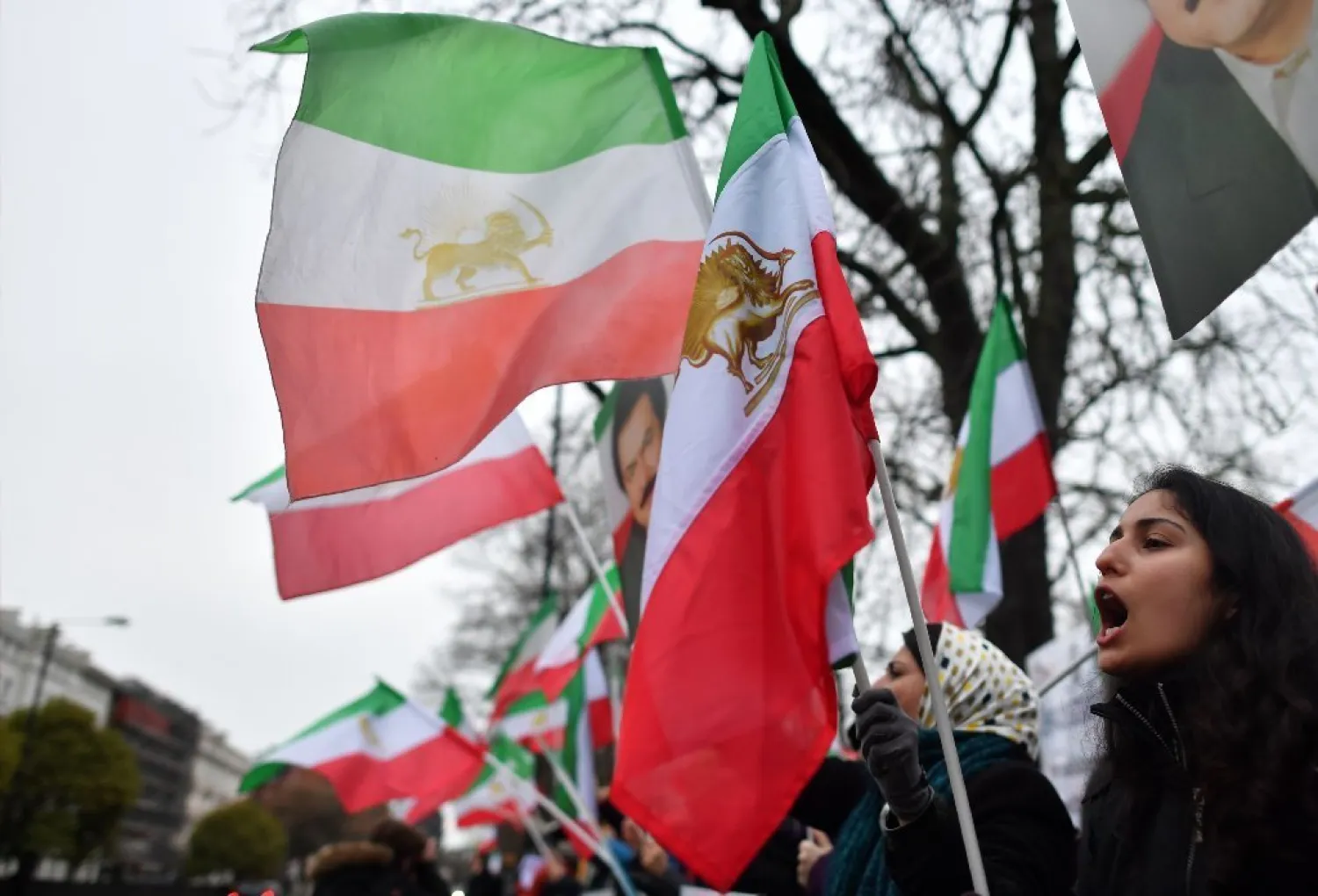
When a government shuts down the internet, it’s rarely about maintaining order. It’s really about fear. Iran’s recent nationwide internet blackout, which coincided with growing protests, isn’t a sign of strength; it’s a clear indication that the regime is struggling to manage a reality it can no longer control. By cutting off digital access, the Islamic Republic is essentially admitting that it fears the voices of its own people more than any external threat.
BREAKING:
Massive anti-regime protest have now also erupted in the city of Dezful in southwestern Iran.
The Islamic regime’s security forces are stretched thin due to mass protests taking place in more than 100 cities now. pic.twitter.com/eZllxTRMRs
— Visegrád 24 (@visegrad24) January 8, 2026
For twelve consecutive days, Iran has been caught in a wave of unrest not seen in years. What started as public outrage over a failing currency, rampant inflation, and the rising costs of basic goods has morphed into a serious political challenge. From Tehran and Mashhad to Isfahan, Tabriz, and countless smaller cities, Iranians have moved past just seeking economic relief. They are now openly questioning the legitimacy of the governing system.
BREAKING: Unprecedented protest sweeping throughout every province in Iran right now.
Where is the media?pic.twitter.com/sm7uo0Fiie
— Eyal Yakoby (@EYakoby) January 8, 2026
The chants ringing out in the streets of Iran leave no room for doubt. Words like “Freedom,” “Death to the dictator,” and “Long live the Shah” signal a significant change in the public’s sentiment. Protesters are demanding the ousting of Supreme Leader Ayatollah Ali Khamenei and are boldly calling for the return of Reza Pahlavi, the exiled son of Iran’s last king. For a regime built on rejecting Iran’s history before 1979, these slogans hit right at the heart of its ideological foundation.
I knew that the Crown Prince @PahlaviReza is popular in Iran. But I didn't know how MASSIVELY popular he is, until today.
In every protest in every city they are calling for his return! pic.twitter.com/FD1QXul3aM
— Dr. Eli David (@DrEliDavid) January 8, 2026
The state’s response has been all too predictable and deeply concerning. Human rights groups have reported that at least 45 protesters have been killed since the protests began, with hundreds injured and over 2,000 detained. There are reports of hospitals being raided and families being pressured to stay quiet. The recent nationwide internet shutdown, which has nearly eliminated connectivity, is just the latest move in this ongoing campaign of repression.
This digital blackout isn’t just about stopping violence; it’s really about cutting off visibility. By isolating communities from each other and disconnecting them from the outside world, the authorities aim to disrupt coordination and hide evidence of their abuses. The Islamic Republic has realized that in the era of smartphones and social media, images can challenge official narratives far more effectively than any foreign statement. So, darkness becomes a tool of governance.
However, the streets continue to speak out. Despite the blackout, videos and eyewitness accounts have emerged, showing large crowds marching peacefully, chanting in unison, and even taking down surveillance cameras that symbolize the state’s constant control. These images suggest that fear, once the regime’s most reliable weapon, is slowly losing its grip.
Voices from the Iranian diaspora have amplified the significance of this moment. Iranian activist and journalist Masih Alinejad has framed the unrest as a revolution rather than a series of protests. She has urged the international community to move beyond dialogue with Tehran’s rulers and instead offer concrete support to the Iranian people. Her calls include expanded satellite internet access through Starlink, the expulsion of Iranian diplomats from the United States, and severe consequences for officials who ordered live fire against civilians. Her message reflects a growing belief among Iranians that engagement with the current system has only prolonged their suffering.
The economic roots of the crisis are undeniable. The collapse of the Iranian rial, the removal of subsidized exchange rates, and sharp rises in food and medicine prices have pushed millions to the brink. Inflation and unemployment have hollowed out Iran’s middle class, while corruption and elite privilege remain untouched. The regime blames sanctions; protesters point to decades of mismanagement, ideological rigidity, and systemic corruption. The participation of shopkeepers and merchants in strikes underscores how deeply this anger cuts across society.
International solidarity is also becoming more visible. Dr. Anila Ali, President and CEO of the American Muslim Multifaith Women Empowerment Council, announced that supporters of Iran’s protest movement would rally outside the White House under the banner of “Women, Life, Freedom.” She openly criticized the silence of much of the Muslim world and expressed solidarity with Iranians resisting what she described as injustice carried out in the name of religion. Her remarks highlight a growing moral unease with treating Iran’s crisis as a purely internal matter.
She shared on her Facebook: “God bless the people of Iran, who are on the streets, standing up to injustice, perpetrated in the name of Islam by their own people, and while the Muslim world is largely mute because there is no Jew involved, because there is no Israel involved and because there is no Arab involved, I say to the Muslim world I stand with the people of Iran, the Ajamis of the Muslim world- and I pray for them that they may have victory against the mullah evil regime- Ameen
God bless the United States of America for standing with the people of Iran.”
Statements from Washington have further sharpened the moment. US President Donald Trump’s warning that continued killings could invite serious consequences has emboldened protesters while drawing condemnation from Tehran.
.@POTUS on Iran: What they've done is, in the past, they started shooting the hell out of [protesters]… and I said if they do that, we're going to hit them very hard… So far, for the most part, they haven't… The enthusiasm to overturn that regime is incredible. pic.twitter.com/i7SBH349Ke
— Rapid Response 47 (@RapidResponse47) January 9, 2026
US Treasury Secretary Scott Bessent’s assessment that Iran’s economy is “on the ropes” mirrors the daily reality faced by ordinary citizens. European leaders have voiced concern, but many Iranians remain skeptical that words alone will alter their fate.
US Treasury Secretary Scott Bessent flags Fed rate outlook, deficit drop, Venezuela access, and warns the Iranian economy is on the ropes#USPolitics #Treasury #FederalReserve #InterestRates #Economy #Venezuela #Iran #Markets pic.twitter.com/VO1FfqO7Se
— ET NOW (@ETNOWlive) January 9, 2026
The renewed prominence of Reza Pahlavi as a unifying figure, regardless of views on monarchy, underscores the depth of public disillusionment with clerical rule. His appeal lies less in nostalgia and more in the absence of credible alternatives within the current system. The movement itself remains decentralized, but its objective is increasingly clear: the rejection of the Islamic Republic’s political authority.
I've trained all my life to serve my nation. I am more than ever ready to step into Iran. I will be there with my compatriots to lead the ultimate battle. pic.twitter.com/RSgG5IfqKm
— Reza Pahlavi (@PahlaviReza) January 7, 2026
Reza Pahlavi said in his statement that:
“Tonight, millions of Iranians took to the streets to demand their most basic right: freedom. The regime’s response was not dialogue, but fear. It severed all lines of communication—shutting down the internet, cutting landlines, and attempting to plunge the country into silence.
I thank the leader of the free world, President Donald Trump, for reiterating his commitment to holding this regime to account. It is now imperative that others, particularly European leaders, abandon their silence and act with the same moral clarity in support of the Iranian people.
I urge the international community to deploy every technical, financial, and diplomatic resource at its disposal to restore communication inside Iran. The world must be able to hear and see the voice of the Iranian nation. Do not allow the courage of my compatriots to be erased by censorship or darkness.”
Millions of Iranians demanded their freedom tonight. In response, the regime in Iran has cut all lines of communication. It has shut down the Internet. It has cut landlines. It may even attempt to jam satellite signals.
I want to thank the leader of the free world, President…
— Reza Pahlavi (@PahlaviReza) January 8, 2026
Iran now stands at a decisive crossroads. When economic collapse converges with political repression, and when peaceful dissent is met with bullets and blackouts, a regime forfeits its claim to legitimacy. Cutting off the internet may delay accountability, but it cannot erase public memory or silence collective will.
In the end, Iran’s streets are speaking with a clarity that no censor can fully suppress. The blackout may obscure events in real time, but it has already illuminated a deeper truth: a state that must unplug its people to survive is a state confronting its own unraveling.