Is dialogue in the diaspora worth it anymore?
‘1) Fuck sitting on the fence (the fence is not for minorities like Jews who know why we need a Jewish state). 2) Fuck everyone who wants us to look in both directions equally or see Gazans with even eyes right now, we are doing our best. 3) Recognize that we need no permission to breathe or take up space or to support a legitimate, sovereign Jewish state. 4) Recognize that it’s a tough time to be a Jew.’
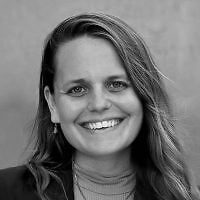
She went onto ask me whether such a dialogue was worth it. People were not for changing. Perhaps but I wanted my university friend, an English literature graduate, to listen to Haviv Rettig Gur’s metaphor about the hobbit,
‘In Lord of the Rings, Tolkien writes of the hobbits: “The Shire had no need of watchtowers or walls, and its peace had been maintained more by the vigilance of its friends than by any efforts of its own. Yet the Hobbits continued to live, as they had lived for centuries, in a state of blissful ignorance, unaware that they were being watched and protected.”……too many in the West have forgotten this last part, not because the world has changed, but because they have lived under someone else’s protection for so long that they have forgotten that they are protected.’
As Jews we don’t ever take our survival for granted, we know who and what protects us.
It shook my university friend who started to see something that she hadn’t seen before about how she was able to freely take positions without there being any jeopardy. That certainly wasn’t the case for my Israeli friend. It seemed to be a moment when dialogue mattered.
Both were now talking about uncertainty. I think what my university friend describes here is shared by many in the diaspora who are ‘ lost in a tangled forest of opinions and hate and fear, in issues I don’t understand. That everything that seems to me so vital to hold onto and speak about and stay true to, will become falsely veiled and clouded in it all‘. My response has always been what I called the 5 year journey with the kids I taught, the ‘ walk towards‘. I and they embraced the ‘spirit in which we are certain by not being certain of our certainties. To the extent that we are not sure about our certainties we begin the ‘walk toward’ certainties.’
But now two years on I am finding uncertainty to be crippling. To partly explain it both of my friends gently introduced generational trauma into our conversation which took me to the dysfunction I grew up in. Fear and anxiety were ever present, that we needed to keep our heads down, avoid risk, conform because at any moment there could be a knock on the door. It’s probably been there the whole time but I refused ‘to know one corner of the room, one spot near the window, one narrow strip on which they keep walking back and forth‘. Better to go out into the world and come back with a self.
As a result it led me to believe ‘life is there ahead of you and either one tests oneself in it’s challenges or huddle in the valley of dreamless day to day existence’. I’m deep in that valley at the moment. My thoughts and feelings grab me by the throat too often. At that moment I’m lost to them.
I feared my Israeli friend would feel this was starting to sound like diaspora self pity and indulgence. Far from it, ‘I think Jews in the diaspora especially Europe have experienced trauma that is unique and that Israelis don’t and can’t get’. It prompted her to ask some tough questions:
‘So what options do we have when some of our most basic life foundations are fallen apart? Keep the dialogue going with those who need persuading? Only hang out with people who agree with us? Drop from sight hoping the wind will start to blow in the other direction? Move to Israel? Lean into the Jewish tribe? Speak out? Come and visit the homeland to breathe? Believe that people are essentially good? Don’t mention or talk about it? None of these options is complete or perfect for everyone of us.
We are in a time when whether you like it or not your Jewish identity is pushed to the fore. Of course it’s not the 1930s and 40s but there is something about having to identify as Jewish whether you choose to or not is a very threatening place to be’
How does a non Jew living in the UK try to understand the lived experience captured by my Israeli friend’s questions that as always get to the heart of things. For my university friend it is in people’s stories, a willingness to not only listen but hear, how really knowing good can help us overcome the terrible place humans can go. However she understands the limits of this in the current reality, ‘it would take a longer, gentler conversation’.
So it was here we bumped up against the limits of our dialogue. We could go no further.
Where did it leave us? For my Israeli friend she is in a war, now is not the time. She has written elsewhere:
‘Our explanations matter, but they might matter to us more than to anyone else. And as we wait for someone to listen, we shouldn’t hold our breath.’
My university friend is still writing to me, we will continue to talk. For me it is now ‘a search of stabilizing the self into a form. In doing so we can create a life that presents itself to a reflective individual as worth living. After all if I’m around in the world at all I am in it as a human being.
If that is the case then I suggest for diaspora Jews who still feel dialogue is worth the effort is because they want to be seen.
‘I want to talk about everything with at least one person as I talk about things with myself’ (Dostoyevsky).
Ultimately a world without dialogue is a ‘universe of darkness’. It has to be worth it.