CFO | Empower Society for Good I Author
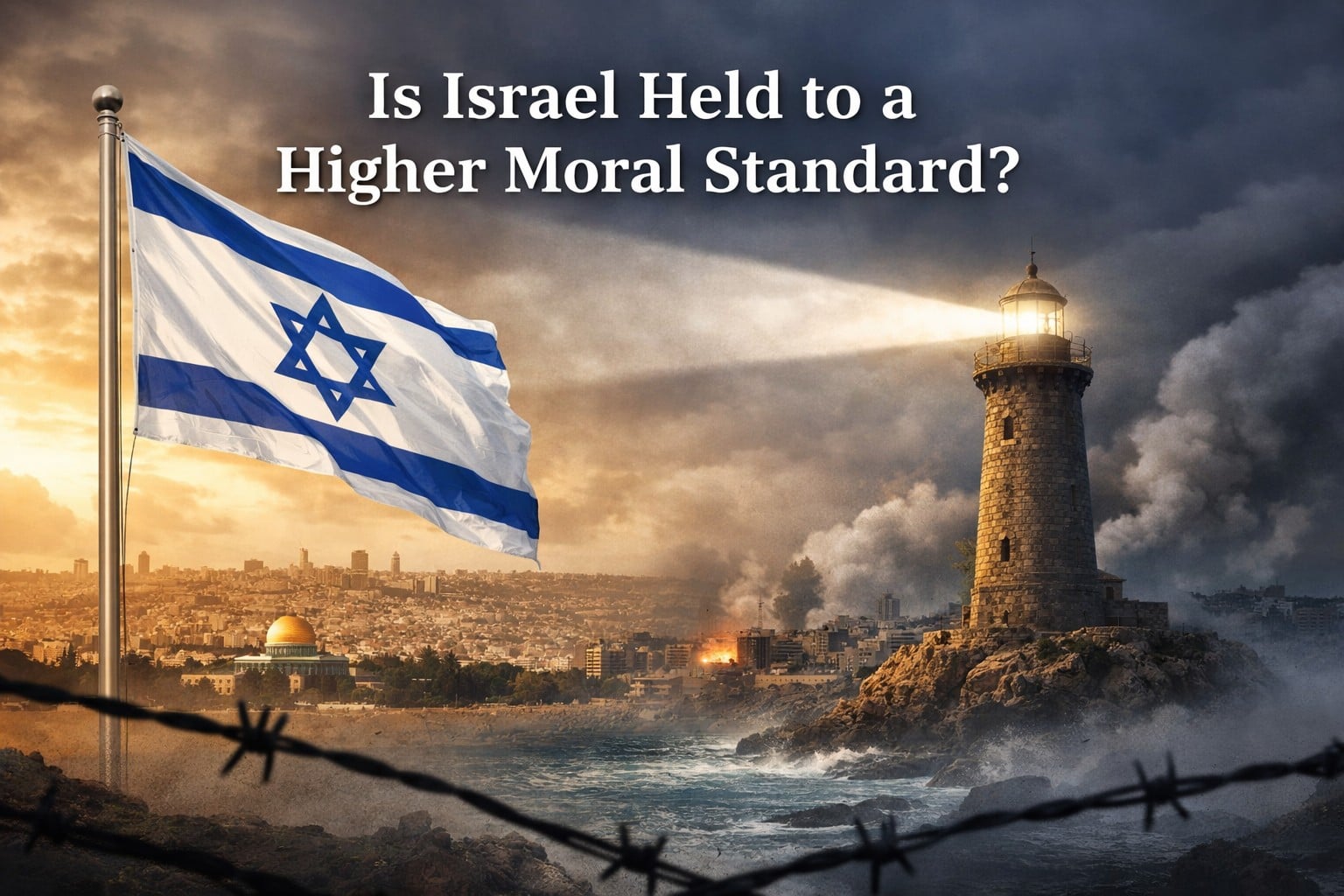
Is Israel Held to a Higher Moral Standard?
As we begin rereading the Book of Vayikra, it is hard to ignore the discomfort.
A book of sacrifices, offerings, and priestly rituals feels far removed from the realities of today’s world. In an age of geopolitics, conflict, and ideological struggle, it is tempting to see Vayikra as a relic — even a form of ancient cult practice with little relevance to modern life.
But that conclusion would be a mistake.
The Book of Leviticus opens in an unexpected way.
“And He called to Moses…”
The Hebrew word Vayikra means “He called.” It is an invitation — not a command shouted from a mountain, but a call to come closer.
Immediately the Torah begins describing the system of korbanot, offerings brought in the Mishkan. For many modern readers, these sacrifices can feel distant and difficult to understand. Yet beneath the ritual language lies a profound moral framework that speaks directly to the challenge of building a just society.
In today’s world, this lesson feels particularly relevant.
We live in an era shaped by wars, ideological conflict, and geopolitical struggles over power and resources. Nations pursue security and influence, but the moral frameworks that guide those pursuits are often fragile or contested.
The Torah proposes a different vision.
It imagines a society where power is restrained by law, where leaders are accountable, where the poor can approach God with the same dignity as the wealthy, and where wrongdoing is acknowledged and repaired rather than denied.
This vision became the foundation of Israel’s covenantal mission.
Israel was never meant to be simply another nation competing for power. The Torah presents it as an experiment in building a society grounded in justice, responsibility, and holiness.
That aspiration has never been easy. History repeatedly shows how difficult it is for any nation to live up to such ideals. Yet the call of Vayikra remains.
God calls not only to Moses but to every generation.
The question that echoes through the opening of Leviticus is therefore not only about ancient offerings in the desert.
It is about the kind of society we choose to build.
If a nation seeks to draw close to God, it must begin with responsibility — with the courage to acknowledge mistakes, the humility to correct them, and the determination to pursue justice even in a world driven by power.
Only then can holiness enter the life of a society.
Because when we look beneath the surface, beyond the rituals themselves, we begin to uncover something much deeper — a structured response to the human condition. The offerings are not about ritual for its own sake. They reflect a profound understanding of the human psyche: our need to take responsibility, to confront failure, to repair relationships, and to draw close to something greater than ourselves.
The Hebrew word korban is rooted in karov — to draw close.
This is the opening message of Vayikra.
Not sacrifice, but relationship.
Not ritual, but responsibility.
The korbanot teach that human beings must seek closeness to God through responsibility.
The Hebrew word korban does not actually mean sacrifice. It comes from the root karov, meaning to draw close.
The offerings are therefore not about appeasing God. They are about repairing relationships — between individuals and God, between people and society, and between human power and moral responsibility.
The first chapters describe several types of offerings, each reflecting a different dimension of human accountability.
The olah, the burnt offering, was completely consumed by fire. It symbolized total dedication — the recognition that life itself ultimately belongs to God. It reminds us that human beings must sometimes surrender ego and power in service of a higher moral purpose.
The mincha, the grain offering, could be brought by the poorest member of society. Unlike the animal offerings, it required only flour and oil. The Torah makes clear that spiritual dignity does not depend on wealth. A society that seeks holiness must recognize the equal value of every person.
Then come the sin offerings, brought when someone has done wrong, even unintentionally. Remarkably, the Torah specifically includes the possibility that leaders, priests, and even the entire community may commit mistakes that require atonement.
This idea was revolutionary.
In many ancient societies, rulers were treated as divine or beyond accountability. The Torah introduces something radically different: leaders are morally responsible for their actions.
Justice requires humility.
The message of Vayikra is therefore not primarily about ritual. It is about responsibility.
Before a society can aspire to holiness, it must create systems that allow individuals and leaders to acknowledge wrongdoing, repair harm, and restore moral balance.
This is not ritual theology.
It is a blueprint for a moral society.
A society in which no one is above accountability.
A society in which wrongdoing is not denied but confronted.
A society that understands that closeness to God begins with responsibility.
Israel Today
And perhaps this is why these ideas feel so relevant now.
We are living through a time of deep moral confusion. Events unfold in real time, yet the narratives surrounding them are fragmented and often contradictory. Even the language we rely on — justice, freedom, proportionality — no longer carries a shared meaning.
From one perspective, Israel is defending its citizens against real and immediate threats. From another, it is seen as an aggressor. Claims are made, counterclaims follow, and clarity becomes difficult to hold onto.
This is not only a conflict of facts. It is a conflict of moral frameworks.
And in such a world, the question Vayikra asks becomes urgent:
How does a society take responsibility when truth itself feels contested?
Israel’s existence is constantly examined and judged in a global arena shaped by geopolitical power struggles, wars, and ideological conflict. There are real threats, real dangers, and real decisions that must be made. At the same time, there are narratives that challenge, question, and often condemn those decisions.
This creates a tension that is difficult to resolve.
But perhaps this tension is not incidental.
Perhaps it is part of the calling itself.
A Higher Standard
So is Israel held to a higher moral standard?
In many ways, yes. Not always fairly, and not always consistently, but persistently.
Yet this expectation does not come only from the outside world. It is rooted in the Torah itself. From the very beginning, Israel was called to be a nation shaped by justice, responsibility, and moral accountability — “a kingdom of priests and a holy nation.”
That calling does not disappear in times of conflict. It becomes more demanding.
The more a nation claims a moral purpose, the more it will be judged by that standard.
In that sense, Israel is not a “moral lighthouse” because it is perfect or universally praised.
It is a moral lighthouse because it is engaged in the ongoing struggle to align power with responsibility, even under pressure — in a world where clarity is elusive, narratives are contested, and the stakes are real.
Drawing Close
Vayikra begins with a call.
Not a call to ritual alone, but a call to responsibility.
Before holiness, there must be accountability.
Before closeness, there must be honesty.
Before a society can claim moral purpose, it must be willing to examine itself.
That was true in the Mishkan.
It remains true today.
Closing Reflection
The message of Vayikra is ultimately a challenge to every generation.
Holiness does not emerge from rituals alone, nor from power, wealth, or national success. It emerges when a society holds itself accountable to justice, compassion, and moral responsibility.
In a world often shaped by conflict, ideological extremes, and struggles for power and resources, the Torah asks whether a nation can live differently — whether a people can build a society guided not only by strength but by conscience.
That question stands at the heart of Israel’s covenant.
The call still echoes.
Related Topics
Related Posts