Hadassah National Assembly, Editor, Hadassah Writers' Circle
Is Tishah B’Av The Saddest Day on the Jewish Calendar?
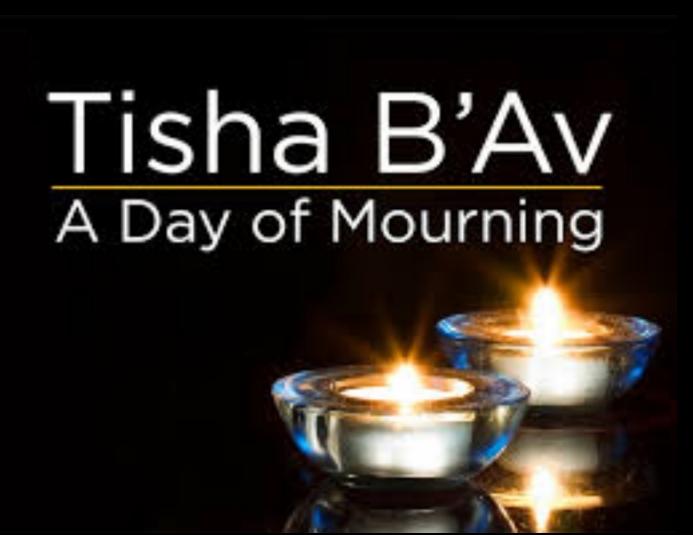
Image courtesy of Hadassah.
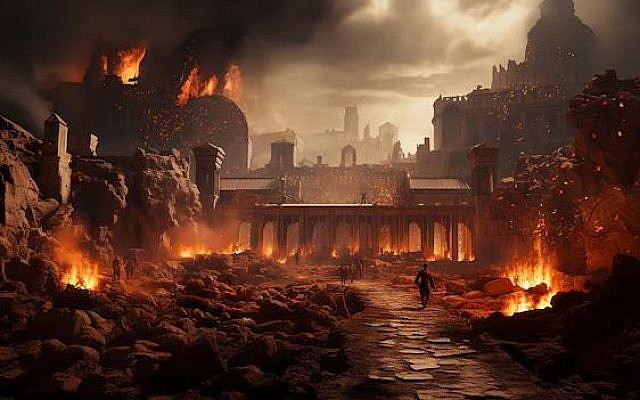
I’ve never commemorated Tishah B’Av—the day of Jewish communal mourning, which falls on the ninth day of the Hebrew month of Av. Many of you know, as the My Jewish Learning website teaches, “Although a large number of disasters are said to have befallen the Jews on this day [including the Jews’ expulsions from England and Spain], the major commemoration is of the destruction of the First and Second Temples in Jerusalem in 586 B.C.E. and 70 C.E., respectively.”
So why, year after year, have I let this holiday come and go without a sense of sadness? I know we often blame our parents for our questionable perspectives, but, the truth is, my mother, though she passed away over a decade ago, is responsible for this one. A staunch Zionist, both intellectually and emotionally, she felt strongly that we had Israel now, so it didn’t make sense to mourn the destruction of the ancient temples. In her mind, those horrible events were supplanted by the establishment of a Jewish homeland. And she celebrated Israel’s creation with an outpouring of devotion.
Until recently, as Tishah B’Av approached, I would hear my mother’s voice reverberate in my thoughts: “No need to mark this day. We have Israel now.”
Yet, as the ninth of Av approaches this year, given the mind-blowing events we have witnessed on and since October 7, 2023, I find myself asking, “Is Tishah B’Av the saddest day on the Jewish calendar as Jewish scholars proclaim?” It’s not that I suddenly feel the urge to mourn the destruction of our ancient temples. Rather, I ask the question because I am saddened that centuries following the destruction of those temples, we, the Jewish people, are still plagued by enemies who want to destroy what we have built. Despite Israel’s legal and moral establishment by a United Nations majority vote in 1948, there are still those today who want to terminate our sovereignty in our Jewish homeland. And, maybe even sadder, is that today some people still aim to eradicate us, not despite Israel’s establishment but dafka (precisely) because of its creation.
Tishah B’Av reminds us of the sad reality that, centuries later, even though Israelis and Jews in the diaspora have shown over and over that we are contributors to global healing and advancement, it’s not enough to quell the hatred over the existence of a Jewish homeland.
And, perhaps, most important, as Tishah B’Av 2025 nears, I can’t help but be overwhelmingly sad about all the people who have been killed in the aftermath of October 7—and all those struggling with new physical and cognitive limitations, lost livelihoods, bombed-out homes, life without their parents or their children and an unsettling sense of uncertainty about their future. And let’s not forget the tension that constantly lives in the Israeli air over when another siren will go off and where another missile will strike.
On Tishah B’Av, we read the Book of Lamentations. I am struck by the words of the first and second verses in Chapter One, which speak of Jerusalem following the destruction of the first ancient temple:
Alas!
Lonely sits the city
Once great with people!
She that was great among nations
Is become like a widow;
The princess among states
Is become a thrall.
Bitterly she weeps in the night,
Her cheek wet with tears.
There is none to comfort her
Of all her friends.
All her allies have betrayed her;
They have become her foes.
Clearly, our reality is drastically different today. The Israel Defense Forces is far from defenseless, and the United States has been an active ally, despite the silence of many individuals we feel have betrayed us.
There are countless people who have rushed to Israel to comfort, sustain and nurture our Israeli family. Jewish organizations like Hadassah, the home of my Zionist heart for decades, have launched crisis campaigns to raise the funds to help Israel meet the challenges of war.
With the threat of an Iranian attack looming, the Hadassah Medical Organization (HMO) moved swiftly to operationalize its operating rooms, intensive care facilities and neonatal and dialysis units underground at The Gandel Rehabilitation Center on Hadassah Mount Scopus. This underground “God Forbid Hospital” has been re-nicknamed the “Thank God Hospital,” caring for patients ranging in age from a few months old to 90 plus.
And here in America, there are new young Zionists who are raising their voices buoyantly on behalf of Israel on social media and in other venues, while staunch long-term Zionists stand firm in their advocacy for our Jewish homeland.
It seems to me that, this year, I must also pause on Tishah B’Av to feel my despondency that too many global leaders and their citizens are using their voices and resources to denigrate Israel and the Jewish people. I can’t help but pause to be disheartened about the centrality of war and violence in our lifetimes and the prevalence of bullies on the world stage.
As I write this, there is still a ceasefire between Israel and Iran, though one in Gaza has yet to take shape. In any case, we don’t know what escalations of violence lay on the horizon, but I ask myself, “Do I have the luxury of walking around sad and in a fog when the people of Israel are digging deep for inner strength to proceed with their lives—to remain resilient and celebrate the good?
Like the Israeli people, I know that, though we must pause to mourn, we must continue to dig deep for resilience and hope that sanity and peace will somehow prevail, sooner rather than later.
Lonye is a member of the Hadassah Writers’ Circle, a dynamic and diverse writing group for leaders and members to express their thoughts and feelings about all the things Hadassah does to make the world a better place. It’s where they celebrate their personal Hadassah journeys and share their Jewish values, family traditions and interpretations of Jewish texts. Since 2019, the Hadassah Writers’ Circle has published nearly 650 columns in The Times of Israel Blogs and other Jewish media outlets. Interested? Please contact hwc@hadassah.org.
Related Topics
Related Posts