
Isolation, intimidation and financial control are also forms of violence
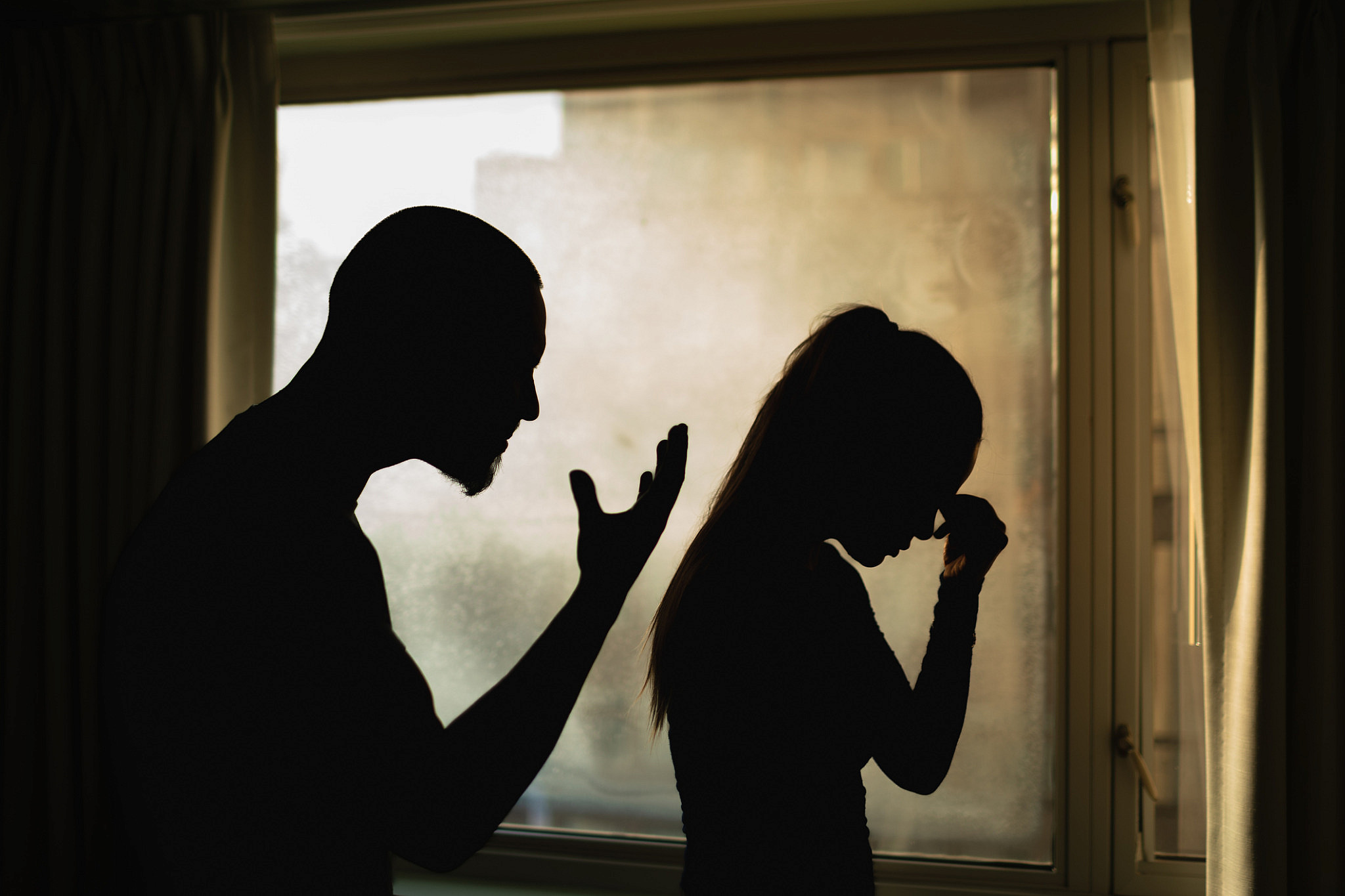
When we talk about violence against women within intimate relationships, we must recognize that the reality extends far beyond what can be seen. For years, public awareness focused almost exclusively on hitting, injuries, and other visible forms of harm. Yet in many Israeli homes, the dominant reality is a long continuum of control, isolation, intimidation, belittlement, and psychological erosion. These wounds may not leave bruises, but they are equally deep.
Today’s International Day for the Elimination of Violence Against Women is an opportunity to shine a light on a problem that persists in the shadows, day in and day out.
National data on intimate partner violence (IPV), based on a survey conducted by the Drawing the Lines initiative in collaboration with the Interministerial Committee for Addressing Domestic Violence, reveal a troubling reality. In a single year, 10.8 percent of women and men aged 18 to 65 experience violence from a partner. That is more than half a million people. Women are far more likely to face severe or life-threatening physical violence and to experience multiple forms of abuse. And when intimate partner violence ends in homicide, the victims are always women. Behind these numbers stand hundreds of thousands of women living with constant fear and restriction, often without any outward sign that something is wrong.
Related: Comptroller says state failing to address domestic abuse, violence against women
Non-physical violence is far more widespread than many assume. Women who turn to support centers describe suffocating control, constant monitoring, repeated demands to check their location, prohibitions on meeting friends, full financial control, phones being searched, daily belittlement, and intrusion into every corner of their private lives. Many of them doubt whether what they experience is considered violence. This uncertainty adds to the complexity of addressing the problem. Violence can persist for years within a relationship before a woman recognizes that she is already in a dangerous situation. The facts are clear. More than 40 percent of women who experience non-physical violence are also at real risk of physical harm. This continuum cuts across every sector, income level, and educational background in Israel.
Personal pain during a national crisis
Over the past two years, another force has intensified the problem. After the outbreak of the war on October 7, the number of women seeking shelter dropped by about 14 percent. Some viewed this as progress, but it was not. Many women felt that during a national crisis there was no space for their personal pain, that their experiences were small compared to the country’s struggles, or that help would not be available when state welfare systems were under pressure. Others avoided seeking help because of uncertainty, fear of change, or declining trust in institutions.
In recent months, however, a different picture has emerged. Support hotlines are reporting a sharp rise in calls. In addition to the violence that existed before the war, new and more complex cases are surfacing. Research worldwide shows that wars tend to intensify domestic violence. Trauma and post-trauma can lead to stress, anxiety, emotional volatility, and difficulty with self-regulation. These conditions can contribute to violent behavior. Seeking help in such situations is deeply complex. On one side stands a partner who risked everything for home and country and returned wounded. On the other stands violence that is real, damaging, and dangerous.
This reality demands broad access to information, expanded support resources, and services designed to address trauma, injury, and family harm together.
Another troubling finding concerns young people. Many struggle to identify forms of non-physical violence. In a recent survey conducted by Drawing the Lines, only 58 percent of young adults recognized a partner’s demand to avoid any interaction with people of the other gender as violence. Only 65 percent recognized the use of threats of self-harm as a method of control. Without a clear understanding of boundaries in relationships and of illegitimate forms of control, prevention becomes extremely difficult. One of our central responsibilities is therefore to expand the public’s understanding of what violence is and how it manifests long before it becomes physically dangerous.
It must be said clearly: the responsibility to notice, ask, and intervene does not rest solely on the victim. Friends, neighbors, relatives, colleagues — we all see signs. We all notice when someone disappears from social circles, seems tense, apologizes constantly, or seems alarmed by every phone call. Sometimes those on the outside are the only ones able to reach out. Even seeking advice for someone else by calling a hotline, consulting a support organization, or speaking with a social worker can change the course of a harmful situation. You do not need full information or absolute certainty. You only need to ask and say: “I am worried about you.” From there, help becomes possible.
And to the woman reading this who knows, deep inside, that something has been happening for a long time and that the burden has become too heavy, we want to say: real, professional, and immediate support exists. The Welfare Ministry’s 118 hotline operates 24 hours a day. No question should cause shame, and there is no situation that cannot be discussed. Abuse does not need to turn physical to be dangerous, and it does not need to continue.
As a society, we must stop waiting for the moment when violence becomes visible. Silent violence is still violence. And it can be stopped, if we choose to see it.