
Curious soul shaping policy through law and learning.
Israel and Kazakhstan: Unlocking New Opportunities Beyond the Middle East
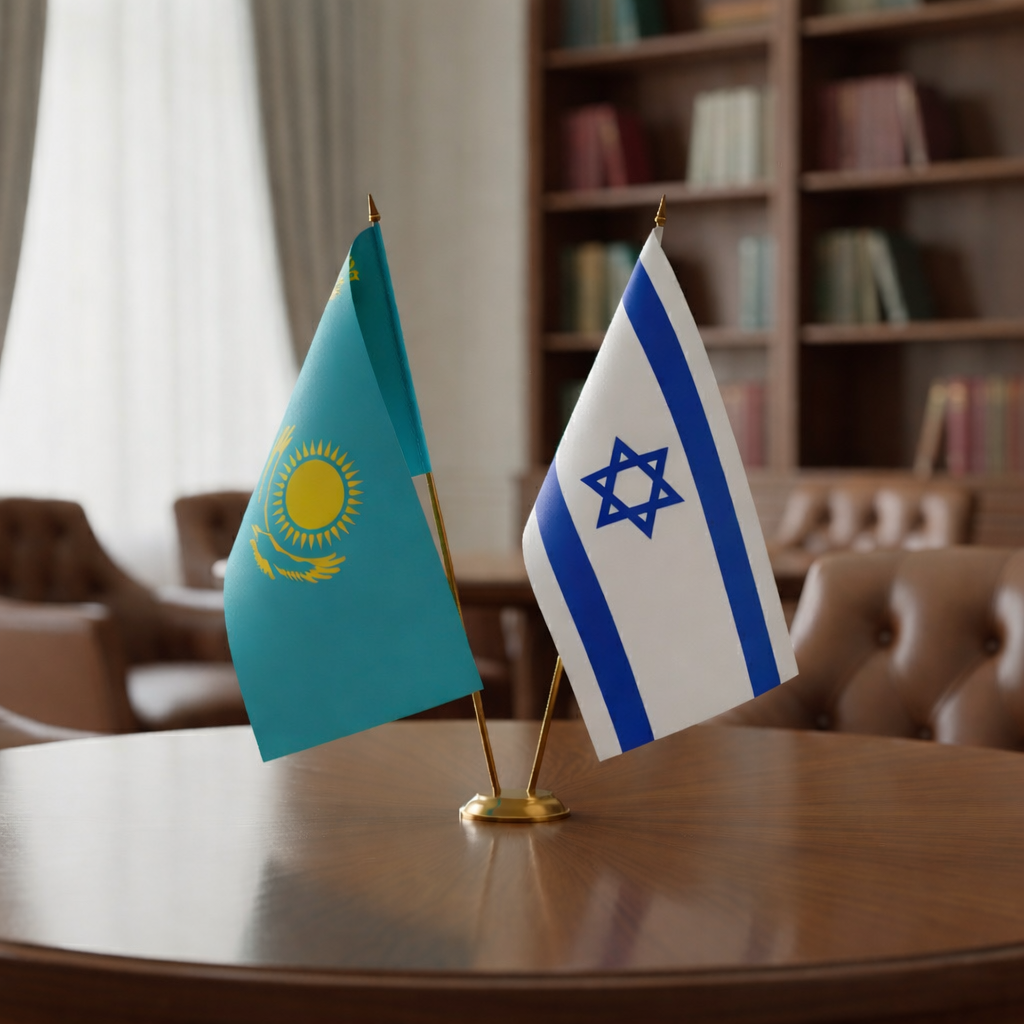
© 2026 Farid Shukurlu. AI-generated illustration created with OpenAI DALL·E. All rights reserved. Reproduction or distribution without permission is prohibited.
Israel, often called the “Start-Up Nation,” is renowned for its tech-driven, innovation-led economy—punching far above its geographic size. That reputation has long made Israel a magnet for global investment. The United States alone invests roughly $40 billion annually in the Israeli economy, while newer partners are taking notice: Azerbaijan, for example, invested more than $500 million in the first half of 2025, underlining growing international interest in Israel’s dynamic market.
Kazakhstan’s recent inclusion in the Abraham Accords has opened fresh investment opportunities and generated momentum for deeper commercial ties between Central Asia and the Middle East. The agreement creates new pathways for private companies to invest in, and crucially engage with, Israel’s innovation ecosystem, especially in sectors where Israel excels: construction, manufacturing and advanced materials.
As Kazakh private firms begin to reap the benefits of closer engagement with Israel, many are actively evaluating entry strategies for a market that combines cutting-edge technology, highly skilled talent and strong demand for high-quality products.
Tambour Ltd exemplifies this dynamic. Now part of the Singapore-headquartered Kusto Group – an international industrial holding founded in Kazakhstan – Tambour is Israel’s largest paint and coatings manufacturer, with a long record of supporting local industry and communities. Kusto’s long-term investments have expanded Tambour into a broader construction-materials and industrial-coatings group, demonstrating how strategic capital can strengthen manufacturing, R&D and jobs. The Kusto Group also maintains a diversified international portfolio across Kazakhstan, Ukraine and Vietnam, spanning manufacturing, agriculture, real estate and energy.
“For Kusto, Tambour has always represented a strategic, long-term investment in Israel’s vibrant construction and coatings market. By committing to innovation, local talent and high-quality products, we have not only grown the company but also raised industry standards and exported them abroad, most recently through our acquisition of Barpimo Coatings, a paint and coating manufacturer in Spain’s Rioja region. This expansion would not have been possible without our success with Tambour in Israel,” said Yerkin Tatishev, Chairman of Kusto Group.
Bilateral ties between Kazakhstan and Israel are reflected in rising trade across construction materials, energy technology, agritech and protective coatings. Kazakhstan’s resource-rich economy and industrial scale complement Israel’s R&D strengths, enabling the creation of higher-value products.
As a result, joint ventures are proliferating modular building systems for urban development, durable infrastructure coatings and sustainable solutions for housing and industry.
This combination is a powerful driver of job creation, supply-chain resilience and market expansion. Israeli technology already supports several sectors in Kazakhstan, from agriculture to digital transformation – areas where Israel excels. Israel’s Ambassador to Kazakhstan, Yoav Bistritsky, has reiterated his country’s commitment to help unlock Kazakhstan’s AI potential. Kazakhstan is investing heavily in this field, building a national AI ecosystem through institutions such as the ALEM.AI International Center and the Astana Hub technology park, which support AI research, startup incubation and international collaboration. The country is also expanding AI education and talent programs, with government initiatives aiming to train up to one million citizens in AI skills by 2030.
At the same time, Kazakh investment in Israel is strengthening the country’s manufacturing base, particularly in northern and southern cities, producing advanced coatings for rail and aviation and green materials for energy-efficient construction, now meeting rising regional demand.
“Founded in 1936 in Tzfat, Tambour is not just a paint company, it is part of Israel’s industrial history and is deeply rooted in the local community. After acquiring the company in 2014, Kusto aimed to honour Tambour’s origins while investing in technological advances that have since transformed the country’s paint manufacturing sector, making it more efficient, greener and better aligned with modern standards,” remarked Yerkin Tatishev.
Kazakhstan’s role in the Abraham Accords framework not only brings new opportunities to Central Asia but also expands the footprint of private Kazakh firms into one of the world’s most innovative economies, with strong potential for rapid growth. Deeper economic integration is likely in tech-driven construction, renewable-energy coatings and agritech, with streamlined trade facilitating investment and technology transfer. These relations exemplify practical mutual benefits: diversified economies, innovative products and shared prosperity.
The Trump Route for International Peace and Prosperity (TRIPP) project will further enhance regional connectivity, enabling countries across the Middle East, Central Asia and Europe to move goods more efficiently. By providing a shorter, more practical logistics corridor, it should significantly ease trade between Kazakhstan and Israel.
Ultimately, the growing partnership between Kazakhstan and Israel shows how strategic investment and open economic cooperation can deliver tangible results. The Abraham Accords have created fresh momentum for countries beyond the Middle East to engage with Israel’s dynamic economy, and Kazakhstan is well placed to benefit. By combining Kazakhstan’s scale, resources and technological ambitions with Israel’s innovation and entrepreneurial culture, both countries can unlock opportunities that reach far beyond bilateral trade.
Related Topics
Related Posts