
Author and Global Affairs Commentator
Israel and Pakistan’s Uncrossable Line
Why normalization with Israel remains politically and ideologically out of reach for Islamabad
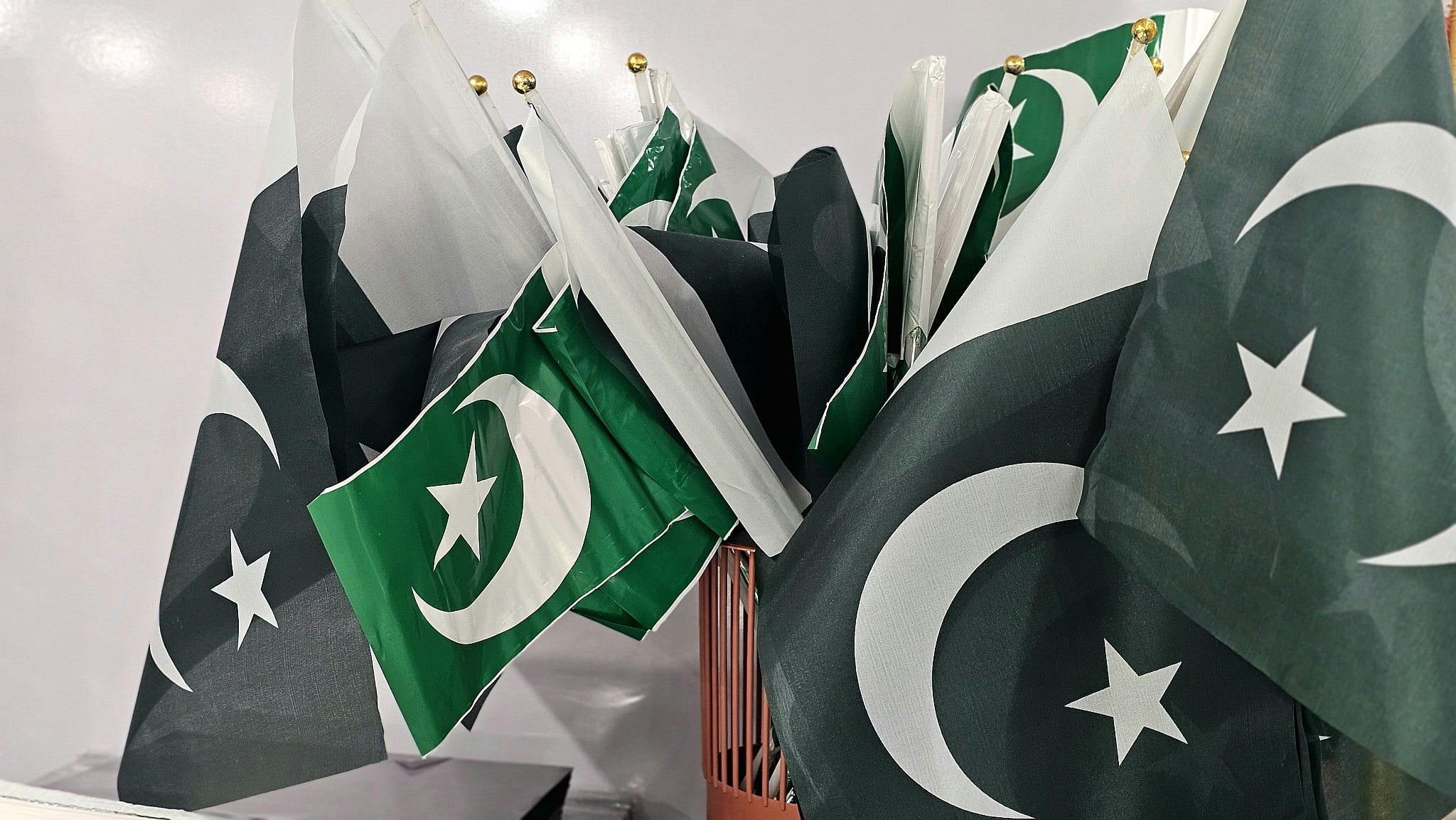
Pakistan’s opposition to recognizing Israel is not merely a matter of foreign policy. It is deeply intertwined with the country’s national identity, political culture, and conception of its place within the Muslim world. (Pexels)
The prospect of Pakistan joining the Abraham Accords has long intrigued policymakers in Washington and parts of the Middle East. Yet such speculation often overlooks a fundamental reality: Pakistan’s opposition to recognizing Israel is not merely a matter of foreign policy. It is deeply intertwined with the country’s national identity, political culture, and conception of its place within the Muslim world.
Recent calls from President Donald Trump for Muslim-majority states involved in regional diplomacy—including Saudi Arabia, Qatar, Pakistan, Turkey, Egypt, and Jordan—to join the Abraham Accords have once again placed the issue in the spotlight. For Islamabad, however, the obstacles to normalization extend far beyond diplomacy. They touch the ideological foundations of the Pakistani state itself.
A Foundational Commitment
Since its creation in 1947, Pakistan has defined itself as a homeland for South Asia’s Muslims. That identity has fostered a strong sense of solidarity with causes perceived as central to the broader Islamic world, none more important than the Palestinian question.
As a result, support for Palestinian statehood has become a core element of Pakistan’s political consensus. Successive governments—civilian and military alike—have maintained that recognition of Israel can occur only after the establishment of an independent Palestinian state. This position has endured through changes in leadership, geopolitical realignments, and shifting regional alliances.
For many Pakistanis, therefore, the issue is not simply whether to establish diplomatic relations with another country. It is whether doing so would compromise a principle that has shaped the nation’s political identity for decades.
The Weight of History
Pakistan’s skepticism toward Israel emerged alongside the birth of both states. Many of Pakistan’s founding leaders viewed Israel’s creation as a Western-backed political project imposed upon the Middle East. Over time, this perception evolved into a durable element of Pakistan’s strategic outlook.
The country’s opposition was not confined to rhetoric. Pakistani military personnel supported Arab states during the Arab-Israeli conflicts of 1967 and 1973, while Pakistani diplomats consistently aligned with Palestinian positions in international forums. Islamabad has repeatedly argued that a lasting settlement must be based on a two-state solution and the establishment of a Palestinian state with East Jerusalem as its capital.
This historical record has reinforced a public narrative in which support for Palestine is presented not as a policy preference but as a moral and ideological obligation.
The Limits of Pragmatism
There have been moments when normalization appeared conceivable. The most notable occurred under General Pervez Musharraf, who sought to explore limited engagement with Israel during the mid-2000s. His outreach generated interest in Washington and among some international observers who believed Pakistan might eventually follow a path similar to that later taken by several Arab states.
Yet the initiative quickly encountered political resistance at home. Religious parties condemned the effort, and public opinion remained overwhelmingly hostile to recognition. Musharraf himself later acknowledged that pursuing full normalization would have carried severe domestic political costs.
The episode revealed an enduring constraint on Pakistani policymakers: even leaders willing to consider engagement with Israel have found little room to maneuver within the country’s political landscape.
The Street Matters More Than Parliament
Pakistan’s position cannot be understood solely through official statements. Public sentiment plays an equally important role.
When the United States recognized Jerusalem as Israel’s capital in 2017, Pakistan’s political institutions condemned the move. More significant, however, was the public reaction. Demonstrations erupted across major cities, reflecting the intensity with which many Pakistanis view the Palestinian cause.
That dynamic remains relevant today. Any government perceived as yielding to external pressure on Israel would likely face opposition not only from political rivals but also from religious movements capable of mobilizing large-scale protests.
Groups such as Jamaat-e-Islami and Tehreek-e-Labbaik Pakistan have made support for Palestine a central element of their political messaging. Their influence means that any shift in policy would generate resistance far beyond parliamentary debate, potentially spilling into the streets and creating instability that Pakistan’s civilian and military leadership would prefer to avoid.
Anti-Americanism and Strategic Distrust
Complicating matters further is the enduring skepticism toward the United States among large segments of Pakistani society.
Despite periodic cooperation between Washington and Islamabad, many Pakistanis view the relationship through the lens of past grievances—from Cold War alliances to the post-9/11 era and the American military campaign in neighboring Afghanistan. The perception that Pakistan has often been treated as a transactional partner remains widespread.
Consequently, calls from Washington for Pakistan to recognize Israel are unlikely to be viewed as constructive diplomacy. Instead, they risk reinforcing suspicions that the United States is attempting to dictate outcomes on issues that Pakistan regards as matters of principle.
Even when relations between American and Pakistani leaders improve, those gains do not necessarily translate into broader public support for U.S. priorities.
An Ideological Red Line
For Pakistan, recognizing Israel would require a series of political and symbolic transformations that currently appear improbable. It would involve abandoning a decades-old diplomatic position, confronting entrenched public opinion, and persuading powerful religious and political constituencies to accept a dramatic shift in national policy.
The challenge is not merely diplomatic. Pakistan’s passport still reflects the country’s longstanding refusal to engage formally with Israel. More broadly, the state’s political narrative continues to link support for Palestine with Pakistan’s own understanding of its Islamic identity.
This reality helps explain why repeated speculation about Pakistan joining the Abraham Accords has yielded little progress. While regional geopolitics are changing and several Arab governments have recalibrated their approach to Israel, Pakistan faces a different set of domestic constraints.
For Islamabad, the question is not whether normalization could generate strategic benefits. It is whether those benefits could ever outweigh the political and ideological costs. At present, the answer appears clear. Israel remains one of Pakistan’s most enduring red lines, and no amount of external pressure is likely to alter that reality in the near future.
Related Topics
Related Posts