Israel and Ukraine Unite Against Common Enemies
Two countries at war, supporting each other.
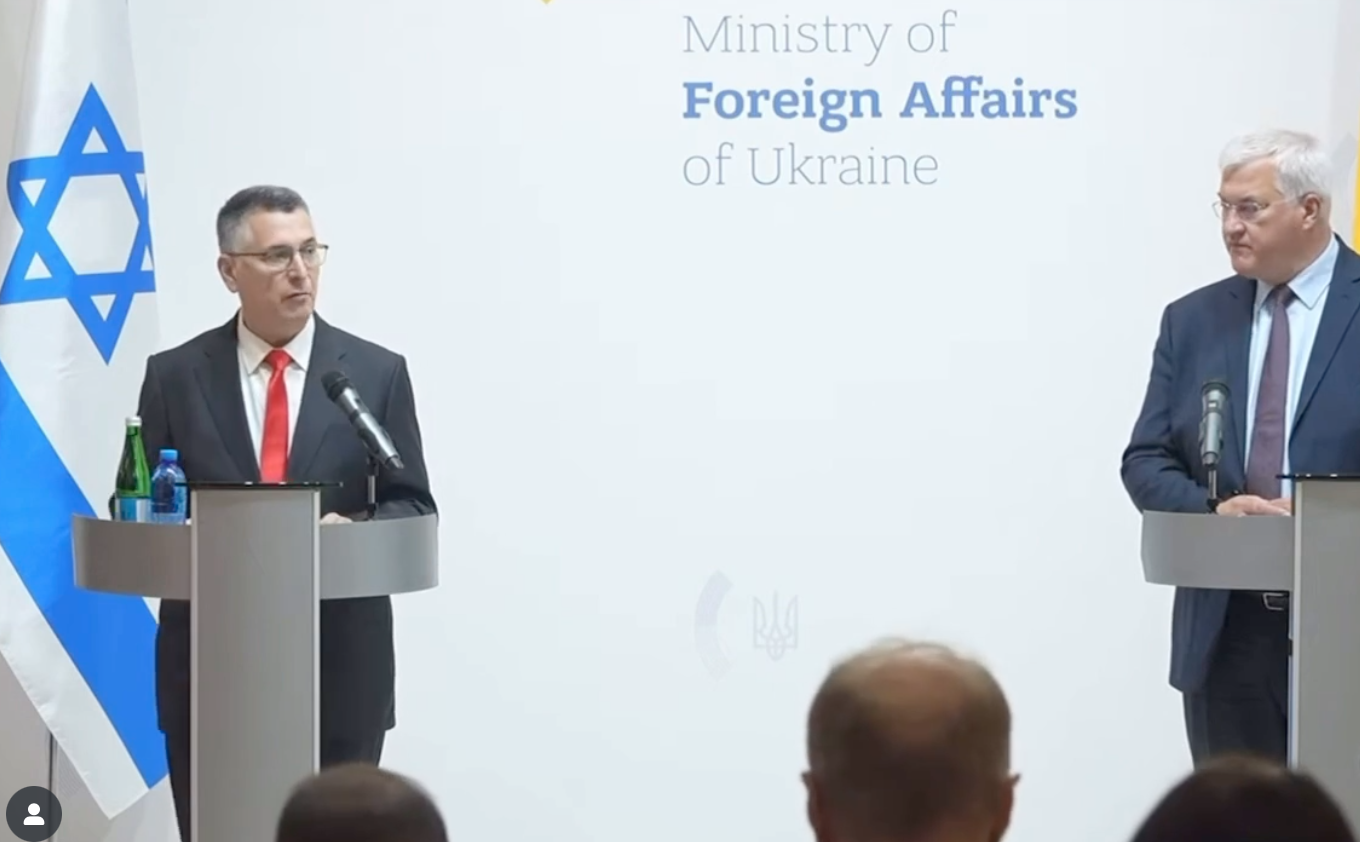
This best describes Israel’s Foreign Minister Gideon Saar’s prolific visit to Kyiv, packed with meetings and conferences. Some of them were kept secret, while others—like the one with Ukraine’s President Volodymyr Zelenskyy and the country’s Foreign Minister Andrii Sybiha—have shown that Jerusalem and Kyiv are embarking on a fully-fledged collaboration against common enemies, Iran included.
“Iran not only threatened Israel. It threatened regional and global security. It threatened Ukraine. We decided today to have a strategic dialogue between our ministries on the Iranian threat,” Saar said during a joint press conference with Sybiha, whom he invited to visit Jerusalem.
He also made it clear that “Israel supports Ukraine and the Ukrainian people,” that Israel condemns Russia’s strikes on civilian targets, and supports lasting peace. Meanwhile, Sybiha emphasized that the two countries have a solid potential in miltech collaboration that should be capitalized on.
The importance of these statements cannot be overestimated.
For many years, I’ve been a vocal advocate of closer collaboration between Jerusalem and Kyiv, for both personal and political reasons.
It has always been clear to me that the enemies the countries face are the same. They belong to the axis of Evil and are ideologically identical: one is a pseudo-Orthodox bastion ruled by a KGB clerk who self-identifies as a female-desired Tsar, and the other is a radical Islamist state run by another self-appointed “Supreme Leader,” oppressing women and dreaming of destroying the West and the chief culprit of it all—the Zionist state.
While I previously covered in detail how Russian propaganda targets Israel and Ukraine, including through vile mouthpieces like Jackson Hinkle, and showed the inadequacy of Putin’s Israel remarks, the personal attacks I’ve experienced on social media since 2023 really show how deeply the countries are interconnected.
Just today, I received a comment on X from a Russia-supporting account calling me a “khokhlozhydovka,” a feminine slur for a Ukrainian Jew, in response to my statement that Russia is Ukraine’s enemy. It was hardly meant as a compliment, but I nonetheless took it as one and posed the typical cheeky Ukrainian question: “I sho?”—roughly translated as “so what duh?”
He made no further response, other than stating that “my being a Ukrainian Jew” allegedly “explains it all.” What that explanation is, I—sorry for the pun—won’t even bother to explain.
The messages I receive from Arabic accounts are often even worse, with icebreakers like “Are you a Jew?” serving only as the first step in a subsequent exchange of verbal hostilities. And mind you, they’re very vile and very personal and require a good deal of mental resilience. Luckily, Ukrainian women don’t lack in the ability to hold a dialogue of this type.
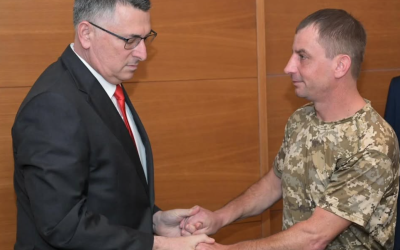
But perhaps the most horrible proof of how deeply Ukraine and Israel’s plights are interconnected is encapsulated by Saar’s meeting with Artem Burik, the Ukrainian soldier whose family was killed by an Iranian missile in Bat Yam in June. This includes his 7-year-old daughter Nastia, who came to Israel to receive leukemia treatment, his wife Maria, and three other members of the family.
The tragedy of them being killed by the very same Iranian missiles and Shaheds that Russia sends daily to Ukraine is insurmountable. For Ukrainians, myself included, the realization that you can lose family, friends, and sweethearts in both Ukraine and Israel concurrently, at any point in time, due to belligerent Tsars or Supreme Leaders is, quite frankly, overwhelming.
But it is also the reason to grow closer and unite in the fight against rogue states, weaken them as Israel did with Iran, and ultimately defeat them.
And yes, I can’t wait to read today’s Russian propaganda reaction to all this. It will undoubtedly be marvelous.