
Israel Cannot Afford to Wait Until It Is Too Late
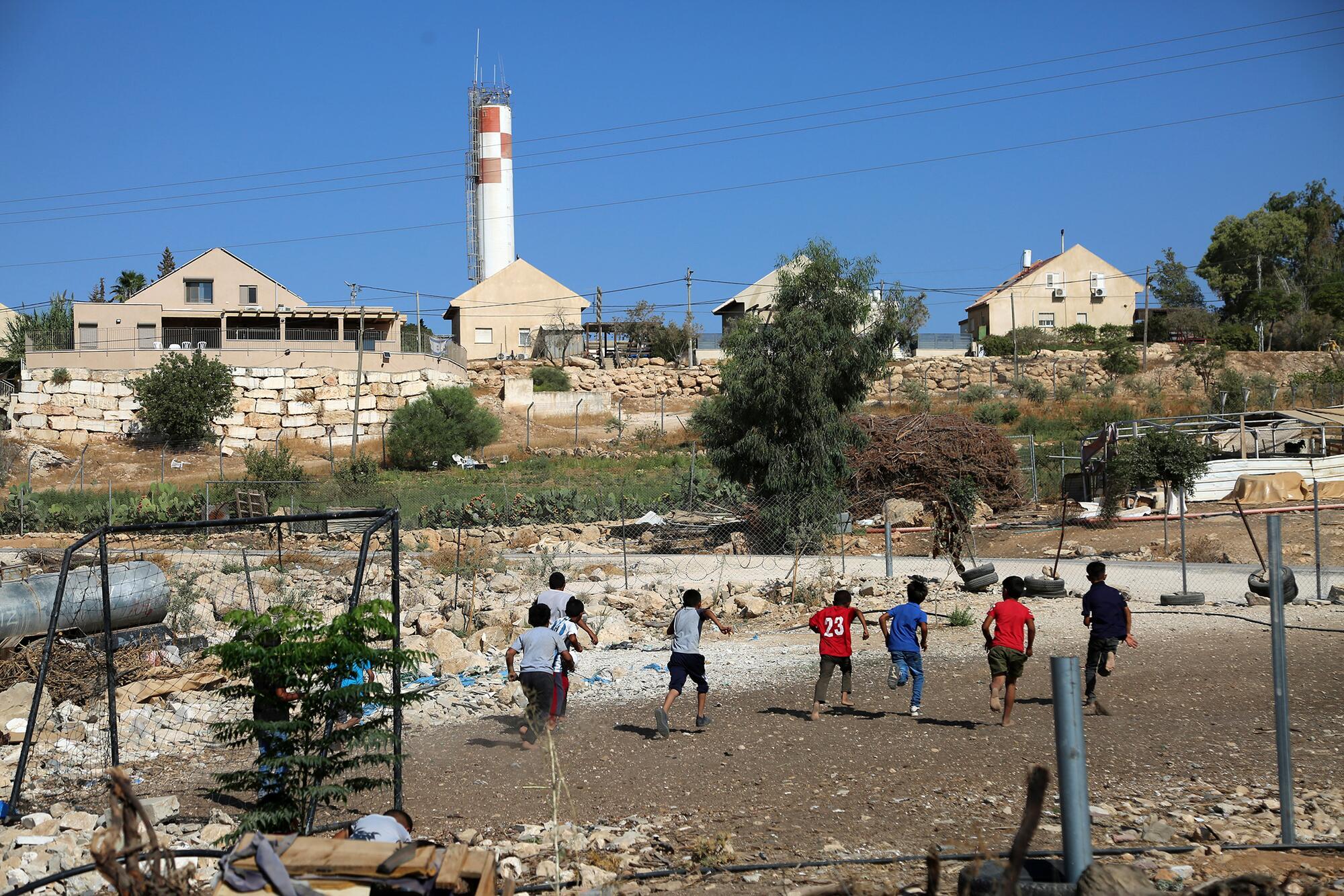
Last week, I toured Israel and the Palestinian territories with a delegation of American Jews who love Israel. They came out of deep concern for Israel’s future and a commitment to its continued existence as the democratic nation-state of the Jewish people. During the tour, we encountered two realities existing side by side: the deep trauma Israeli society has experienced since the October 7 massacre and the ongoing deterioration of conditions for Palestinians in the West Bank and Gaza.
In meetings with Israelis in communities near the Gaza border, as well as in Tel Aviv and Jerusalem, one message was repeated: It is too early to talk about a political agreement with the Palestinians. After the atrocities committed by Hamas – the murders and kidnappings—it is difficult to expect Israelis to trust the other side or believe that an agreement could guarantee our security. For many, even discussing a political agreement signals a detachment from reality and a failure to heed the lessons of October 7.
We cannot dismiss these concerns lightly. A society that has experienced national trauma needs time to mourn, recover, and restore its sense of security. No responsible political agreement can ignore the threat of terrorism or the obligation to prevent a recurrence of the October 7 disaster. Peace that fails to guarantee security is no solution.
But in Hebron, Umm al-Khair, and Ramallah, we encountered the other side of this reality. While Israelis seek to postpone discussions about a future political agreement, the situation on the ground continues to change in ways that make an eventual solution increasingly difficult to achieve.
We witnessed firsthand the appalling violence against Palestinians that has intensified recently. With explicit and implicit support from elements of the Israeli government and security establishment, settler violence has extended beyond Palestinian communities to target even those seeking to observe events and engage peacefully with residents. Our delegation experienced intimidation and threats of violence, while IDF soldiers and police officers did little to prevent escalation or protect those at risk.
We heard from Palestinians how the expansion of settlements, outposts, and farms, together with the deepening of Israeli control over the West Bank, is making it increasingly difficult for them to live normal lives. In Gaza, the destruction and humanitarian crisis deepen despair, risk strengthening Hamas, and leave fundamental questions about the postwar future unresolved.
The Palestinians we met and the statistical data that they presented about public opinion in Palestine reveal a genuine desire for a political settlement based on the 1967 borders that would preserve Israel as a Jewish majority state while allowing Palestinians to achieve independence. The people we met included individuals from some of the Palestinian communities most directly affected by the encroachment of illegal settlements and the violence that accompanied it.
Our conversations, considered alongside polling data, challenged the widespread assumption that Palestinians as a whole are not partners for peace. The war in Gaza has demonstrated the devastating consequences of Hamas’s approach for both Israelis and Palestinians.
The gap is therefore widening. Israelis say it is still too early to discuss a solution. At the same time, Palestinians face a reality in which the prospect of independence is steadily disappearing, along with basic protections such as the rule of law and equal justice. These two processes reinforce each other. As Palestinians lose hope for freedom and independence, despair and extremism gain ground. Support for continued control and opposition to political initiatives grows as Israelis feel increasingly threatened.
This is a dangerous cycle. If we wait until Israeli society feels secure enough to discuss the future of the Palestinians while continuing to create facts on the ground that undermine the possibility of a solution, we may discover that waiting has made us less secure. Instead, it may have destroyed the prospect of an agreement that could deliver security and stability.
The cost extends beyond losing the opportunity for an agreement. Prolonged Israeli control over millions of Palestinians, without equal rights or a credible prospect of independence, risks entrenching a reality of de facto apartheid. Although the term remains contested, it reflects the growing concern that two populations living side by side are subject to fundamentally different systems of rights and legal protections. Such a reality erodes Israel’s democratic character, deepens its international isolation, and damages its relations with its closest allies. In our pursuit of absolute security today, we are undermining the foundations of long-term security.
The current government is pursuing annexation, driven in large part by ultranationalist ideologies. Most Israelis, however, do not share these ideologies. Overcoming it will not be easy. These ideological forces are deeply entrenched and have demonstrated their willingness to use intimidation and violence to advance their goals. The silent majority will need to muster the political will and courage to confront them if Israel is to make the necessary progress toward arrangements with the Palestinians.
The lesson of our tour is not that Israel should compromise its security or ignore the trauma of October 7. On the contrary, genuine security requires a strategy for the reality our children will live in, rather than relying on tactical military measures alone. This means a determined struggle against terrorism and violence on both sides, an end to unilateral actions that undermine the prospects for an agreement, and a credible political horizon that can ensure security for Israel, freedom for the Palestinians, and regional cooperation.
The choice is not between security and peace. It is between building lasting security and postponing decisions until reality leaves us with only worse options. The trauma of October 7 must always be remembered, but it must not hinder the future.
This conclusion extends beyond Israel’s domestic debate. The international community should deny the next Israeli government—even if it is a government of change—a grace period to return to a policy of conflict management, given the demonstrated terrible costs of that approach.
The previous “government of change” under rotating Prime Ministers Naftali Bennett and Yair Lapid, although far preferable to Netanyahu’s government, did not make a political settlement a practical policy objective. That failure must inform how we understand the years of missed opportunities and unresolved conflicts that preceded October 7. A new government must not repeat the mistake of treating the absence of a political process as a sustainable strategy.
Israel’s friends should insist that the next government do more than manage the conflict: it must begin changing the reality that has perpetuated it. The goal is not to impose an agreement on Israel that fails to guarantee its security but to help Israel prevent the burial of any remaining chance for a resolution and seize the regional opportunity created by a growing sense of international urgency.
The continuation of the current situation serves Iran’s interests by creating instability that increases its influence, but it does not serve the interests of Israel, the United States, the Arab countries, or Europe’s liberal democracies.
We must not wait until Israelis are ready to discuss the future, only to discover that reality has left them with no meaningful choices. We must not wait until it is too late.