
The Tragic Trap of October 7
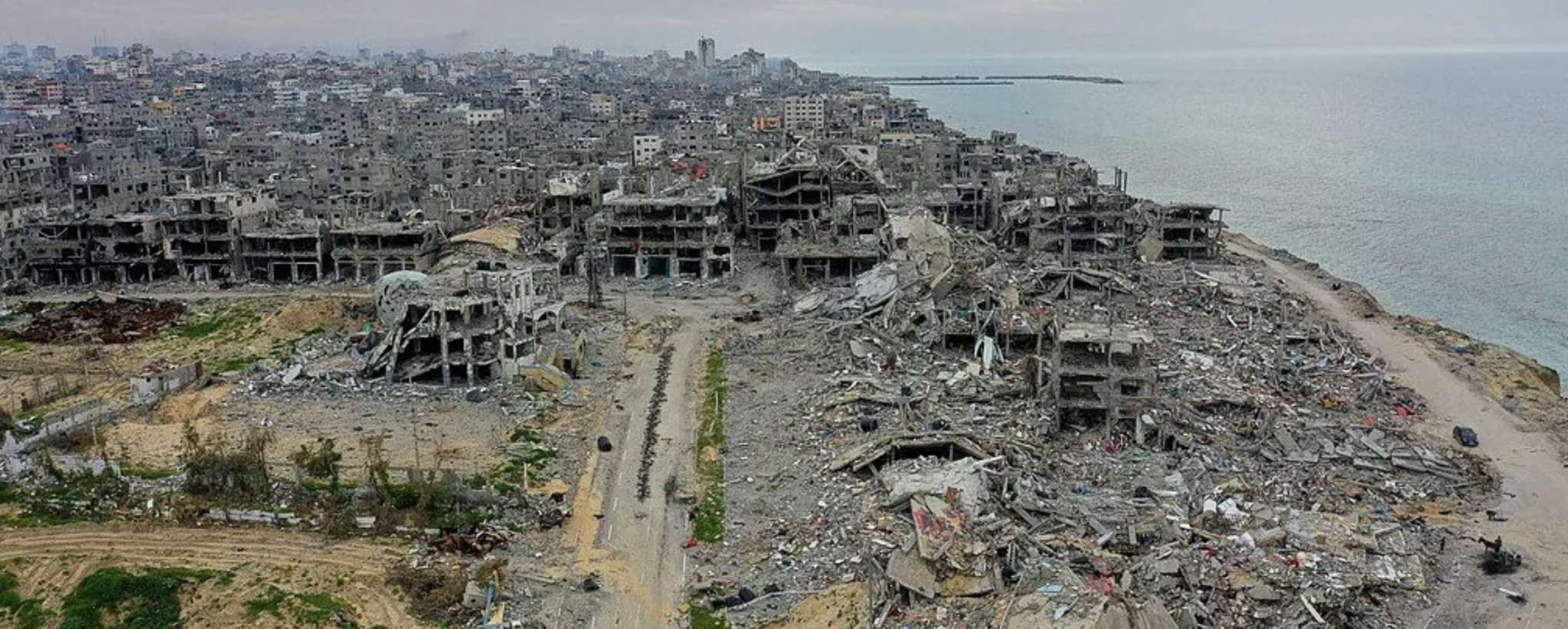
In 2006, Hezbollah’s leader admitted he would never have attacked Israel had he known the consequences. Seventeen years later, Hamas made a very different strategic calculation.
On 27 August 2006, Hassan Nasrallah, the leader of Hezbollah, made an extraordinary admission.
Just weeks earlier, Hezbollah fighters had crossed into Israel, killing Israeli soldiers and capturing two others. Israel responded with overwhelming military force. The resulting 34-day war devastated southern Lebanon, destroyed much of the country’s infrastructure and killed more than a thousand Lebanese people.
In a televised interview, Nasrallah was asked whether he would have authorised the operation had he known the consequences. His answer was unequivocal: “We did not think, even one percent, that the capture would lead to a war at this time and of this magnitude.” When asked whether he would have proceeded knowing what he now knew, he replied: “I say no, absolutely not.”
It was an extraordinary acknowledgement of strategic miscalculation from the leader of one of Israel’s most determined enemies. Nasrallah had provoked a military response whose scale he had neither anticipated nor intended. The consequences for Lebanon had been catastrophic.
Seventeen years later, on October 7, 2023, Hamas launched the deadliest attack on Israel since the state’s founding in 1948, and the deadliest massacre of Jews since the Holocaust. But learning from Nasrallah’s experience, Hamas had made a tragic strategic calculation. Provoking that response was central to Hamas’ aggression, and the terrible suffering it would inflict upon the Palestinians of Gaza was a price its leadership was prepared to accept.
Three years later, the consequences of that calculation are becoming increasingly apparent. Israel has inflicted devastating military losses upon Hamas, but it is also suffering what may prove to be the greatest strategic catastrophe in its history.
An attack designed to provoke a war
Hamas knew that Israel would respond with overwhelming military force to the atrocities of October 7. Through successive wars with Israel, its leadership had witnessed the destruction inflicted upon Gaza. They understood the extraordinary lengths Israel was prepared to go to secure the return of its hostages, and the enormous pressure Israeli society would exert upon its leaders to bring them home, both the living and the dead. They understood Israel’s immense military strength, its willingness to use that strength, the vulnerability of Gaza’s civilian population and the devastating consequences of provoking a prolonged conflict.
Its fighters did not simply attack military installations or attempt to seize territory. They invaded civilian communities, murdered families in their homes, massacred hundreds of young people attending a music festival and committed acts of unimaginable brutality. They abducted 251 people, both alive and dead, Israelis and foreigners, soldiers and civilians, into Gaza. Approximately 1,200 people were murdered in an attack designed to traumatise Israeli society to its foundations.
Israel faced an enemy on its border that had demonstrated both the capability and the intention to massacre its civilians. No government on earth could reasonably have been expected to refrain from launching a military offensive following an attack of such magnitude and brutality. But that was precisely the trap. Every destroyed neighbourhood, every Palestinian child killed and every image of civilian suffering broadcast around the world would increase international pressure upon Israel. The greater the destruction in Gaza, the greater the international condemnation, and the more Hamas stood to gain politically from a war it could never hope to win militarily.
Hamas also understood that the hostages would provide extraordinary leverage. Their captivity would complicate Israel’s military campaign, prolong negotiations and extend the conflict, increasing international pressure upon the Israeli government. The repeated release of harrowing videos showing the hostages’ suffering, including footage of one hostage being forced to dig what he was told was his own grave, would further traumatise Israeli society and intensify domestic pressure upon its leaders to secure their release, potentially on terms favourable to Hamas.
There can be no doubt that Hamas expected Israel to retaliate. Its leadership deliberately provoked a confrontation whose consequences would extend far beyond Gaza.
The lesson of Gilad Shalit
In October 2011, Hamas learnt another strategic lesson.
In June 2006, Hamas and allied militants captured a young Israeli soldier, Gilad Shalit, during a cross-border raid. He was held captive in Gaza for more than five years. In October 2011, Israel finally secured his release in exchange for 1,027 Palestinian prisoners.
Among them was Yahya Sinwar, the man who would go on to mastermind the atrocities of October 7. Sinwar was freed because Hamas had taken a single Israeli soldier hostage, a lesson he could hardly have forgotten. The hostage-taking of October 7 was not an entirely new strategy. Hamas had employed it before, and Sinwar himself was living proof of its effectiveness.
The two events of 2006 offered Hamas’ leadership two very different lessons. Nasrallah had demonstrated the devastating consequences of provoking Israel into war, while Shalit’s captivity demonstrated the extraordinary price Israel could be made to pay to bring its hostages home. Seventeen years later, Hamas would combine both elements on an unprecedented scale.
The calculation behind the catastrophe
For decades, Hamas had been unable to defeat Israel militarily. Israel possesses one of the world’s most powerful and sophisticated militaries, overwhelming technological superiority and the support of the United States. A conventional military victory was impossible. But military victory was never the objective.
Generations of international sympathy for Israel, rooted in the horrors of the Holocaust and the historic persecution of the Jewish people, could be eroded. Its longstanding alliances could fracture, while Palestinian statehood, increasingly marginalised in international diplomacy, could return to the centre of global affairs. Above all, the emerging normalisation of relations between Israel and Saudi Arabia could be rendered impossible. Such an agreement had promised to transform the Middle East, strengthening Israel’s regional position while leaving Hamas increasingly isolated. And beneath these calculations lay an even darker possibility: that antisemitism, never far beneath the surface, could once again be unleashed upon Jewish communities around the world.
It is often argued that the only thing humanity learns from history is that humanity learns nothing from history. Hamas proved the exception. Its leaders knew from experience that Israel would face enormous international pressure to act proportionately and within international law. But how does a state respond proportionately to an enemy that has no regard for human life, deliberately massacres civilians, operates within civilian population centres and has constructed a vast military tunnel network beneath some of the most densely populated civilian communities on earth?
The antisemitism at the heart of October 7
There is another aspect of the attack that cannot be overlooked, and which has too often been obscured by the subsequent political arguments: antisemitism.
On 24 October 2023, Israeli authorities released a recording of a Hamas attacker telephoning his parents during the massacre. The man, calling from the Israeli community of Mefalsim, excitedly boasted that he had killed ten Jews. Not ten Israeli soldiers or ten enemy combatants. Ten Jews. According to the recording, he was calling from a telephone belonging to one of his victims. His parents responded with praise.
The distinction carries deep significance. The Arabic word Yahud means Jews. It does not mean Israelis. Yet in its 2025 documentary Gaza: How to Survive a Warzone, the BBC faced accusations that translations of references to Jews as references to Israel or Israeli forces obscured antisemitism. The controversy reached the House of Commons, where MPs challenged the BBC over its translations. Whatever the editorial justification, the distinction between Jews and Israelis is not one that can simply be erased.
Hamas’ original 1988 charter was vehemently antisemitic. Although its 2017 political document sought to distinguish Jews as a religious community from Zionism as a political movement, the language of the Mefalsim attacker demonstrated how such distinctions could disappear in the minds of those indoctrinated by Hamas.
The antisemitic hatred unleashed in the aftermath of October 7 was not confined to Israel or Gaza. It spilled onto the streets of cities across the world. Amid enormous demonstrations against Israel’s military campaign, Jewish communities witnessed an alarming resurgence of antisemitism, with threats, intimidation and open expressions of hatred directed at people who had no connection whatsoever to the decisions of the Israeli government.
The consequences have been horrifying. In October 2025, two Jewish worshippers were murdered in an antisemitic terrorist attack on a Manchester synagogue on Yom Kippur, the holiest day in the Jewish calendar. In March 2026, four ambulances belonging to Hatzola, a Jewish volunteer emergency medical service, were deliberately set alight outside a synagogue in Golders Green, London. Ambulances: vehicles dedicated to saving human lives.
But perhaps the most harrowing illustration came from Australia. On 14 December 2025, Jewish families gathered at Sydney’s Bondi Beach to celebrate Hanukkah. Fifteen innocent people were massacred in an antisemitic terrorist attack. Among the dead were a ten-year-old girl and a Holocaust survivor. People who had gathered to celebrate a religious festival were murdered because they were Jewish.
Perhaps most disturbing of all is the situation in Germany, a country whose historical responsibility for the Holocaust gives these developments particular significance. In an interview published on 14 November 2026, Germany’s newly appointed commissioner for Jewish life and the fight against antisemitism, Dr Katharina von Schnurbein, revealed that antisemitic incidents had tripled since October 7. Jewish people are increasingly concealing their identities, removing religious symbols from their homes and avoiding wearing the Star of David or the kippah in public. Eighty years after the Holocaust, Jews in Germany are once again afraid to identify themselves openly as Jewish.
From Manchester to London, Sydney to Berlin, Jews were once again being attacked, threatened and intimidated because of their faith and identity. Not because of anything they had done, but because of who they were. Criticism of Israel is not inherently antisemitic, and opposition to its government, military conduct or policies is entirely legitimate. But holding Jews collectively responsible for Israel’s actions, celebrating the murder of Jewish civilians or threatening Jewish communities because of events in the Middle East crosses an unmistakable line. The antisemitism of October 7 must not disappear from the historical record beneath the horror of everything that followed.
A military victory, a strategic catastrophe
Three years after October 7, Hamas’ military capabilities have been severely diminished, much of its senior leadership has been killed and its military infrastructure degraded. Yet beyond the battlefield, the strategic consequences for Israel have been devastating.
On the eve of October 7, Israel stood on the threshold of a historic diplomatic breakthrough with Saudi Arabia. The Abraham Accords, brokered by Donald Trump’s administration in 2020, had already transformed Israel’s relationships with several Arab states, establishing diplomatic relations with the United Arab Emirates, Bahrain and Morocco. Bringing Saudi Arabia, one of the most influential powers in the Arab world and home to Islam’s two holiest sites, into this emerging diplomatic framework promised to transform the Middle East, strengthen Israel’s regional security and reshape the balance of power against Iran.
The attack of October 7 shattered that prospect. Instead, Palestinian statehood, which had increasingly been pushed to the margins of international diplomacy, returned to the centre of world affairs. Britain, France, Canada and Australia, among Israel’s closest Western partners, formally recognised the State of Palestine. Governments that had resisted recognising Palestinian statehood for decades reversed their longstanding strategic policies.
The consequences extended far beyond diplomatic recognition. Israel also faced restrictions on arms imports, as longstanding allies suspended or curtailed military exports to the country. Targeted sanctions against Israeli ministers and settlers, suspended trade negotiations and proposals to withdraw preferential trading arrangements with the European Union further demonstrated the deterioration in Israel’s international relationships.
The scale of Israel’s growing international isolation was perhaps most vividly illustrated by the controversy surrounding the Eurovision Song Contest. In December 2025, the European Broadcasting Union was forced to confront demands for Israel’s exclusion from the competition. Although Israel was ultimately permitted to participate, Spain, Ireland, the Netherlands, Slovenia and Iceland boycotted the 2026 contest in protest. A competition established to bring European nations together through music had become another arena in which Israel’s international participation was being challenged.
The consequences are unmistakable. A country that, on the eve of October 7, appeared to be moving towards an unprecedented era of diplomatic recognition and regional integration now finds itself increasingly isolated, facing economic and cultural boycotts, growing hostility from traditional allies and the deeply troubling prospect of approaching international pariah status.
Perhaps the most disturbing illustration of Israel’s deteriorating international standing lies in the proceedings before the world’s highest courts. In November 2024, the International Criminal Court issued arrest warrants for Prime Minister Benjamin Netanyahu and former Defence Minister Yoav Gallant over alleged war crimes and crimes against humanity. Meanwhile, Israel faces accusations of genocide in proceedings brought by South Africa before the International Court of Justice.
The historical irony is almost impossible to comprehend. A state established in the aftermath of the Holocaust to provide a homeland and refuge for a people who had endured centuries of persecution and the genocide of six million Jews now finds itself accused of genocide before the world’s highest court. Israel vehemently rejects the allegations, and the ICJ has not determined that genocide occurred. Yet the very existence of these proceedings represents a devastating reversal in Israel’s international standing.
Of greatest strategic significance, and representing the gravest threat to Israel’s security, is the deterioration of its relationship with the United States. For generations, American military assistance, diplomatic protection and bipartisan political support have been the foundations of Israel’s strategic security. That alliance remains powerful, but beneath the surface of American politics, something profound is changing.
Within the Democratic Party, support for Israel has become increasingly contentious. A growing number of younger Americans express greater sympathy for Palestinians, challenging the longstanding political consensus that has sustained American support for Israel. The election of Zohran Mamdani as Mayor of New York in 2025, followed by the reported election of Abdul El-Sayed to the United States Senate in November 2026, illustrates the growing electoral influence of politicians outspoken in their condemnation of Israel’s conduct in Gaza. El-Sayed campaigned against American military assistance to Israel in Michigan, a state with a substantial Arab-American population.
But perhaps the most significant development came not from the Democrats, but from the Republican Party itself. Following the Republicans’ defeats in the November 2026 midterm elections, Vice-President JD Vance reportedly identified changing America’s relationship with Israel among the principal demands expressed by voters who had supported Donald Trump in 2024 but subsequently abandoned the Republicans. Among the demands he cited were ending the war with Iran, tackling the cost of living, putting America first and, most strikingly, “Change our relationship to Israel.”
The significance of those words should not be underestimated. They came not from a Democratic critic of Israel, but from the sitting Republican Vice-President, a leading figure in the administration of a president who had placed enormous importance on strengthening Israel’s position in the Middle East. Even if Vance was reporting voters’ demands rather than announcing a change in administration policy, the fact that such a demand had become politically significant within the Republican electorate represented a fundamental warning to Israel.
The consequences of this deterioration extend far beyond diplomatic isolation or international condemnation. Israel’s military superiority, regional influence and ability to defend itself against existential threats are inseparable from its relationship with the United States. The erosion of that alliance strikes at the very foundation of Israel’s national security. No boycott, diplomatic condemnation or hostile resolution could inflict strategic damage of comparable magnitude. It is here, rather than on the battlefields of Gaza, that Hamas may ultimately have achieved its greatest strategic victory.
Who has really paid the price?
There is something profoundly disturbing about examining these events through the language of strategic success. The people of Gaza have endured unimaginable devastation and suffering, with families destroyed, communities displaced and much of Gaza bombed to rubble. Israelis have endured the trauma of barbaric mass murder, the plight and suffering of the hostages, prolonged insecurity and the anxiety of increasing international isolation and hostility. Yet the cold calculations of political strategy demand that we examine what Hamas’ leadership believed it could achieve, and the words of another Hamas leader are revealing.
On 19 October 2023, less than two weeks after the massacre, Khaled Mashal was challenged by a Saudi television interviewer about the suffering Hamas’ attack had brought upon civilians. His response was extraordinary: “We know very well the consequences of our operation on October 7.” He went on to argue that national liberation required sacrifices, invoking the experiences of Vietnam, Afghanistan and other conflicts.
Compare those words with Nasrallah’s admission in 2006. Nasrallah said he would never have authorised the operation had he known what would follow. Mashal acknowledged the consequences and defended the operation. The contrast could hardly be more striking.
The victory that should trouble us all
History is littered with examples of armies winning battles while losing wars. Vietnam demonstrated that overwhelming American military superiority could not guarantee strategic success. Afghanistan demonstrated that insurgent movements could survive extraordinary military pressure and ultimately achieve political objectives that had seemed impossible. But October 7 presents a particularly disturbing variation on that history. Hamas did not simply seek to survive a stronger enemy. The evidence suggests that its leadership deliberately provoked a confrontation capable of transforming the political balance of power in the Middle East and of isolating Israel on the global stage.
This is the tragic paradox of October 7. An organisation responsible for the deliberate murder and abduction of civilians may have helped bring about political changes that decades of conventional diplomacy had failed to achieve. If the lesson drawn from these events is that atrocities can provoke a response so destructive that the perpetrators ultimately benefit politically, the implications extend far beyond Israel and Palestine. They strike at the foundations of international security.
Twenty years ago, Hassan Nasrallah looked back at the devastation of Lebanon and admitted he would never have ordered the operation that had provoked it. Hamas’ leadership made a different calculation. They knew Israel would respond, they knew the consequences would be devastating, and they were prepared to let the people of Gaza pay the price.
For Israel, October 7 may prove to have been not merely a catastrophic failure of intelligence and security, but a strategic disaster whose consequences will be felt for generations. For Hamas, the question is whether its military destruction has been accompanied by political consequences that its leaders were seeking all along. And for the rest of the world, the most troubling possibility is that terrorism has once again demonstrated its capacity to reshape international politics through the deliberate slaughter of innocents.
This is the tragic trap of October 7. Israel may have won on the battlefield, but Hamas has won the strategic victory.