
CEO of Time to Stand Up for Israel
Israel Cannot Gamble Its Existence on Washington’s Indecision
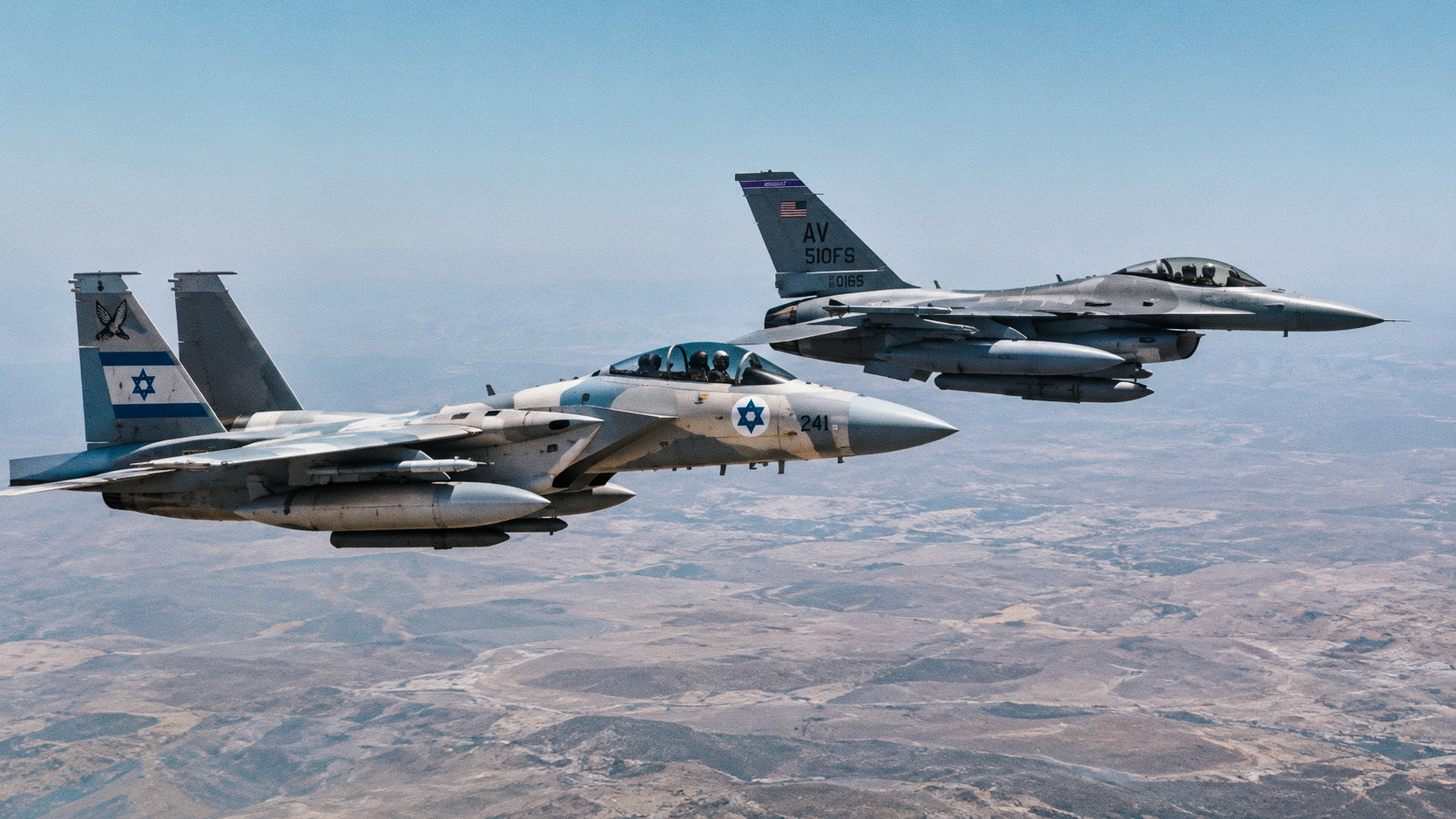
Photo Credits: Sabine Sterk ( AI)
There is something profoundly disturbing about the position Israel finds itself in today. The Jewish State is caught between an Iranian regime that has openly threatened its existence for decades and an American administration that seems to alternate between military determination and diplomatic hesitation. While Washington calculates the economic, political and diplomatic consequences of another military confrontation with Iran, Israelis must calculate something entirely different: their chances of survival. That fundamental difference should never be underestimated. For the United States, Iran represents a geopolitical and strategic challenge. For Israel, Iran represents a potentially existential threat.
Recent reports suggest that Israeli intelligence officials have been pressing Washington to take renewed military action against Iran. Israeli concerns reportedly include the reconstruction of Iranian military capabilities and suspected activities related to unconventional weapons development. President Donald Trump has reportedly acknowledged concerns surrounding potential chemical and biological weapons development while suggesting that further developments might have to wait until after January 1. Although these concerns do not establish that Iran possesses operational chemical or biological weapons, they certainly warrant serious attention.
January 1? How reassuring for American citizens living thousands of kilometres away from Tehran. How considerably less reassuring for Israeli families who have spent countless nights in bomb shelters, whose children recognise the sound of incoming missile alerts and whose entire country is within reach of Iranian ballistic missiles.
Military confrontation was supposed to significantly diminish Iran’s strategic capabilities. Yet the regime remains in power, diplomatic efforts have failed to deliver lasting security and the danger of renewed military escalation remains. Meanwhile, Gulf countries reportedly fear the consequences of another major military offensive, particularly Iranian retaliation against their infrastructure and economies. Their concerns are understandable, but why should Israeli security become subordinate to the economic interests of other nations? Why should the protection of oil installations carry greater political weight than the protection of millions of Israeli citizens?
Israel cannot afford the luxury of wishful thinking. It cannot relocate itself to another continent, distance itself from its enemies or simply withdraw from the Middle East when the political consequences become inconvenient. Israel has no alternative homeland waiting for its population. It has one country, one territory to defend and one fundamental obligation: ensuring that its citizens survive.
What frustrates me enormously is the growing tendency to portray Israel as an obstacle to peace whenever its security assessments do not correspond with the diplomatic ambitions of Washington. Suddenly, the country threatened by the Iranian regime is considered a potential saboteur of negotiations, while representatives of that very regime are treated as indispensable diplomatic partners. Surely, the responsibility for establishing genuine peace also lies with those who have spent decades threatening Israel, financing terrorist organisations and developing weapons capable of causing unprecedented destruction.
Nevertheless, supporting Israel does not mean automatically supporting every military operation proposed by its government. Different assessments may exist within Israeli and American security circles regarding the urgency of renewed military action. Military decisions must be based on reliable intelligence, strategic necessity and a realistic assessment of their consequences, rather than political convenience, whether in Jerusalem or Washington.
The United States remains an extraordinarily important ally of Israel, and the cooperation between both countries should never be taken for granted. However, an alliance should never develop into a situation in which one sovereign nation feels compelled to seek permission from another to guarantee its own survival. American presidents come and go. American administrations change their priorities. Elections determine the political direction of Washington, but Iranian hostility towards the Jewish State has survived numerous American presidencies.
Israel must think beyond the political lifespan of any American president.
Economic sanctions may weaken the Iranian regime, and diplomacy may eventually produce meaningful results, but neither constitutes an adequate security guarantee without credible enforcement. Any agreement must address not only Iran’s nuclear ambitions but also its ballistic missile capabilities, suspected unconventional weapons programmes and support for armed organisations committed to attacking Israel. An agreement that merely postpones confrontation while allowing dangerous military capabilities to be rebuilt is not a sustainable peace agreement. It is the transfer of an unresolved threat to the next generation.
My greatest concern is that Israel will once again be expected to exercise restraint until restraint becomes strategically disastrous, only to find itself internationally condemned when it finally responds. We have witnessed this impossible expectation repeatedly. Israel is expected to tolerate threats that no other sovereign nation would find acceptable, demonstrate patience towards those who openly celebrate its destruction and defend itself without causing any diplomatic inconvenience whatsoever.
The Iranian people deserve freedom, prosperity and a government that invests in their future rather than regional warfare. Israelis deserve precisely the same. The enemy is not the Iranian population but a regime whose ideological hostility and military ambitions have contributed enormously to instability throughout the Middle East.
Israel does not need another temporary illusion of security. It needs enforceable guarantees, credible deterrence, independent strategic capabilities and allies that understand the consequences of failure.
Washington can afford to change its foreign policy. Tehran can attempt to prolong negotiations. European governments can issue diplomatic statements from comfortable distances.
Israel cannot afford to be wrong.
Because when Washington makes a strategic miscalculation, it may lose political credibility. When Israel makes an existential miscalculation, it may lose everything.
Israel’s survival must never become a bargaining chip on somebody else’s negotiating table.
Related Topics
Related Posts