
Israel: Heart of Asian geopolitical realignments
Israel: Heart of Asian geopolitical realignments?
The world’s attention remains focused on the competition between China and the United States, but Israel, which is often seen as a “peripheral,” is quietly changing Asia’s strategic balance. The country used to focus on Europe and the US, but over time it has become a significant center for technology for Asian powers, from India to Japan via Taiwan and South Korea. However, many Western analyses undervalue or even ignore this influence. Yet, it has become a major factor in the geopolitical recomposition of the Asian continent.
Three developments explain this phenomenon. First, Asia has become the heart of global technological growth. Then, Israel has built a model of quick, new ideas in both military and the private world that not many other countries can match. Finally, the Asian powers are looking to diversify their partners to escape Chinese technological dependence. In this triangle, Israel finds a natural place, often strategic, sometimes decisive.
India: The most visible strategic partnership
One of the strongest ties Israel has in Asia is with Narendra Modi’s India, where military cooperation, intelligence, and defense technology form the backbone of the relationship. For more than a decade, Israel has become one of New Delhi’s top three suppliers of weaponry: drones, surveillance systems, surface-to-air missiles, and anti-terrorist technologies. Cooperation goes beyond armament: high-tech agriculture, water solutions, and cybernetic innovation.
Often undervalued, this partnership relies on a measure of secrecy, particularly in the field of counter-terrorism, where Israeli expertise directly inspires Indian agencies. It also corresponds to a political convergence: Modi’s assumed nationalism sees in Israel a model of security resilience and military modernization. In an Asia marked by Indo-Chinese tensions, Israel represents for India an actor capable of strengthening its strategic autonomy without entering into the logic of blocks.
Japan: A discreet, but crucial technological pivot
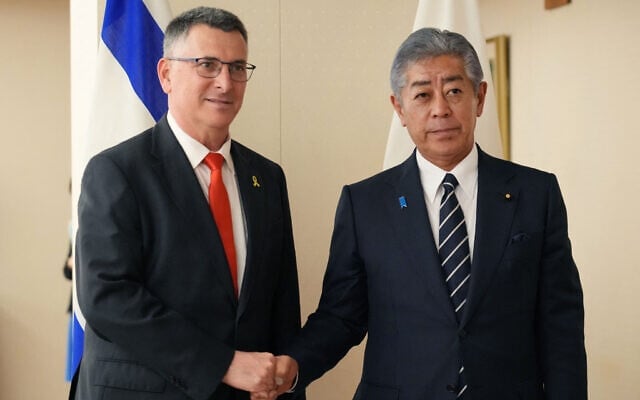
More surprising is the rise in ties between Israel and Japan, a country that has long been cautious when it comes to relations with Middle Eastern states in order to preserve its energy access. But faced with the rise of China and cybersecurity challenges, Tokyo has made a strategic shift. The major Japanese conglomerates—Mitsubishi, Hitachi, and Rakuten—have massively invested in Israeli start-ups, particularly in cybersecurity, smart mobility, and artificial intelligence.
Japan not only invests, but also finds inspiration. The Israeli approach to military innovation—agility, rapid testing, integration of civil technologies—now influences Japanese doctrine. Tokyo’s interest in the anti-missile systems developed by Israel testifies to this growing confidence. This rapprochement is still underestimated because it takes place in great diplomatic discretion, but it could become one of the major axes of Japanese strategy in the coming decade.
Taiwan: A silent strategic convergence
The case of Taiwan is undoubtedly the most sensitive. Officially, diplomatic relations between Israel and Taipei are limited by the need for Israel to spare China. But unofficially, the technological exchanges have never stopped. The cooperation includes sensors, advanced components, cybersecurity, and certain sectors of military AI. Taiwan, faced with increasing pressure from Beijing, sees in Israel a model of resilience, smart militarization, and societal preparation, particularly in the management of mobilization and territorial defense.
This discreet but very real link illustrates a form of “gray strategic cooperation” that is increasingly frequent in Asia: indispensable but not publicly assumed, structuring but not proclaimed. It also shows that Israel, despite its concern not to provoke Beijing, becomes for several states a key partner in the construction of a technological ecosystem not dependent on China.
South Korea: The high-tech alliance of the 21st century
South Korea is perhaps the Asian country that, apart from India, has most rapidly intensified its cooperation with Israel. Korean purchases of Israeli systems—radars, anti-missile solutions, and drone technologies—are multiplying. But the relationship goes beyond defense: automotive, robotics, industry, and cybersecurity. Seoul sees the Israeli ecosystem as a source of agile technologies capable of complementing its own industrial strengths.
For South Korea, Israel is a relevant military laboratory. Like Seoul, Israel lives under the threat of an unpredictable neighbor and must develop systems for rapid detection, reaction, and deterrence. The two countries share a culture of strategic urgency, which makes their cooperation natural and immediately operational.
Israel, technological alternative to China.
Beyond these bilateral ties, a deeper dynamic is emerging: Israel becomes a technological alternative to China, discreetly supported by the United States. Washington sees in Israeli know-how—cybersecurity, military AI, drones, sensors, dual technologies—a way to help its Asian partners without causing escalation with Beijing. As long as Israel limits its sensitive ties with China, the US encourages this rise in power.
In this architecture, Israel positions itself as a strategic supplier of critical technologies for Asian democracies seeking to reduce their dependence on Chinese channels.
A long-underestimated influence, now decisive
Israel’s influence in Asia has long been underestimated. But today, from New Delhi to Tokyo, from Seoul to Taipei, Israel occupies a central place in the construction of an Asian order resilient to rising threats.
Far from being a small peripheral country, Israel has become a pivotal technological player on the Asian continent. And in 21st-century Asia, technology is the new geopolitics.