
Israeli independent consultant and analyst exploring politics, security, and international affairs
Israel Must Decide What Victory in Iran Means
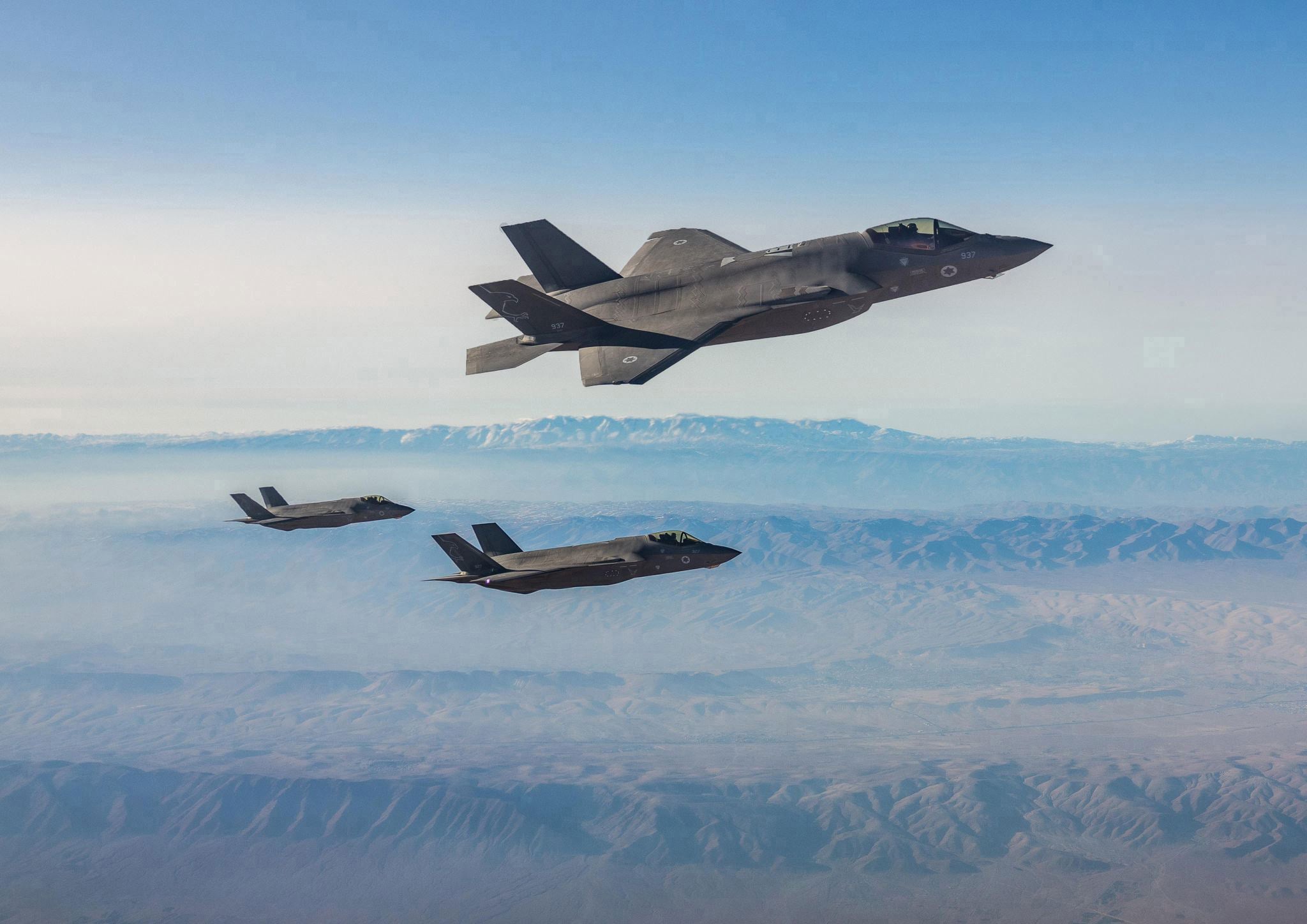
Israeli Air Force F-35I Adir fighter jets during Operation Roaring Lion, March 2026. Photo: IDF Spokesperson’s Unit / Wikimedia Commons (CC BY-SA 3.0)
The renewed Israeli debate over Iran on November 23 exposed a disagreement not only over when to strike, but over what another operation should accomplish. Gadi Eisenkot questioned the need for immediate action and emphasized the unresolved enriched-uranium stockpile, while Benjamin Netanyahu insisted that the threat was urgent.
Former Mossad director David Barnea went further, calling for renewed war when conditions permit and for the downfall of the Iranian regime. These positions point to distinct objectives that should not be collapsed into a single definition of victory.
The Israeli and American strikes of June 2025, followed by the joint campaign launched in February 2026, inflicted severe damage on Iran’s nuclear infrastructure, conventional forces and weapons production. They demonstrated Israel’s operational reach and its capacity, alongside the United States, to impose costs Tehran could not prevent. Consolidating these military achievements now requires measures that prevent Iran from rebuilding the capabilities it has lost.
The nuclear file illustrates the distinction. Before the June 2025 strikes, the International Atomic Energy Agency estimated that Iran possessed about 440 kilograms of uranium enriched to 60 percent. Its November reporting states that Tehran’s lack of cooperation has prevented inspectors from establishing the material’s current status. That is a failure of Iranian transparency, not evidence that its nuclear program escaped serious damage.
Further strikes might be necessary if intelligence identifies renewed enrichment or an imminent attempt to weaponize the material, but even successful attacks on facilities cannot replace an effort to locate, secure or verify the stockpile. Removing uncertainty is part of the security objective, not an argument against military action.
The missile threat demands a different strategy. Western intelligence estimates reported by The Times of Israel in November suggest Iran is producing roughly 50 ballistic missiles monthly, about half its prewar rate, following extensive damage to its military industry. The figure indicates sharply reduced production alongside an effort to rebuild, rather than a recovery of earlier strength.
Israel may have good reason to strike critical facilities again, particularly if production approaches a dangerous threshold. But destroying finished weapons is only one way to preserve its advantage. Research by the Center for Strategic and International Studies identifies Tehran’s dependence on imported machinery, components and procurement intermediaries. Disrupting these supply chains could prolong the effects of Israeli strikes and make rebuilding considerably harder.
Regime change raises a different question. Barnea’s call to bring down the Islamic Republic reflects the concern that a hostile leadership will seek to regenerate its military capabilities. The killing of Ali Khamenei and the heavy damage inflicted on Iran did not, however, dismantle its governing institutions. That institutional continuity should not be mistaken for an Iranian victory; neither does it mean further bombardment alone would produce a different government.
As Israel’s Institute for National Security Studies has argued, political transformation depends on internal dynamics that military power can influence but cannot reliably determine. Israel can regard the regime’s removal as desirable without making an uncertain political outcome the condition for declaring an otherwise effective security operation successful.
The distinction matters when assessing escalation. Military intelligence reportedly warned Netanyahu that a unilateral strike might trigger fighting on additional fronts. Such risks do not negate Israel’s military advantages or require it to accept an unacceptable threat. They affect the scale of the operation, the coordination needed with Washington and the resources available to sustain gains after the initial strikes.
A limited operation with a verifiable objective may be strategically sound even when it carries risks; a campaign that gradually expands from destroying particular capabilities to promising regime collapse requires a different and far more demanding justification.
Israel should therefore judge the next operation against three separate tests: what immediate capability would it remove, how long would that advantage last, and what measures would prevent Iran from reversing the damage? Intelligence collection, restrictions on procurement, nuclear inspections and credible threats of further force are not substitutes for Israel’s military strength. Used together, they can help turn battlefield achievements into sustained constraints on Tehran.
Iran remains dangerous, but it has also suffered profound military setbacks. The purpose of another strike should not be to demonstrate superiority that Israel has already shown. It should be to secure a measurable improvement in Israel’s safety, with objectives that military power can achieve and a plan to preserve the result.
Related Topics
Related Posts