
Israeli independent consultant and analyst exploring politics, security, and international affairs
Israel Must Understand Palestinians Beyond Hamas
November 28 was supposed to mark the first Palestinian legislative elections in twenty years. A presidential decree issued by Mahmoud Abbas on October 10 postponed the vote until September 11, 2027. The postponement comes amid significant changes in Palestinian public opinion and raises a question of strategic importance for Israel: how accurately does the existing Palestinian political landscape reflect the society it claims to represent?
In an interview with The Times of Israel on November 27, Gazan peace activist Jaser AbuMousa offered an account of Palestinian life under Hamas and aspirations for a future beyond perpetual conflict with Israel. His testimony comes at a time when several indicators point to growing disillusionment with the traditional Palestinian factions and changing attitudes toward the means of achieving Palestinian political objectives.
An October 2026 survey by the Palestinian Center for Policy and Survey Research (PCPSR) recorded a decline in support for Hamas from 35 percent in late 2025 to 19 percent. Among Palestinians surveyed, 42 percent identified negotiations as the most effective means of achieving Palestinian national objectives, including statehood, compared with 33 percent favoring armed struggle.
A joint Palestinian-Israeli survey released on November 24 by PCPSR and researchers at Tel Aviv University revealed that Palestinian justification of the October 7 attack had fallen from 80 percent to 45 percent over three years, with 52 percent now considering it unjustified. In the context of Trump’s plan for Gaza, support for disarming Hamas stood at 53 percent in Gaza, compared with 23 percent in the West Bank.
These developments coexist with troubling indicators. The October survey recorded an increase in support for armed struggle in Gaza from 21 percent to 37 percent within two months. Palestinian political attitudes remain fluid, influenced by security conditions, living circumstances and perceptions of the prospects for achieving national objectives.
For Israel, understanding these differences has become a matter of strategic assessment. October 7 exposed the consequences of misjudging Hamas’s intentions and capabilities. An accurate assessment of Palestinian society requires a similarly rigorous examination of its internal divisions, political aspirations and evolving attitudes toward violence.
Hamas derives much of its political influence from its ability to impose the course of events. Through armed violence, coercion and international visibility, the organization can exercise influence far beyond its level of popular support. Its capacity to determine the dynamics of the conflict has effectively given it considerable power over the political future of Palestinians and the strategic choices available to Israel.
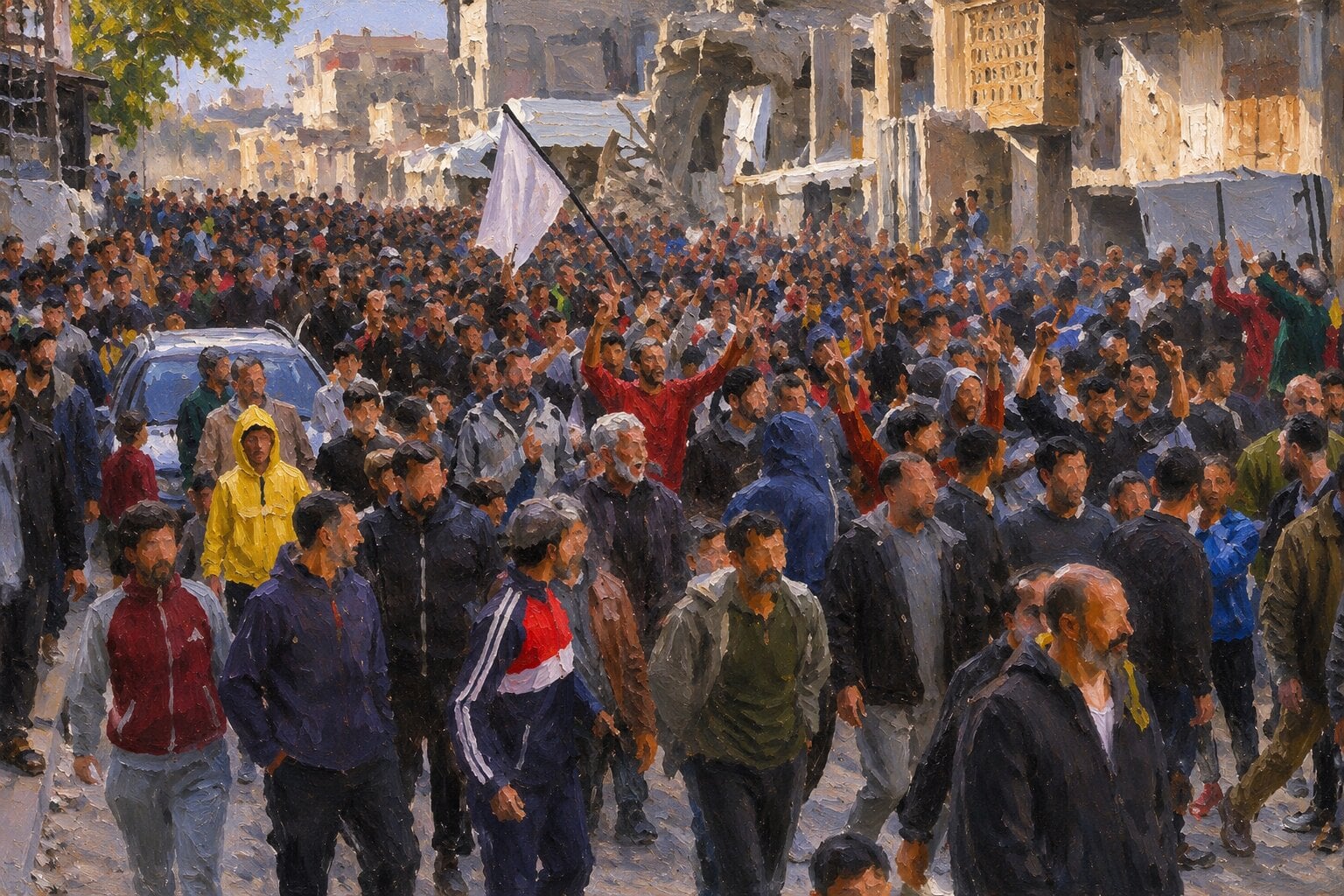
The conditions under which Palestinians express their political preferences further complicate this assessment. During the anti-Hamas demonstrations in Gaza in the spring of 2025, Amnesty International documented intimidation and reprisals against protesters. Political economist Timur Kuran’s concept of preference falsification offers a useful framework for understanding how coercive environments can distort the public expression of political attitudes.
The prolonged absence of national elections compounds this problem. An entire generation of Palestinians has reached adulthood without participating in legislative elections, while established factions continue to dominate political representation. The municipal elections in Deir al-Balah in April 2026 offered a limited opportunity for alternative forms of political participation, although clan influence and restrictions on electoral competition highlighted the difficulties of developing independent political institutions.
The central strategic question for Israel concerns the relationship between Palestinian political legitimacy and the durability of future security arrangements. Any Palestinian authority entrusted with security and administrative responsibilities will need sufficient domestic legitimacy to exercise authority, effective institutions to implement decisions and the capacity to uphold verifiable security commitments.
A leadership dependent primarily on external recognition would struggle to establish its authority. Equally, popular legitimacy without credible security commitments would offer Israel little reassurance. The viability of Palestinian political alternatives depends on the convergence of these requirements.
Israel’s assessment of potential Palestinian partners must therefore extend beyond individual personalities and declarations of peaceful intentions. Their social standing, institutional capacity, independence from armed factions and willingness to assume responsibility for preventing terrorism are essential indicators of their credibility.
There is also considerable strategic value in understanding how Palestinian attitudes respond to different political and economic circumstances. Identifying the conditions under which armed factions gain or lose support can help Israel assess the long-term consequences of its security and political decisions. Such knowledge is particularly important in preventing the emergence of new organizations capable of exploiting the grievances and institutional vacuum left by a weakened Hamas.
Military preparedness, deterrence and enforceable security guarantees remain fundamental to Israel’s national security. Their long-term effectiveness also depends on an accurate understanding of the political and social environment in which threats emerge, evolve and reproduce themselves.
Hamas’s ability to shape the conflict has long exceeded its capacity to represent the full diversity of Palestinian society. The extent to which this imbalance persists will influence the prospects for stability. Understanding Palestinians beyond Hamas is an essential part of assessing the threats Israel faces, the alternatives available to it and the conditions under which lasting security might become possible.
Related Topics