
Israel stops settlers in Syria: Israel’s Zero Tolerance is the smart play
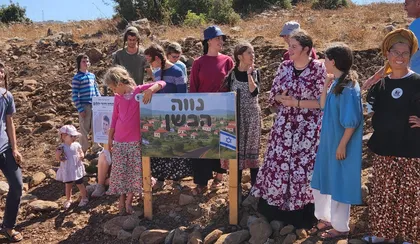
In the dead of night on February 16, 2026, a small band of Israeli settler activists from the far-right Bashan Pioneers group slipped across the border into southern Syria, only to be swiftly intercepted and hauled back by IDF forces. The incursion lasted mere minutes before the perpetrators were detained and handed over to police for questioning. This latest stunt, condemned by the IDF as a “serious criminal offense” that endangers civilians and soldiers alike, underscores a perilous fringe ideology threatening to upend Israel’s delicate strategic gains in post-Assad Syria.
Footage posted to social media shows Israeli activists attempting to establish a settlement in Syria, August 18, 2025 (X; used in accordance with Clause 27a of the Copyright Law)
But here’s the silver lining: the Israeli government’s unwavering zero-tolerance policy toward such actions isn’t just prudent—it’s a masterstroke in maintaining international legitimacy, operational agility, and long-term security. By clamping down hard and fast, Jerusalem signals to the world that its presence in southern Syria remains strictly military and humanitarian, avoiding the diplomatic quagmire that civilian settlements would unleash. In a region where chaos reigns under jihadist rule, this restraint isn’t weakness; it’s calculated strength, preserving alliances and deterring escalation without overextending resources.
Who Are the Bashan Pioneers? A Fringe Movement Rooted in Biblical Dreams
The Bashan Pioneers, or Halutzei HaBashan in Hebrew, aren’t your average advocacy group, they’re a radical fringe group born in April 2025, amid the power vacuum following Bashar al-Assad’s downfall. Drawing their name from the biblical Bashan region, a fertile area in southern Syria and the Golan Heights once allotted to Israelite tribes, their goal is audacious: establishing Jewish settlements deep into Syrian territory to claim what they see as historical birthrights. Founded by hardline activists the group has orchestrated multiple unauthorized border breaches since inception, including flag-raisings, cornerstone-layings for outposts like “Neveh Habashan,” and even family excursions into Syria. Their rhetoric is fiery and unapologetic: “Conquering Syria with our hands,” they proclaim via WhatsApp groups and social media, urging fellow Jews to “make history” by populating the area and preventing any future Israeli pullbacks.
Yet, this isn’t a mass movement. Support is scant among Israeli voters, recent surveys from the Israel Democracy Institute indicate less than 10% of Israelis back settlements in southern Syria, with most prioritizing economic stability and existing security threats over expansionist adventures. Politically, they’re isolated too, no mainstream parties like Likud or Yesh Atid, Blue and white etc endorse them, only fringe figures like former MK Moshe Feiglin have appeared at their events. The IDF’s consistent crackdowns reflect a broader consensus: these actions are reckless, not heroic.
Echoes of Antiquity: Bashan’s Biblical Legacy and the Allure of ‘Greater Israel’
To understand the Pioneers’ fervor, let us go back in time to biblical times. Bashan, a lush plateau east of the Jordan River, was indeed part of the biblical kingdoms of Israel. In the Book of Deuteronomy, it’s described as territory conquered from King Og and allocated to the tribes of Reuben, Gad, and Manasseh—a symbol of divine promise and fertile promise. This narrative fueled early Zionist visions of “Eretz Israel,” an expansive homeland stretching from the Nile to the Euphrates, as referenced in Genesis 15:18. Historical parallels abound: during the Hasmonean era (2nd century BCE), Jewish rulers expanded into similar trans-Jordanian lands, blending conquest with religious destiny; under King Solomon (circa 970-931 BCE), the kingdom reached its peak, incorporating Bashan and beyond.
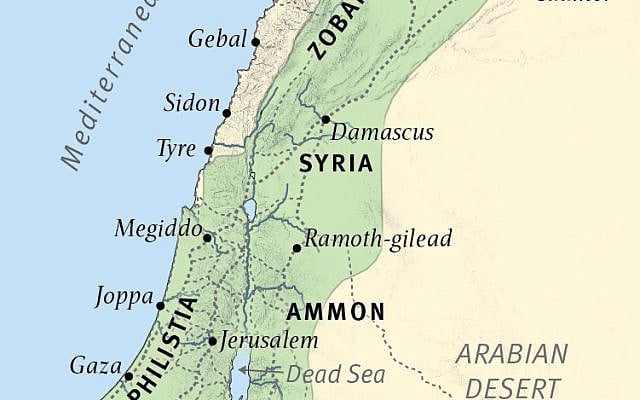
Fast-forward to the 20th century, and figures like Revisionist Zionist leader Ze’ev Jabotinsky evoked these borders in calls for a robust Jewish state, influencing far-right ideologies today. But until Assad’s fall, these ideas were mostly rhetorical flourishes, confined to settler circles focused on Judea and Samaria and Golan. The 1974 disengagement agreement with Syria kept the border sealed, making Syrian adventures geopolitically suicidal. The Pioneers’ emergence marks an opportunistic twist, exploiting Syrian chaos to turn ancient maps into modern blueprints.
Post-Assad Chaos: Israel’s Calculated intervention into Syria
The game changed dramatically on December 8, 2024, when Assad’s regime crumbled under assault from Turkish-backed jihadist proxies like Hayat Tahrir al-Sham (HTS) and the Syrian National Army (SNA). As Damascus fell, Israel didn’t hesitate: IDF forces surged forward to neutralize heavy weapons stockpiles that could fall into hostile hands, targeting artillery and missiles that posed existential threats. With HTS leader Ahmad al-Sharaa (formerly Abu Mohammad al-Jolani), an internationally wanted terrorist with ties to al-Qaeda and even ISIS founder Abu Bakr al-Baghdadi, now helming Syria, Jerusalem’s forward defense strategy kicked into high gear.
Positions were established on the Syrian flank of Mount Hermon, within the demilitarized zone (DMZ), and forward posts in Quneitra and Daraa provinces, creating a buffer to keep jihadists at bay from the Golan Heights. As 2025 unfolded, the humanitarian crisis deepened. HTS-aligned forces ramped up persecution of minorities, especially persecution of the Druze, whose esoteric faith blends elements of Islam, Christianity, and Judaism, and is seen by most of the jihadist groups as heretic. Massacres and kidnappings rocked Sweida, the Druze heartland, prompting Israel to intervene with airstrikes that deterred attacks and enforced demilitarization in southern Syria. This wasn’t just realpolitik; it stemmed from genuine solidarity. Israeli and Golan Druze serve loyally in the IDF, earning high regard, and their Syrian kin faced (and still face) existential peril.

Humanitarian aid flowed, coordinated with US support, framing the operation as a lifesaving mission. Under international law, this military footprint holds water: Article 51 of the UN Charter justifies self-defense against imminent threats, while humanitarian intervention to protect persecuted minorities aligns with norms like the Responsibility to Protect (R2P). The result? Minimal global backlash, no mass protests in Western capitals, no frantic UN Security Council sessions, and even tacit US nods via joint aid efforts.
The Settlement Trap: How settlers could Ignite a Global Firestorm
While the current military only operation in Southern Syria is supported by international law and faces only limited pushback and even enjoys tacit US nods of approval, the introduction of settlers would change international support and legal foundation drastically overnight. Diplomatically, it screams “occupation” and “colonialism,” inviting a torrent of condemnation. The Fourth Geneva Convention’s Article 49 bans population transfers into occupied territories, a rule born from WWII horrors to prevent permanent land grabs.
Arguments that support settlement in Judea and Samaria based on defensive war gains in 1967 and the unrevoked League of Nations Mandate preserved in UN Article 80 don’t apply here, as Syria falls outside that territory and lacks the defensive war context, making it a clear violation of Syrian sovereignty. Applying the Geneva convention could trigger ICJ challenges and ICC probes and war crime labels, alienating allies like the US and emboldening foes like Turkey and Iran.
Ongoing US-mediated talks between Syria and Israel are already complicated enough, as progress has been limited with positions far apart: HTS leader al-Sharaa (Jolani) seeks a narrow security framework, while Israel pushes for a broader peace agreement guaranteeing Druze safety, security provisions, and state interests. Settlers would only complicate them further, potentially derailing talks indefinitely and efforts like the joint deconfliction mechanism.
Legally, the shift is stark: a pure military presence can invoke self-defense and humanitarian law, but settlements reek of permanence, violating occupation rules under the Hague Regulations. Operationally, it’s a nightmare. In 2026’s Syrian tinderbox, swarming with HTS remnants, SNA militants, and other jihadists groups, settlements become sitting ducks, far easier to target than the IDF’s mobile, drone-backed patrols.
The Bashan pioneers claim settlements would provide security there, the rest of the classic “settlements provide security” rationale posits that civilians bring a permanent Israeli presence, many of whom serve in mandatory military service including as reservists, creating an on-site force multiplier. While one could argue this works in a substantive network of settlements by deterring threats through population density, in Syria, starting from zero with no existing network, it falls flat, directly becoming a magnet for jihadist groups. Static points make easier targets than the high-tech, highly mobile IDF forces now patrolling southern Syria via drones, air support, and rapid-response units, apart from a few outposts and security checkpoints.
Moreover, introducing settlers risks more flashpoints with local populations; currently, the IDF stays out of local villages whenever possible, minimizing friction and preserving the humanitarian narrative, but civilian incursions could spark clashes over resources, straining relations with communities like the Druze and escalating unrest. Protecting them would pin down troops, diverting resources from Gaza, Lebanon, and Judea and Samaria hotspots, stretching an already fatigued military thin. And deconstruct the myth further: in this fractured landscape, settlements don’t buffer threats—they magnetize them, inviting guerrilla raids, rocket barrages, and international isolation that weakens Israel’s deterrence. History shows settlements often escalate conflicts, not resolve them; think Judea and Samaria’s cycle of violence.
Why Israel’s Current Approach is the Winning Strategy
The Netanyahu government’s zero tolerance for settlers in Syria, and their laser-focused on military necessity, isn’t just right; it is brilliant. It safeguards the status quo: a largely secure buffer zone providing strategic depth, it provides protection for the Druze, enables humanitarian aid supplies and all that with minimal diplomatic heat, and even tacit US approval. All while US-brokered talks inch toward de-escalation. By keeping civilians out, Israel avoids the Pioneers’ trap, honoring ancient heritage through strength, not folly. If settler activities persist, they risk eroding this strategic edge, potentially inviting broader escalation in an already volatile Middle East. In the Syria of 2026 which is a hotbed of jihadist groups, and a new flashpoint for regional power plays, the smarter play is the current Israeli strategy as it provides maximum Israeli freedom of operation supported by international law, and security for the Druze with minimal international pushback and US support.