
Israel, the State that Judges Its Own War
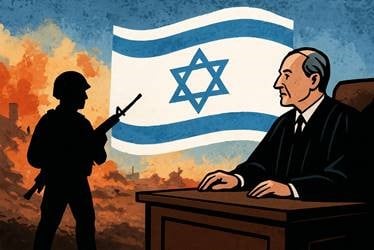
As the war in Gaza continues and the International Court of Justice (ICJ) examines allegations of genocide, a singular fact is often absent from the debate: Israel is one of the very few states in the world whose Supreme Court exercises direct judicial oversight over military operations during wartime, incorporating international humanitarian law into its review. This oversight is neither theoretical nor symbolic; it binds both the government and the military, even at the heart of the conflict.
Under Israeli law, the armed forces and the government possess, as elsewhere, broad discretionary powers in conducting military operations. However, this power is not absolute. The Supreme Court, sitting as the High Court of Justice (“Bagatz”), has arrogated to itself the jurisdiction to review any executive act, including in times of war, whenever questions of legality or proportionality arise. This principle is grounded in the “Basic Law: Human Dignity and Liberty” (1992), which provides a constitutional foundation for the protection of fundamental rights, even in the face of security imperatives.
Judicial oversight exercised even in times of war
Contrary to the practice of most democracies, where courts declare themselves incompetent to adjudicate ongoing military decisions, the Israeli Supreme Court reviews petitions submitted by NGOs, individual Palestinians, or even international entities, sometimes within a matter of days. It can order modifications to targets, suspend operations, or impose the opening of humanitarian corridors.
The Court bases its decisions on three criteria:
- Suitability: The measure must be apt to achieve the pursued military objective.
- Necessity: There must be no less harmful means to achieve the same goal.
- Proportionality: The harm caused to civilians must not be excessive in relation to the anticipated military advantage.
In doing so, the Court applies as customary international law the Additional Protocol to the Geneva Conventions, to which Israel is not a party.
Among landmark cases adjudicated are: the obligation to maintain a minimum humanitarian supply to Gaza, even in case of a blockade[1]; injunctions permitting civilian movement within the Gaza Strip, particularly evacuations from combat zones[2]; and strict regulation of targeted killing policies, including requirements for prior verification and post-operation review[3].
The High Court accepts petitions from non-Israeli actors, including Palestinians residing in Hamas-controlled areas. It is virtually the only court worldwide exercising real-time oversight with broad access to appeals from enemies or third parties.
The Hague paradox
While Israel is one of the rare states to submit its military operations to permanent judicial scrutiny, how should one understand the accusations brought before the ICJ?
Most countries judging Israel lack comparable wartime judicial procedures or mechanisms capable of halting or amending ongoing military operations.
How can it be explained that Israel is prosecuted before an international tribunal for acts that its own national judiciary examines, limits, and sometimes annuls?
This paradox demonstrates that the ICJ is being instrumentalized and that the case against Israel serves political, diplomatic, and media objectives.
[1] Jaber al-Bassiouni et al. v. Prime Minister et al. (HCJ 9132/07)
[2] Gisha v. Government of Israel (HCJ 9132/07)
[3] Public Committee Against Torture in Israel et al. v. Government of Israel et al. (HCJ 769/02)