
Journalist, Commentator on Middle East Issues
Israel-Turkey Relations: Strategic Competition and Imposed Partnership
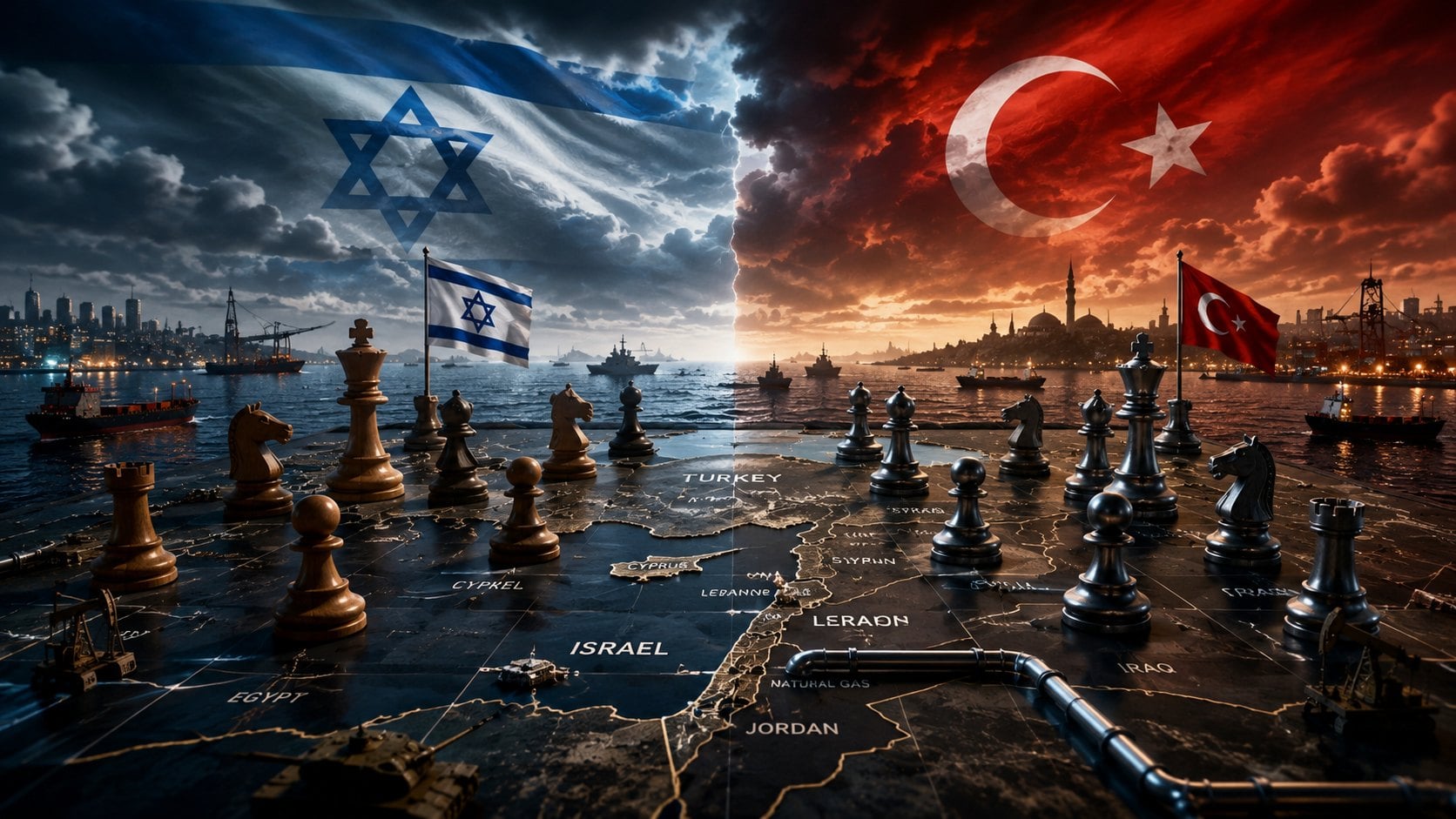
AI Creation (my prompt)
Relations between Israel and Turkey, which began in 1949 as an unannounced regional alliance between two non-Arab powers in the Middle East, have witnessed an unprecedented deterioration over the past year. Israel’s recognition of the Armenian Genocide at the end of June, after decades of deliberate abstention, marked a striking political shift rather than merely a symbolic step. In response, statements by Turkish Foreign Minister Hakan Fidan, in which he asserted that “Israel has become an entity that can no longer be tolerated in the region”, sparked widespread outrage in Israel.
Furthermore, the decision by the Istanbul Public Prosecutor’s Office to file an indictment against Prime Minister Benjamin Netanyahu and dozens of Israeli officials following the interception of the “Somoud” ship revealed that the judicial arena has transformed into a new front in the conflict.
The conflicting interests between the two sides are concentrated in three main arenas:
- Syria: In post-Assad Syria, Turkey is working to consolidate its influence through its relationship with the new authorities. Israel views this trend with concern, especially following US support for integrating Kurdish forces into the Syrian army, and amid fears of losing the Air Force’s ability to operate with total freedom of movement in Syrian airspace, which currently lacks effective air defenses.
- Eastern Mediterranean: Ankara views the alliances Israel has bolstered with Greece, Cyprus, and India, alongside the IMEC economic corridor project aimed at connecting Asia to Europe, as an attempt to encircle Turkey and bypass its regional role. This has prompted Ankara to reinforce its naval presence under its “Blue Homeland” doctrine.
- Gaza Strip: Turkey continues its support for Hamas and plays a prominent role in efforts related to the post-war governance of the Strip, further heightening tensions with Israel.
Despite these friction points, shared interests between both parties remain. Turkish Foreign Minister Fidan hinted that the resumption of ties is contingent upon halting the war and Israel’s willingness to recognize a Palestinian state on the 1967 borders, while also pointing to the possibility of establishing a broader regional security framework that includes both countries.
Furthermore, the volume of bilateral trade, which reached nearly $10 billion prior to the war, along with their historical alliance with the United States and their membership within the Western system, serves as a stabilizing factor against uncontrolled escalation, even if it does not signal a swift reconciliation.
On the international stage, this tension reflects a broader competition over shaping the new regional order. The United States is attempting to strike a balance between its support for Israel and maintaining Turkey as a pivotal NATO member, while both Russia and China closely monitor any rift within the Western camp.
Ultimately, the primary risk is not the outbreak of a direct military confrontation, which appears unlikely, but rather the continuation of a mutual cycle of escalating rhetoric and enemy image construction. This trajectory threatens to narrow the scope for diplomatic maneuverability on both sides, even as underlying economic and security interests continue to compel cooperation when necessary.
Related Topics
Related Posts