
President of Shahvand Think Tank
Israel Was Right About Iran
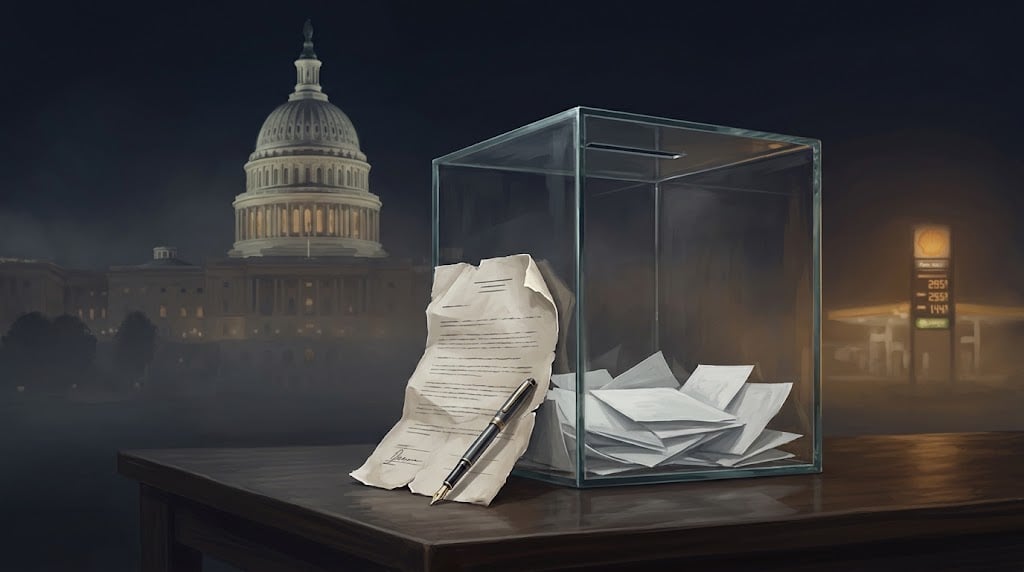
The midterm vote and the failed Iran memorandum. AI-generated illustration for Shahvand
Trump’s deal constrained Israel, left Tehran’s regime in power and helped cost Republicans both the House and the Senate.
For Israel, the lesson of the American midterms begins with a decision Donald Trump made in June. Israel saw a chance to bring down the Islamic Republic. Trump chose a memorandum with Tehran that constrained Israeli action and left the regime in place. By November, American forces were again striking Iranian targets in the Strait of Hormuz, Democrats had won both chambers of Congress, and Trump acknowledged that the war played a part in the defeat. The decision that deserves scrutiny is his choice to interrupt the campaign without securing a political settlement that could hold.
What Israel understood
Israel was right to see the survival of the Islamic Republic as the central problem. A damaged missile program can be rebuilt. A weakened proxy can be resupplied. As long as the institutions that finance, arm and direct these operations survive, Israel must prepare to confront them again. The June memorandum declared an end to military operations on all fronts, including Lebanon, while deferring the hardest nuclear questions to a final agreement that never came. Trump had already pressed Benjamin Netanyahu to hold off on strikes in Beirut as Washington pursued its deal. For Israel, the terms of a pause with Tehran had direct consequences on its northern border.
I have described the Islamic Republic as an onion. Its power is distributed across military, intelligence, clerical and economic institutions that protect one another. Killing the man at the top can disrupt command while leaving much of that machinery intact. Israel’s military campaign could weaken those layers and create a political opening. Turning that opening into a transition required an organized Iranian opposition capable of bringing people together and taking responsibility for what came next. That was the opportunity Washington should have pursued with Israel.
How the pause became a political liability
Trump had a clear reason to seek relief. The disruption of oil shipments through Hormuz was driving up fuel costs, and reopening the strait offered an immediate benefit to American households. Vice President JD Vance put his name to the framework alongside Trump. The prospect of restored shipping calmed markets, but fighting resumed in July and the memorandum expired in August without a final agreement. By October, higher fuel prices were still making it more expensive for Americans to drive and fly. Washington had traded leverage for a pause that failed to deliver lasting relief.
This is where the war collided with the promise of America First. Voters who had expected a government focused on household costs saw an overseas commitment making those costs harder to bear. Republicans went into the midterms having to defend both the price of the war and the failure of the agreement meant to end it. Trump owned that decision. Vance, who helped pursue the agreement, will have to answer for his judgment if he asks Republicans to make him their candidate in 2028.
Senator Lindsey Graham urged Trump to “finish the job” if no deal was reached. He was right to question the value of easing pressure while the regime retained the means to threaten shipping and its neighbors. Israel’s approach pointed toward a political objective the United States could have pursued while that pressure was strongest. Washington could have joined Israel in backing Prince Reza Pahlavi to bring together the Iranian forces capable of leading a transition. The memorandum let that moment pass.
What finishing the job should mean
Israel’s Innovation, Science and Technology Minister, Gila Gamliel, has publicly backed Pahlavi, who has offered to lead a democratic transition. Washington should follow Israel’s lead by recognizing him as a leading figure in Iran’s democratic opposition and supporting his effort to convene a broad transitional coalition. As I argued in “A Guided Fall in Iran,” the credibility of such a transition would depend on participation from inside Iran, including civic groups, labor organizers and professionals who know how the country’s institutions function. They would help the coalition prepare for decisions that would have to be made quickly if the regime fractured, from maintaining essential services to protecting basic freedoms and securing public institutions.
Pahlavi’s role would be to assemble a coalition capable of keeping the country functioning and preparing a free referendum. Iranians would choose between a republic and a parliamentary monarchy on equal terms. The United States could work with Israel to give the coalition diplomatic standing and help Iranians communicate and organize. The authority to govern Iran would come from Iranians themselves.
For Israel, an Iranian government with the authority to change its relationship with Jerusalem would offer a strategic gain beyond any temporary ceasefire. For the United States, an Iranian-led transition would offer a way to address the source of repeated crises while leaving the responsibility for governing Iran in Iranian hands. Pursuing that course would have carried risks, but it would have given the two allies a shared political objective at the moment they had the most leverage.
Trump sought an exit through the very regime Israel had gone to war to weaken. The agreement broke down, the fighting returned and American households continued to pay. Washington should now take the step it passed up in June and join Israel in backing Pahlavi’s effort to build a coalition that can carry an Iranian-led transition through to a free vote.
Related Topics