Writer covering Israel–Africa, Jewish affairs, and Israel worldwide
Israel Week in Kenya: Standing Together for Life, Healing, and Hope
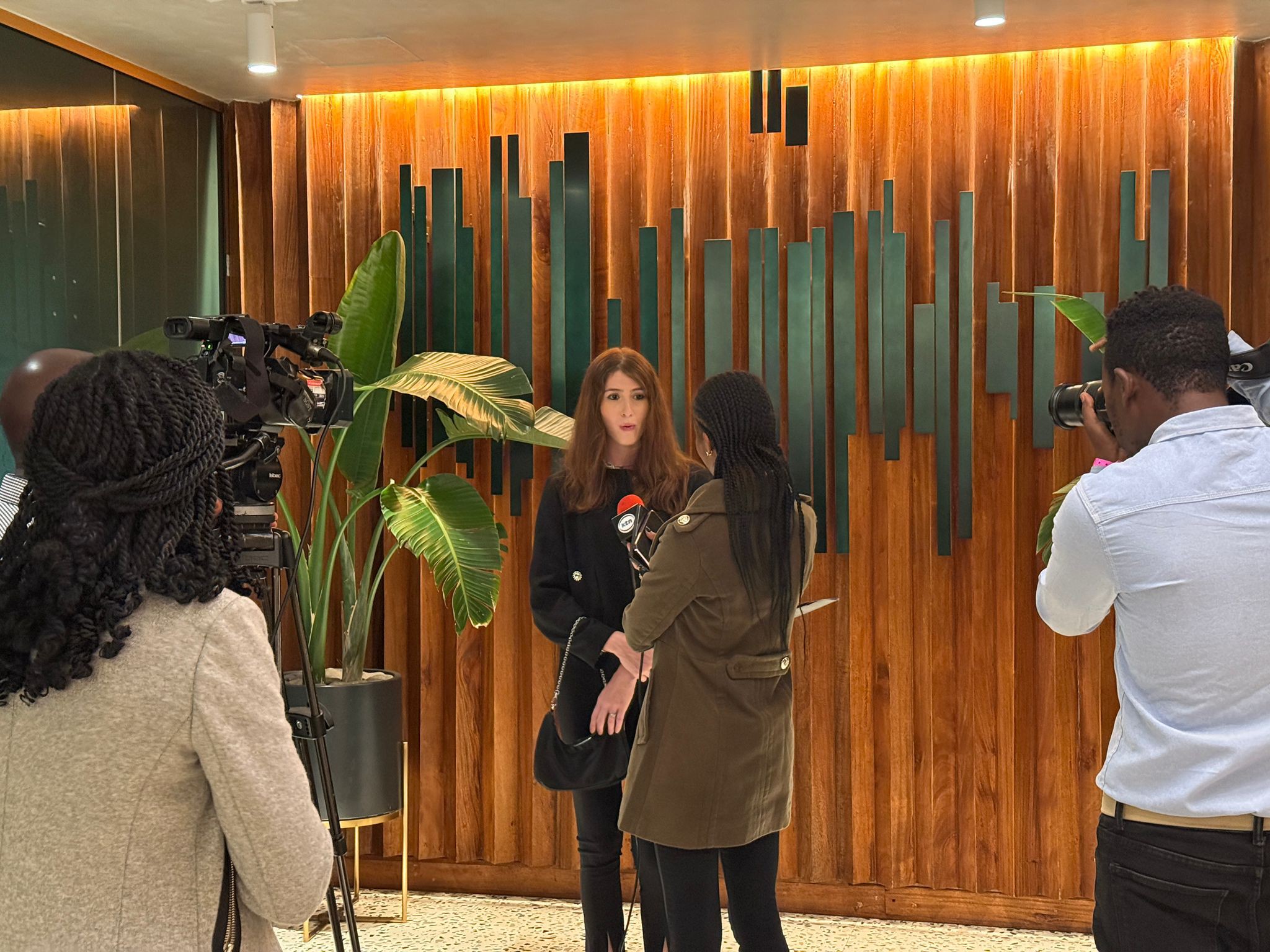
photo credit: Israel In Kenya/Facebook).
From honoring the victims of the Nova Music Festival to advancing medical and agricultural cooperation, Israel and Kenya continue to build a friendship rooted in shared humanity and hope.
It has been a week of quiet power a week that has reminded Israel and Kenya that strength need not always roar; sometimes it simply stands, remembers, and rebuilds. On October 26, the Embassy of Israel in Kenya hosted a memorial titled “The Day Music Stood Still.” The name itself carried a quiet irony how could music, that universal language of joy, stand still? And yet, on that day a year ago at the Nova Music Festival, it did. The silence that followed the gunfire still echoes, and the world still searches for words adequate to describe the indescribable.
In Nairobi, Ms. Maya Parizer, survivor of that horrific attack, lent her voice to memory. Her testimony was not a performance but a prayer a blend of courage and composure that spoke of what it means to live after surviving. Her words reminded us that while terror aims to erase, the human spirit insists on rewriting the story. Later, at Faith Evangelistic Ministry Church, Kenyans prayed for Maya and for Israel. The sight of a Kenyan congregation embracing the young Israeli survivor was quietly profound an act of empathy without preamble, faith without borders. It said, in essence: we understand loss; we understand endurance.
Also, in another event that same week, the language of solidarity shifted from the spiritual to the practical. Ambassador Gideon Behar, Israel’s envoy to Kenya, paid a courtesy call to the CEO of Kenyatta University Teaching, Referral, and Research Hospital (KUTRRH). The visit came ahead of the Pediatric Disaster Medicine Seminar, organized by the Embassy, MASHAV (Israel’s Agency for International Development Cooperation), and Hadassah Medical Center in Jerusalem. Fifty-nine Kenyan healthcare professionals took part in the training a small number, perhaps, but the irony of “small” here is that even a few hands, properly trained, can save countless lives. The seminar drew on Israel’s hard-earned expertise in emergency medicine lessons forged not in textbooks but in the crucible of crisis.
As Ambassador Behar emphasized, the partnership in healthcare is more than a technical exchange; it is a moral statement. To teach another how to save a child is to declare, without words, that every child’s life matters equally whether in Jerusalem, Kisumu, or Kibera.
Meanwhile, as the week continued, another form of cooperation blossomed one rooted not in medicine but in the earth itself. On November 11, experts from Kenya and Israel will meet online to share ideas on water management, irrigation, and sustainable farming. The conversation, bringing together KEWI, Volcani Institute (ARO), and CultivAid, speaks to a simple truth: when you share water, you don’t just share resources you share hope.
In yet another act of partnership, Ambassador Behar toured an agricultural project developed by MASHAV, CultivAid, and Water for Mercy. There was no fanfare just rows of thriving vegetables, a seedling nursery, and young mango trees, all tended by Kenyan students mentored by Israeli experts. It was a portrait of cooperation without speeches a quiet kind of diplomacy where the harvest itself does the talking.
Parallel to the week’s emotional beginning, this agricultural scene offered its own moral symmetry. From trauma to treatment, from prayer to planting, every gesture spoke of the same conviction: life must go on, and it can go on better. So what was Israel Week in Kenya really about? Not policy, not ceremony but presence. The kind of presence that heals by showing up, teaches by doing, and reminds us that remembrance is hollow without renewal.
As the candles at the Nova memorial burned in Nairobi, their flames reflected in faces of both Israelis and Kenyans. The question that lingered was simple yet profound: how does one honor the dead? The answer, perhaps, is by choosing to protect the living.
Related Topics
Related Posts