
Lawyer & Law Professor
Israel Wins Far More Than a War
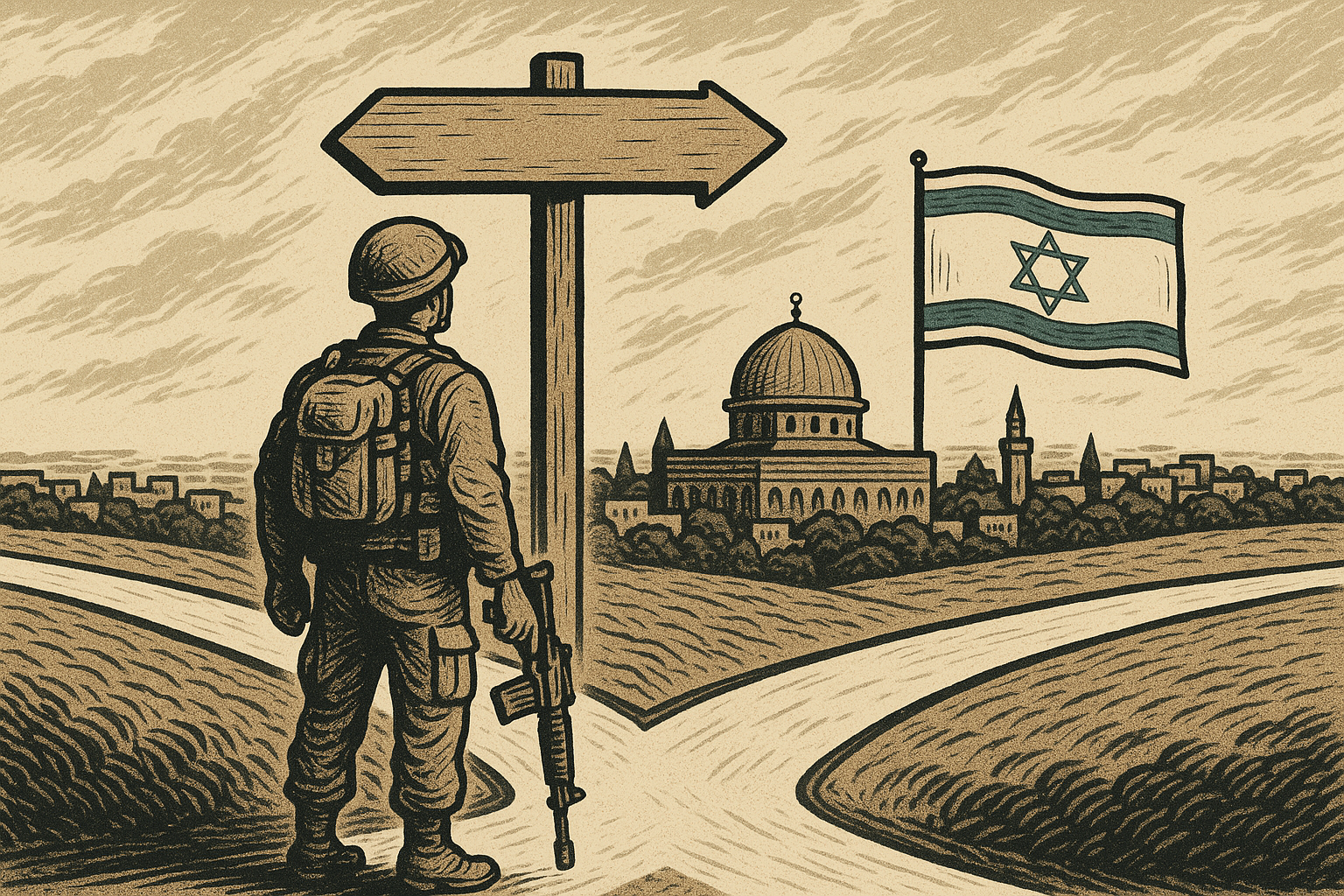
Image Created by ChatGPT with DALL-E, 2025.
As the world waits for the official announcement marking the end of the war in Gaza and the return of the hostages, Israel stands at a defining crossroads. Once again, under the honorable command of the Israel Defense Forces, the Nation has prevailed in a war it never chose, one whose outcome redefines the moral and strategic legitimacy of its very existence. This conclusion, still awaiting formal confirmation, represents the culmination of an effort that forever altered the destiny of the Jewish People and the Middle East.
Two years and two days have passed since that dark morning of October 7, when Hamas’s killers crossed into Israel with the deliberate cruelty of those who seek not just to murder, but to shatter the spirit of a nation. Since then, each dawn has carried the memory of that horror, and every act of the State of Israel has been a renewed affirmation of its most fundamental right; the right to exist.
Nothing since that blood-soaked dawn has been simple. Israel was not merely defending itself; it was defending its collective soul from annihilation. Its enemies, the emissaries of militant Islam who still dream of erasing Israel from the map, sought not only physical destruction but moral collapse. The price was high, but the result was the opposite: the rebirth of a proud and honorable nation that draws certainty from adversity.
For two relentless years, Israel fought and dismantled an organization that no longer exists as a military force, even if its poisonous ideology still lingers. Gaza today lies in ruins, not as a prize of conquest but as undeniable proof of the defeat of Islamist fanaticism.
The wicked leaders of Hamas, Yahya Sinwar, Ismail Haniyeh, and Mohammed Deif, worshipers of death and enemies of civilization, died as they lived: miserable peddlers of hatred, responsible for a massacre that disgraced humanity. Hassan Nasrallah, Hezbollah’s moral nihilist, met the same fate, sealing the end of an era when armed militias dictated the region’s agenda. The Houthi militias in Yemen were crushed, and Iran, the theocratic dictatorship that bankrolled them all, has been reduced to a hollow shell, left only with incendiary words and a failed nuclear dream.
Militarily, the results are beyond dispute. The terrorist infrastructure and tunnels in Gaza were almost destroyed. Israeli intelligence reached unprecedented precision; the operation that eliminated hundreds of terrorists simultaneously through their own beepers and walkie-talkies will be studied as one of the most astonishing technological feats of the 21st century. The Iranian nuclear threat is no longer immediate, and the Houthis’ logistical web has been dismantled.
Even Qatar, the terror-sponsoring state that tried to hide its complicity behind a mask of diplomacy, understood the message when Israel struck its strategic facilities, proving that no sanctuary is safe for terrorism. Rafah, once the last stronghold of extremism, became the symbol of its extinction.
This war reshaped not only borders but the moral architecture of the Middle East. And the result was not Israel’s territorial expansion but something greater: the recovery of the conviction that the Jewish People will never again allow life to be held hostage by fear.
The transformation now sweeping the region is political and structural. For the first time in generations, much of the Arab world no longer sees Israel as a threat but as an anchor of stability.
Egypt, Saudi Arabia, Bahrain, Morocco, and the UAE continue to deepen cooperation through the Abraham Accords, while in Beirut and Damascus, cautious conversations are beginning that would once have been unthinkable.
The collapse of Assad’s regime is merely one visible symptom of a deeper shift. Fanaticism, at least in this region, has stopped being profitable. The rhetoric of hate is cracking. In its place emerges a fragile but real idea: a sense of shared survival. No one says it aloud, but everyone understands it. Israel’s security has become the prerequisite for the region’s stability.
Ironically, the opposite is happening in the West. A generation of self-styled activists has confused emotional fragility with critical thought, building a hollow morality incapable of distinguishing victims from executioners. Cloaked in a relativism that turns cowardice into empathy, these new arbiters of virtue erase history, whitewash terrorism, and disgustingly call murder resistance. Behind the soft language of inclusive humanism hides an ugly truth: the only violence they excuse is the one committed against Jews.
This same crowd, in the name of social justice, has abandoned moral justice, unable to grasp that defending freedom sometimes requires strength. While the Middle East learns that coexistence depends on Israel’s survival, European and American campuses seem determined to forget what civilization owes the Jewish People.
The deal to return the hostages home did not emerge from nowhere. It is the logical outcome of a chain of decisions that blended military power with diplomatic patience. Let there be no confusion: Hamas did not agree willingly; it surrendered. It has been crushed on every front. Bereft of allies, cut off from Iran, abandoned by Hezbollah, and quietly betrayed by Qatar, Hamas accepted the terms out of sheer exhaustion. Jihad was a lucrative business until it was not.
Arab nations realized that prolonging the war meant financing their own ruin. They helped push it toward closure. Donald Trump, who is expected to announce the deal and is already whispered as a candidate for the Nobel Peace Prize, will be remembered as the visible mediator of a negotiation whose true driving force was Israel. The world watched as Netanyahu visited the White House again and again.
Inside Israel, a profound change unfolded. Political divides were suspended, if not erased, by the urgency of common defense. Unity, so often invoked and rarely achieved, became tangible. The Jewish People remembered who they are and proved it through action. They recovered confidence, purpose, and resilience. They withstood pain with dignity while the so-called international community often confused neutrality with moral apathy.
And, for better or worse, “habibi, ein q’mo Bibi“. Benjamin Netanyahu, whom history and perhaps the courts will one day judge with more serenity than the headlines, endured unprecedented internal and external pressure. He refused to halt the offensive before fulfilling three essential objectives: destroy Hamas’s military capability, bring the hostages home, and restore deterrence against Iran and its allies. His decision to continue operations in Rafah, Khan Yunis, and southern Lebanon despite outside pressure was the turning point. Israel moved on its own timetable, not anyone else’s, and that independence, harshly criticized at the time, proved the key to success.
The cost, however, was enormous. Thousands of soldiers return with visible wounds, and others that will take years to heal. Hundreds of families mourn their dead, and Jews around the world mourn with them. In Israel, children in the south learned too early to recognize the sound of sirens, while in the north, many grew up far from home. Israel knows that the price of survival is measured not only in lives lost but in lives interrupted, and that understanding grants its victory not just legitimacy but dignity.
Now the future raises new questions. Gaza must be governed by a model that prevents the return of terror and builds a responsible civilian leadership. Whether that promise is kept remains to be seen. What is clear is that the Palestinian Authority, discredited and exhausted, is no longer a viable option. Even Gazans themselves are beginning to speak out against the tyranny that rules them. The rhetoric of hate has not disappeared, but it is losing its grip.
Within Israel, the debate over sovereignty in Judea and Samaria is once again front and center. What was once an ideological issue is now one of structural security. Ensuring control over those regions is no longer expansionism; it is defense in depth. The movements in the West Bank over these two years were not conquests of land but conquests of certainty. Israel emerges not as an occupier but as the custodian of its historical continuity.
The sweetest victory of all will be the return of the hostages, planned for the festival of Simchat Torah, the very holiday on which they were taken. That day will stand as a symbol of life’s triumph over death. The streets will overflow with tears and dancing, with embraces that need no words. It will not be a celebration of power but of survival. Israel will dance again, not because it conquered, but because it endured.
And yet one truth remains: no one truly wins a war. Israel’s victory cannot erase the tragedy or repay the cost. But there are wars one cannot avoid, wars where surrender would mean accepting injustice as destiny. Israel did not choose this war; it was chosen by it. The Jewish People fought out of duty. The IDF fulfilled its mission, and in doing so, ensured the continuity of the Jewish People for generations to come.
Today, the Middle East wakes to a new light. Tyrants hide, terrorists fall silent, and nations rediscover that peace with Israel is not a concession but an opportunity. The Jewish State rises strengthened by the hope it embodies. It has reminded the world that freedom is non-negotiable, that dignity cannot be delegated, and that life, even after horror, remains the highest form of resistance. No one truly wins a war, but Israel fulfilled its mission, and in doing so, restored the moral order of the world.
Related Topics
Related Posts