Israeli actions in Sweida are both moral and strategic
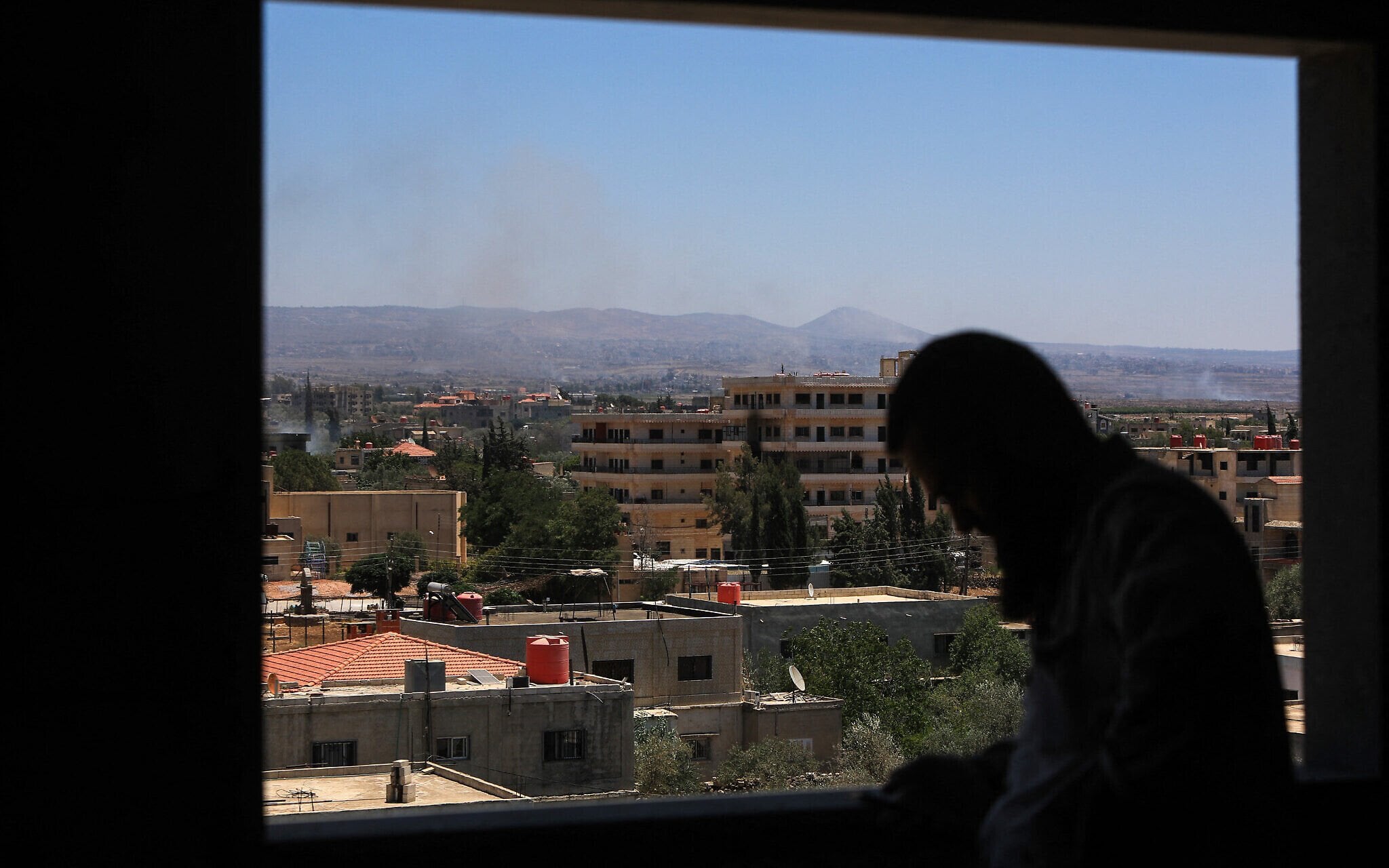
Last week, just a few dozen miles from Israel’s northern border, a brutal massacre unfolded in southern Syria’s Sweida province. The victims were members of the country’s Druze minority, an Arabic-speaking community that has long lived in the region, committed to the sovereignty of the states in which they reside, including Syria, Lebanon and Israel.
Faced with harrowing images of kidnappings, executions, and mass violence, Israel chose to act. It did so cautiously and proportionally: first by sending discreet warnings to the Syrian regime and then launching limited strikes against jihadist militias in Sweida. When those measures failed, Israel escalated, targeting the Syrian Ministry of Defense and general staff in Damascus for the first time since 1973. That strike was effective. It helped bring about a ceasefire, brokered with American leadership by Secretary of State Marco Rubio and special envoy Tom Barak.
Israel did not act to gain territory or interfere in Syria’s sovereignty. It acted to protect civilians, specifically a minority community with which it shares a deep historical bond. For 77 years, the Druze in Israel have stood shoulder to shoulder with the Jewish majority. They serve in the military, hold public office, and form an integral part of Israel’s social fabric. This “blood alliance,” reaffirmed during and after the October 7 attacks, carries with it a clear moral responsibility.
A Strategic Response to a Deepening Crisis
Israel’s intervention also served its national interests. Sweida sits in a region increasingly contested by jihadist groups, Iranian proxies, and tribal militias. The July 11 assault by Sunni Bedouin tribes on Druze villages – allegedly aided by regime and jihadist forces – was not an isolated event. It reflected a deeper struggle for control over southern Syria, including strategic smuggling routes and influence over minority populations.
While it remains unclear whether Syrian President Al-Sharaa ordered the attacks, his regime’s inability – or unwillingness – to stop them raises serious questions. Publicly, Al-Sharaa distanced himself from the violence, mindful of his growing international legitimacy. Privately, intelligence assessments must determine whether this was a loss of control or something far more deliberate.
Within the Druze community, divisions run deep. Some leaders, like Sheikh Hikmat al-Hijri, reject the regime and insist on keeping their autonomy and their weapons. Others, such as Sheikh Yusuf Jarbu’, favor cooperation with Damascus and oppose Israeli involvement. These internal dynamics complicate any agreement —and increase the risk of the collapse of the ceasefire.
Israel’s Interests in Syria
Israel’s actions in Sweida were guided not only by conscience but by a clear-eyed assessment of strategic needs:
- Preventing direct threats to its northeastern border, including terrorism, rocket fire, and weapons smuggling.
- Blocking renewed Iranian entrenchment, including recent Quds Force activity near the Golan Heights.
- Defending the Druze, a minority under existential threat, as part of Israel’s moral, societal and political fabric.
- Preserving channels of dialogue with Damascus to explore long-term security arrangements.
- Containing Turkish military influence in southern Syria and clarifying red lines.
- Safeguarding Israel’s international legitimacy, especially with its partners in Washington, Abu Dhabi, and Riyadh.
A Responsible Use of Force
Israel’s measured escalation, preceded by backchannel warnings and initially limited military action, demonstrates that it is not seeking confrontation. Rather, it is pursuing stability, protection of minorities, and long-term deterrence.
Indeed, Israel’s strike on Damascus was not merely symbolic. It was a message: violence against the Druze community and massacre of civilians, especially when perpetrated by or tolerated by a government, will have consequences.
But even now, Israel seeks to avoid further escalation. Its conditions for continued dialogue with the Syrian regime are clear:
- Guarantee the rights and protection of minority populations.
- Prevent the deployment of regime military or jihadist forces south of Damascus.
- Enforce the ceasefire between Druze and Sunni communities.
- Hold accountable those responsible for the massacre.
From Force to Diplomacy
Military action, however justified, must be accompanied by diplomacy. Israel should lead a regional effort, alongside the United States, Saudi Arabia, the UAE, and Turkey, to stabilize Syria, marginalize extremist actors, and prevent further atrocities.
This is not about power projection. It is about regional responsibility. In Syria, as elsewhere, force must serve strategy, one that balances values, interests, and alliances.
Israel does not seek war. It seeks stability, security, and the defense of its moral principles.