
Israeli Energy Security Is as Simple as Plugging In
Solar and renewable energy in Israel has lagged behind other developed nations, as only 16% of electricity came from renewable sources, with the lion’s share being from solar. This puts the country in second to last place among OECD countries for renewable energy production and highlights a vulnerability in our energy system, as we are more reliant on a global supply chain to provide energy.
By the end of the month, another European country will give its citizens access to more solar. Starting August 27th, the British public can buy plug-in solar kits at a range of stores. The UK is not the pioneer in the field of plug-in solar, also known as balcony solar. That credit actually goes to Germany, where since 2024 over 800,000 systems have been installed in yards and on balconies across the country.
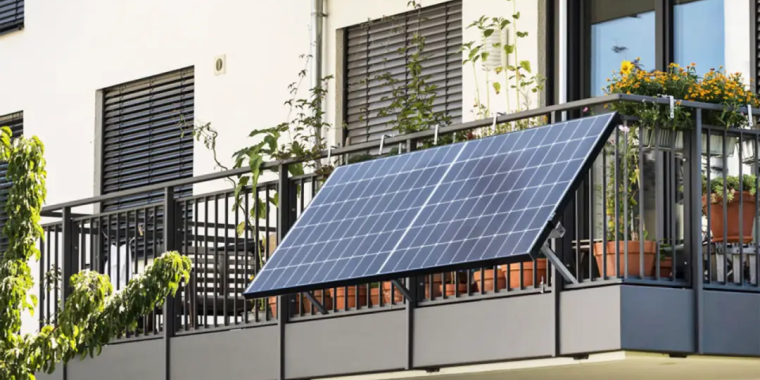
Plug-in solar is exactly as it sounds: you buy a couple panels in a DIY kit from a store, like IKEA, and plug it directly into any three-prong wall outlet. On the backend, it’s slightly more technical than that, but essentially it feeds power directly into a house or apartment to use locally, so it’s not going back into the grid. This helps power home appliances and devices when panels are taking in power, and in Germany they start as low as €200, with the price of the systems having halved over the last few years.
The US has also taken note of this new category, with 10 states already legalizing plug-in solar. Americans are still waiting on a certified kit to hit the market, but once it does, millions more people will be able to produce their own energy simply by going to the store and plugging in a solar kit into any regular outlet at home.
In Israel, we could greatly benefit from this form of solar, and the conditions may be even better suited than Europe or the US. In actuality, the strongest argument for Israelis to have plug-in solar does not center around environmentalism. Rather, it centers around access, cost, and most importantly, security.
Today, nearly 30% of Israelis live in rental homes and apartments, a figure that has steadily increased over the last 10 years. For this portion of the population, it is not possible to invest in a solar array and install it on the roof of a building they don’t own. Plug-in solar would mean that well over 2 million people in the country could begin to produce their own power.
But the numbers go even further to support this low-barrier form of solar, as 67% of the country live in apartments and multi-occupancy buildings. To install a traditional solar array, two-thirds of the country would need to get their neighbors to agree to the system, share the upfront capital costs, and suffer through construction. Older buildings in the country may not warrant an investment in a solar array which could entail adding structural support plus the hard costs of the system. To truly give renters and all apartment dwellers access to solar, we need to offer a much more simple and low-barrier product.
Residential electricity rates in Israel are a far cry from the rates that European markets like Germany and the UK command, but the economics of adding solar can still be beneficial. In fact, the average rate is not far off from the average residential customer in the US, where plug-in solar has gained traction on financial grounds, and Israel has an abundance of sunshine. This can translate to decent savings for Israeli households, which saw an increase in electricity prices of 1.5% this year.
Solar energy output varies greatly depending on the location of the panels, but a safe assumption for an 800-watt plug-in system would produce around 90kWh per month, translating to about 50 shekels in monthly savings for one system. That might not be a huge amount, but small savings add up, and can eat into a good chunk of the electricity bill for smaller apartments. For a country with one of the highest costs of living in the developed world, those savings matter to keep the lights on and the fridge running.
But beyond cost, the biggest benefit of plug-in solar in our country is related to security. These past few years have brought to the forefront how vulnerable Israel is to major onslaughts of rocket barrages, with critical infrastructure often targeted. In the event that an attack should damage critical electrical infrastructure, large portions of the country could be left without power. Plug-in solar won’t power a house all night, but with the right equipment in the form of special inverters or batteries, it could offer a critical lifeline. In the event of one of these outages, it can keep charging phones or medical devices and a fan running during the heat of the day. That could potentially save lives in a worst case scenario of an attack on our electrical grid.
Our grids are already vulnerable, as just last week an attack on electrical infrastructure left many without power during one of the hottest days of the year. Southern residents didn’t have cooling or a way to charge a phone, and while the nature of the attack appears to be criminal, it has highlighted a vulnerability in our power grid. It’s time to let the citizens of Israel plug-in to not only save money, but keep our families and loved ones safe and secure in times of uncertainty.