
Journalist, Commentator on Middle East Issues
Israel’s 2026 Political Landscape: At a Fateful Crossroads
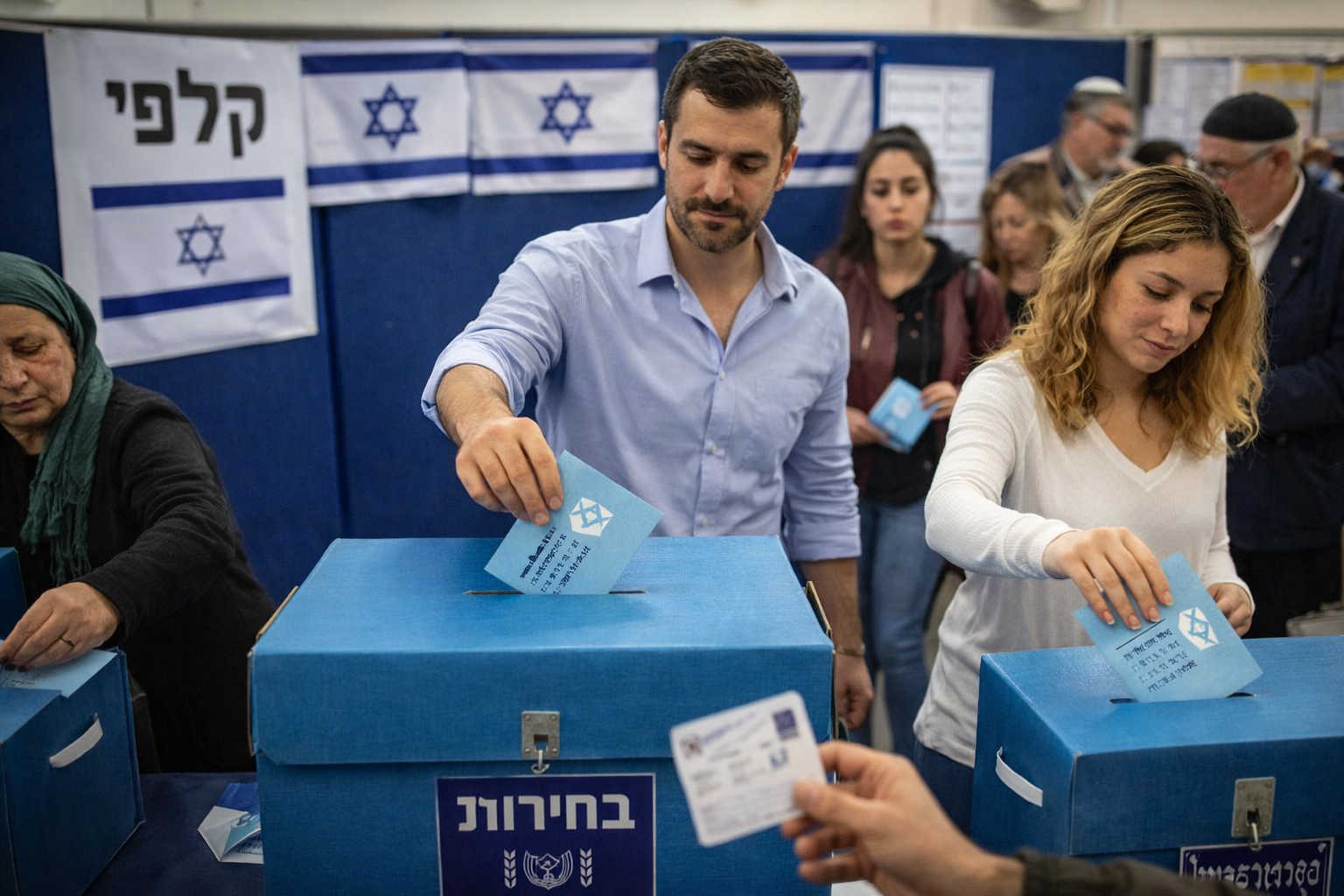
AI Image, prompt by me
In February 2026, Israel’s political map resembles a tangled web of internal tensions, as the nation reaches one of its most significant turning points since the outbreak of the “Iron Swords” war. The political system is caught in a tug-of-war between efforts to maintain coalition stability and heavy public and legal pressures that threaten to dissolve the government and trigger early elections.
The Budget and the Draft Law: Cracks in the Coalition
The most pressing issue today is the approval of the 2026 state budget. Although the budget passed its first reading in late January with a narrow majority of 62 supporters, it exposed a deep rift within the United Torah Judaism party. “Agudat Yisrael” (the Hasidic faction) voted against the budget to protest the delay in legislating the “Draft Law” (the conscription exemption law), while “Degel HaTorah” (the Lithuanian faction) supported it. The deadline for the Haredi ultimatum is fast approaching: if the budget does not pass its second and third readings by March 31, the Knesset will automatically dissolve. Prime Minister Netanyahu is now forced to maneuver between the Haredi demands for a sweeping exemption and the requirements of the defense establishment and the Legal Counsel to set realistic recruitment targets and economic sanctions, especially given the IDF’s critical manpower shortage following years of combat.
The Battle Over the Commission of Inquiry
The question of responsibility for the October 7 failure remains an open wound. The government recently approved a bill to establish a “Special State Commission of Inquiry”, a model that differs from the classic State Commission. According to the proposal, the commission’s composition would be “equal” (parity) between the coalition and the opposition. This has sparked fierce criticism from legal experts and the public, the vast majority of whom support an independent commission headed by a judge. The struggle over the nature and powers of the commission is not merely legal but an existential political battle for Netanyahu, who is attempting to prevent a scenario where the commission’s makeup is determined exclusively by the President of the Supreme Court.
Drama in the Arab Vote: The Return of the Joint List
Another dramatic development is the late January announcement regarding the re-establishment of the “Joint List.” Under heavy public pressure in Sakhnin and following the crisis of rampant crime, the leaders of the Arab parties (Hadash, Ta’al, Balad, and Ra’am) signed a letter of intent to unite. This move could completely shift the parliamentary calculus. Such a union is expected to boost voter turnout in the Arab sector and could bring the list to a representation of 15 seats or more. This would make them a significant “blocking bloc” against the formation of a narrow right-wing government and position the Arab public as a central player in the “day after” the elections.
Prospects for Early Elections
The chances of early elections in 2026 are higher than ever. A combination of three factors, the inability to reach an agreement on the Draft Law, the pressure surrounding the budget approval, and the strengthening of the Arab party bloc, is pushing the coalition into a corner. While Netanyahu strives to complete his term, the reality on the ground indicates that the next two months will be the final test for his government. If a creative solution to the conscription crisis is not found, Israel may find itself in a stormy election campaign as early as this summer, elections that will serve as a referendum on the future of the social contract and accountability for the events of recent years.
Related Topics
Related Posts