
Israel’s Choice: Sparta or Venice
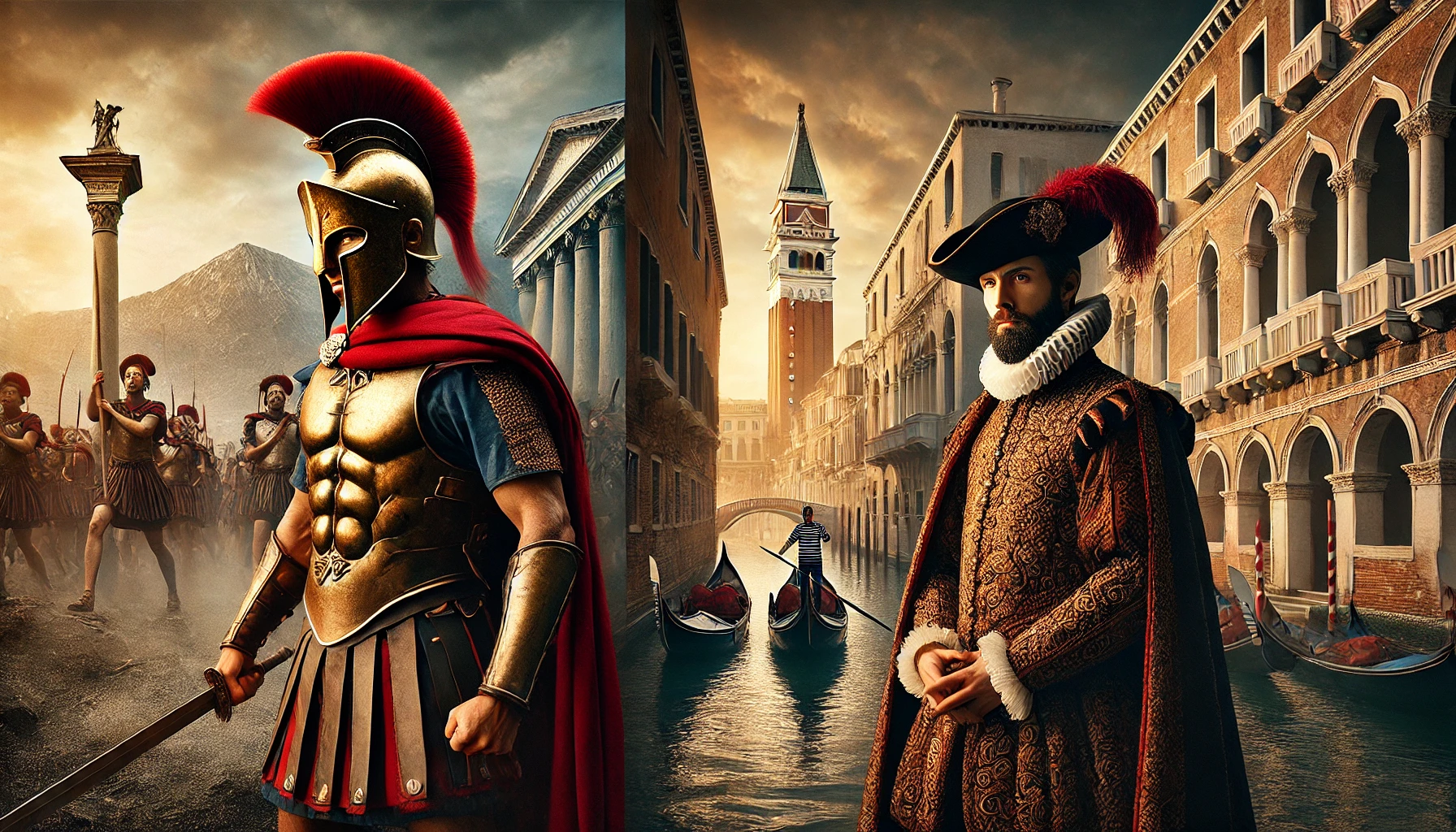
Israel’s Gaza policy veered in every direction. Since Smotrich and Ben-Gvir were the only ones offering a consistent policy, settlement and annexation, many assumed that they spoke for the government. Netanyahu’s strategic ambiguity enabled this reality which left the Israeli public uncertain, while he prioritized avoiding prison (which to be fair, I would as well). The peace deal arrives at a perfect moment: with the 2026 election looming, Netanyahu now has the chance to rewrite Israel’s story once again.
The announcement of an Israeli-Palestinian peace deal has underscored a deeper question: what story does Israel tell itself about its place in the region? Bibi presented a story of Israel, blockaded by China and Qatar, needing to fight their way out like “a kind of super Sparta.” But cracks appeared in the story as China runs the strategically vital Haifa Port, Bibi just made up with Qatar, and Sparta lasted as a great power for merely three decades. Israel requires a story that will sustain its power for centuries.
Machiavelli taught that violence should be brutal, but brief. For Israel to endure, she must rely on sources of power beyond brief, brutal wars. Israel must learn to engineer dependence: to solve problems in ways that others cannot, to define the terms of relief, and to bind neighbors to systems only she can provide. Military power can win a war, but engineered dependence secures influence that lasts long after the fighting ends. For a small nation, lasting strength lies in winning advantages without having to fight for them.
History offers a model in Venice. The republic’s military strength kept it alive in moments of danger against powerful rivals such in Genoa, France, Spain, and the Ottomans. While military victories faded, Venice’s ability to engineer dependence endured: every household required their salt, grain fed northern Italy in times of famine, and piracy patrols kept the Adriatic Sea safe for commerce. These solutions outlasted battles, binding others to Venice and sustaining its influence for five centuries.
Water is Israel’s salt. In 1994, Israel secured Jordan’s recognition and a stable border by guaranteeing water deliveries that Amman could not live without. That dependence deepened in November 2021, when Jordan, Israel, and the UAE signed the “Project Prosperity” agreement. Jordan would export solar power to Israel, while Israel exported desalinated water to Jordan. Venice once sent salt across Europe and now Israel sends salt-less water to Jordan. While Israel could live without Jordan’s solar power, Jordan could not live without Israel’s water.
Energy is Israel’s grain. In June, during the Israel-Iran war, Israel reduced gas exports to Egypt highlighting Egypt’s vulnerability to Israel’s gas supply. Despite this, Cairo signed a $35 billion deal in August with Israel’s NewMed to triple gas imports, locking in reliance for decades to come. The agreement went forward despite furious public anger over Gaza. Venice once shipped grain, energy for people; Israel now exports natural gas, energy for machines. The form has changed, but the dependence remains the same.
Surveillance is Israel’s piracy patrol. With the Ofek-19 satellite, Israel can track Captagon routes that flood the Gulf with addiction. Lebanon and Syria, both negotiating some sort of peace with Israel, could be swayed by help against this trade. By sharing intelligence selectively, Israel could shape cooperation while ensuring reliance on its eyes in the sky. Venice once patrolled the Adriatic against pirates who threatened commerce; Israel could patrol from orbit against drug traffickers who threaten stability. The seas have become skies, but the principle remains the same.
Sparta shows how quickly power can vanish. Thirty years of dominance ended with one defeat at Leuctra. Venice endured for five centuries because it combined military strength with the steady cultivation of dependence. Israel now faces the same choice: to follow Sparta into short-lived isolation or to follow Venice into durable leverage. Its future will not be secured by battlefield victories alone but by engineering solutions that others cannot and binding neighbors to systems only Israel can provide. That path of engineered dependence offers Israel its best chance at longevity.