
Author and Global Affairs Commentator
Israel’s Conflict Is Bigger Than Borders
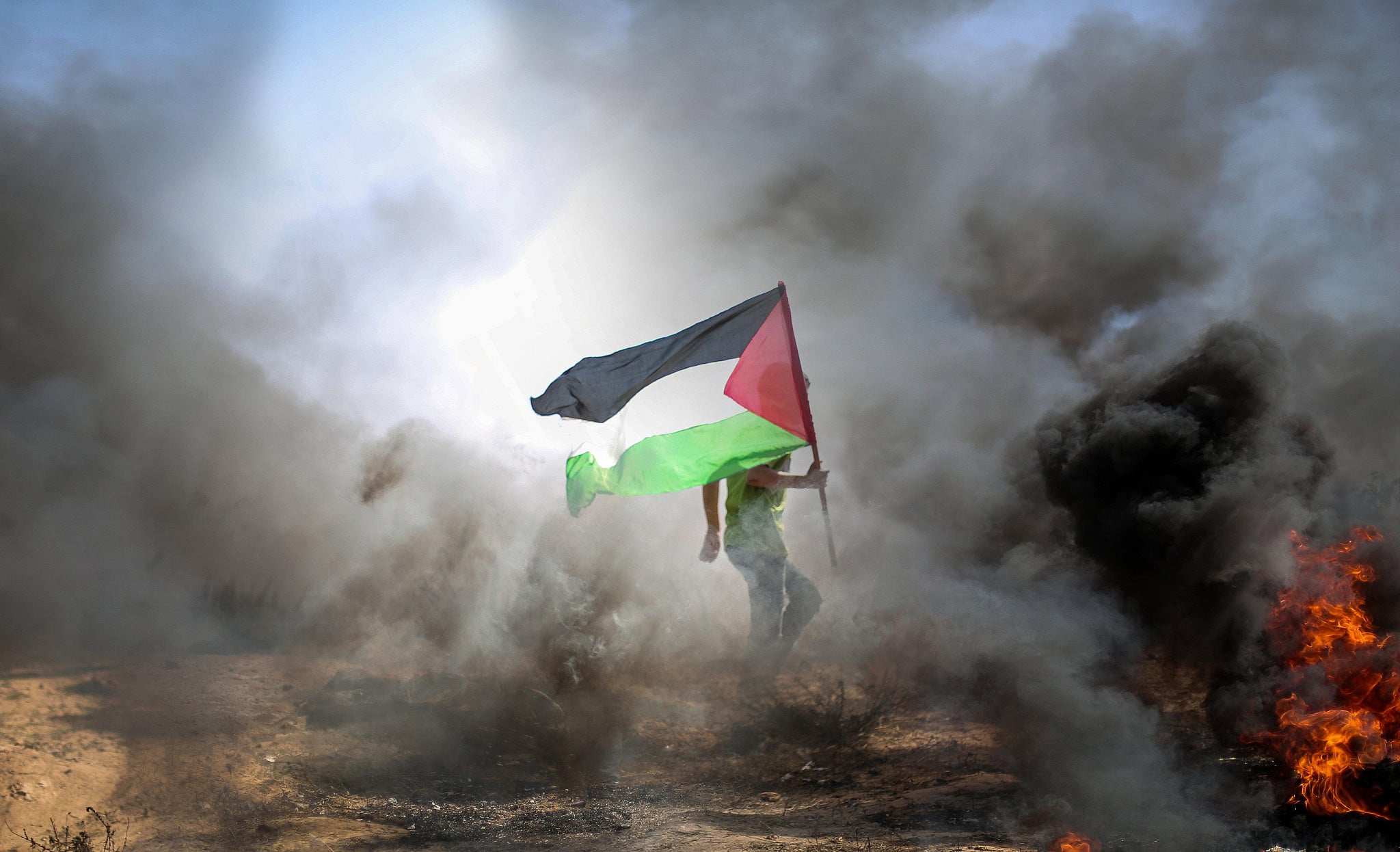
For Israel, the challenge is not simply to present more information. It is to explain the conflict in a way that distinguishes between Hamas, Palestinian society and the wider Muslim world. (Hosny Salah via Pexels)
What if the most difficult question facing Israelis and Palestinians is not where a future border should run, but whether the two national movements can ultimately accept each other’s right to exist—and what happens when decades of diplomacy fail to resolve that deeper dispute?
For much of the past several decades, one idea shaped the thinking of Israel’s political center and left: the Israeli-Palestinian conflict was, fundamentally, a dispute over territory. The logic appeared straightforward. Israel would relinquish land, the Palestinians would establish an independent state, and a conflict that had defined generations could finally begin to recede.
The Oslo process was built around that premise. Negotiations focused on borders, sovereignty, settlements and security, while successive Israeli governments made increasingly far-reaching territorial proposals.
But the assumptions behind that framework have been badly shaken, particularly since the Hamas-led attacks of Oct. 7, 2023.
For many Israelis, the question has changed. It is no longer simply where a border should be drawn. It is whether the conflict is also about something more fundamental: the acceptance of a Jewish state as a permanent part of the Middle East.
That is a harder question—and one that cannot be answered by maps alone.
None of this means that Palestinians as a whole share the same objectives, or that the aspirations of an entire population can be reduced to the ideology of Hamas. Palestinian politics are diverse, and millions of Palestinians have their own ambitions, grievances and visions for the future.
But the influence of Islamist movements, particularly Hamas, has become impossible to ignore.
Hamas has long articulated a vision of the conflict that extends beyond the boundaries established after the 1967 war. In its worldview, the struggle is not simply a conventional territorial dispute that can be resolved through the exchange of land for peace. Territory, history, religion and national identity are intertwined.
Western governments have often approached the conflict through concepts that are familiar to liberal democracies: borders, sovereignty, national self-determination and economic development.
Those principles remain central. But they do not necessarily explain everything.
The Limits of the Territorial Formula
The experience of Gaza after Israel’s 2005 withdrawal became an important part of this debate. Rather than developing into the stable, economically integrated Palestinian entity that some Israelis and Western policymakers had hoped might emerge, Gaza ultimately became the centre of Hamas’s political and military infrastructure.
That experience challenged another assumption: that economic opportunity and improved living conditions would necessarily reduce the appeal of armed confrontation.
The events of Oct. 7 brought that debate into sharper focus.
The communities attacked that day—including Be’eri, Kfar Aza and Nir Oz—were not settlements in the West Bank. They were within Israel’s internationally recognised pre-1967 boundaries. For the Israelis who were attacked there, the geography offered little comfort: the violence had crossed the very line that many had assumed would define the territorial dispute.
That has had profound consequences for Israeli political thinking.
For some on the Israeli left and centre, the lesson has been that territorial compromise alone cannot guarantee reconciliation. Any durable political settlement would require more than an agreement over land. It would require confidence that both national movements genuinely accept the other’s permanent existence.
That does not make a negotiated settlement impossible. It does, however, make the conditions for one considerably more demanding.
The Other Battlefield
There is another arena in which the conflict is being fought: the global battle for public opinion.
Few countries occupy a more complicated position in that contest than Qatar. Doha is a close US partner, hosts a major American military installation and has played an important diplomatic role in negotiations involving Hamas. At the same time, Qatar has provided substantial assistance to Gaza and has hosted senior Hamas figures.
Its influence extends beyond diplomacy.
Qatar-based Al Jazeera has become one of the world’s most influential Arab media networks, giving Doha an unusually powerful platform for shaping how events in Gaza are understood across the region and beyond.
That matters in an age when a short video circulating on TikTok, Instagram or another social platform can reach millions of people before governments have finished verifying what happened.
The images emerging from Gaza are devastating. Civilian suffering, destroyed neighbourhoods and overwhelmed hospitals inevitably shape perceptions of the war. But images can also detach events from the circumstances surrounding them.
The result is a contest over context.
Israel argues that it is fighting Hamas, an armed organisation operating within an extraordinarily dense civilian environment. Critics of Israel argue that the scale of destruction and civilian casualties cannot be justified by reference to Hamas’s presence.
Both claims form part of a far larger information war in which the first narrative to reach the public often has an enormous advantage.
When History Becomes a Headline
Israel has frequently struggled to compete in this environment.
Traditional public diplomacy is slow. Investigations take time. Military maps require explanation. Intelligence assessments are difficult to communicate in a 30-second video.
Social media rewards something else: immediacy, emotion and visual simplicity.
That creates an asymmetry that is difficult to overcome. By the time a government publishes evidence intended to establish what happened, millions of people may already have formed an impression.
The conflict therefore increasingly operates on two levels at once: the physical battlefield and the battle over interpretation.
For Israel, the challenge is not simply to present more information. It is to explain the conflict in a way that distinguishes between Hamas, Palestinian society and the wider Muslim world. Treating those categories as interchangeable would not only be inaccurate; it would undermine Israel’s ability to make its case internationally.
The more difficult argument is that the central dispute is not between Israel and Palestinians as peoples, but between competing political visions—one of which, in its most extreme form, rejects Israel’s legitimacy altogether.
That distinction is crucial to any serious discussion of peace.
What Must Come Before a Border?
A political settlement ultimately depends on whether both sides believe that the agreement represents an endpoint rather than an interim stage.
For Israel, that means asking whether a future Palestinian leadership would genuinely accept the country’s permanent existence as a Jewish state.
For Palestinians, it means asking whether Israel is prepared to recognise Palestinian national aspirations as legitimate rather than treating them as an inherently hostile project.
Those questions cannot be answered by diplomacy alone. They require political legitimacy, institutions capable of enforcing agreements and a willingness to confront movements that reject coexistence.
The tragedy of Oct. 7 does not provide a definitive answer to whether such a future is possible. It does, however, demonstrate the danger of assuming that territorial compromise automatically produces reconciliation.
The debate over borders remains essential. But it may not be sufficient.
The deeper question is whether two peoples with competing claims to the same land can eventually accept that neither is disappearing—and build a political order around that reality.
Until that question is confronted, negotiations over where to draw the line may remain secondary to the far more consequential question of whether both sides are prepared to live with the existence of the other.
Related Topics
Related Posts